


Waytale
London cityscape

London

Where History Meets Modern Majesty

Discover London through AI-powered audio stories for kids and families. Experience historic landmarks, museums, and hidden gems with expert narration and local insights that bring the city to life.

50 Stories
AI Narrated
7 Voices

Free to download · No account required

building

Temple Church

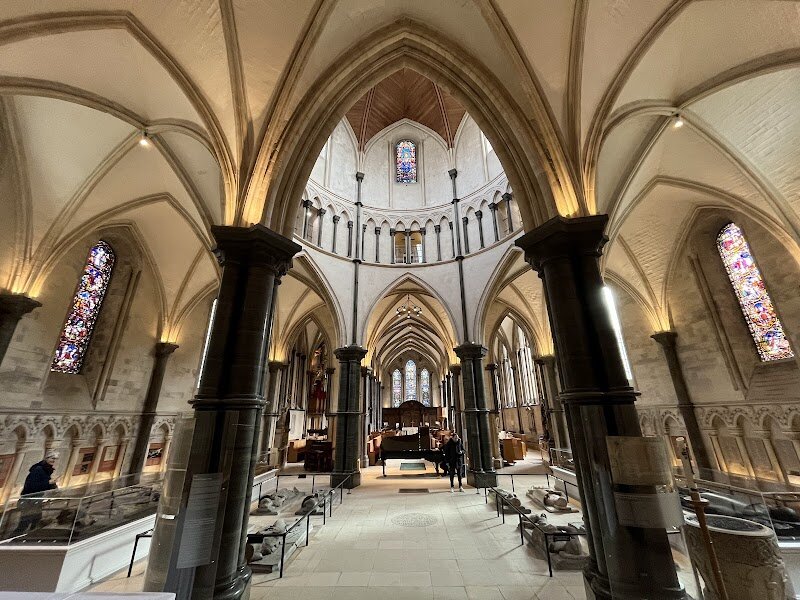
Step into the enchanting world of **Temple Church**, a hidden gem tucked away in the heart of London’s historic Temple district. Founded in 1185 by the legendary Knights Templar, this remarkable church invites families and curious travelers to uncover centuries of secrets and stories within its ancient walls. The church’s most striking feature is its rare **circular nave**—one of only a handful in England—modeled after Jerusalem’s Church of the Holy Sepulchre, radiating a sense of harmony and wonder that captivates visitors of all ages. Wander beneath soaring arches and marvel at the beautifully preserved **medieval effigies** of crusader knights, which seem to whisper tales of daring quests and mysterious rituals. The blend of Norman strength and Gothic elegance in the architecture offers a visual feast for history lovers and budding architects alike. Younger visitors can let their imaginations soar, picturing Templar initiations and medieval adventures, while adults appreciate the church’s pivotal role in London’s past—from surviving the Great Fire to its meticulous restoration after World War II. Whether you’re tracing the footsteps of the Templars, inspired by The Da Vinci Code, or simply seeking a tranquil retreat, **Temple Church** promises an unforgettable journey through time for every explorer.

Ten medieval knights carved in stone sleep eternally on the floor inside that honey-colored round tower ahead of you, including William Marshal, the man who helped create Magna Carta right here in Temple. This is Temple Church, one of only four round churches left in all of England, and you're standing in the historic Temple district tucked between Fleet Street and the Thames where the mysterious Knights Templar built their English headquarters in 1185. As you approach the entrance, notice how the round sandstone structure connects to a larger rectangular section... that extension was added in 1240 specifically because King Henry III wanted to be buried here, though he later changed his mind for Westminster Abbey instead. The round design deliberately echoes Jerusalem's Church of the Holy Sepulchre, reminding Templars of Christ's burial every time they entered for their secretive dawn initiation ceremonies. Step inside and you'll discover this isn't just ancient history... Dan Brown featured this very church in The Da Vinci Code, and Shakespeare wrote about the Temple gardens in Henry VI, imagining the Wars of the Roses beginning right outside these walls. The lawyers from Inner and Middle Temple still maintain this church today, just as they have since the 1400s, keeping alive nearly 900 years of continuous worship in London's most enigmatic sacred space.

landmark

SEA LIFE London Aquarium

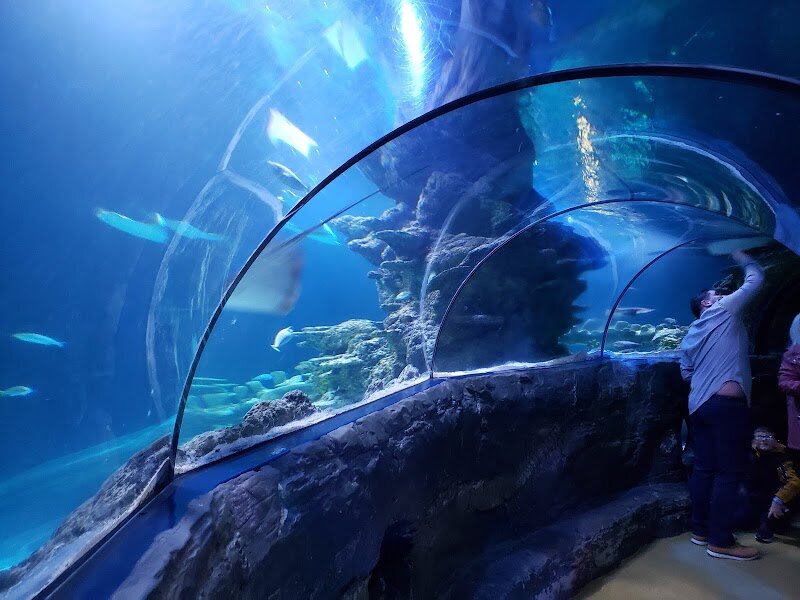
SEA LIFE London Aquarium invites families and curious travelers to dive into an enchanting world beneath the waves, right in the heart of the city. Set within the historic County Hall on the South Bank, this celebrated aquarium has become one of London's most beloved attractions since opening its doors in 1997. Following a dramatic transformation in 2009, the aquarium now dazzles with immersive experiences, including a glass Ocean Tunnel and the thrilling Shark Walk, where visitors stroll inches above majestic sharks gliding below. What makes SEA LIFE London truly special is its blend of innovative exhibits and conservation efforts. Guests can encounter everything from graceful rays and mysterious jellyfish to the playful gentoo penguins introduced in 2011. Interactive zones let children touch starfish or learn about the vital role of marine habitats, making every visit both fun and educational. The aquarium’s story is rooted in London’s long fascination with aquatic life, evolving from Victorian-era "Fish Houses" to today’s cutting-edge marine displays. Whether you’re gazing at vibrant coral reefs or marveling at robotic fish inspired by the wonders of nature, SEA LIFE London Aquarium promises an unforgettable journey into the deep—perfect for sparking curiosity and delight in visitors of all ages.

That colonnade entrance you're looking at once echoed with the voices of London's most powerful politicians — this grand early 20th-century County Hall served as headquarters for the Greater London Council until 1986, when Margaret Thatcher dissolved it entirely. Now, behind those stately limestone columns, lies Europe's most ambitious underwater world with over 500 species swimming through 14 themed zones. As you step inside, you'll discover Britain's ONLY living coral reef display — a massive 92,000-liter tank that took marine biologists three years to establish. But here's what most visitors miss: that famous glass-floor Shark Walk you're about to experience? It's built with the same reinforced glass technology used in submarine observation decks, designed to hold the weight of a small car while sand tiger sharks glide just inches below your feet. The building's transformation from political powerhouse to aquatic wonderland cost £40 million, but they kept one original feature — those Art Deco ceiling details in the main corridor still bear the Greater London Council's coat of arms, now watching over penguins instead of politicians.

museum

Sir John Soane's Museum

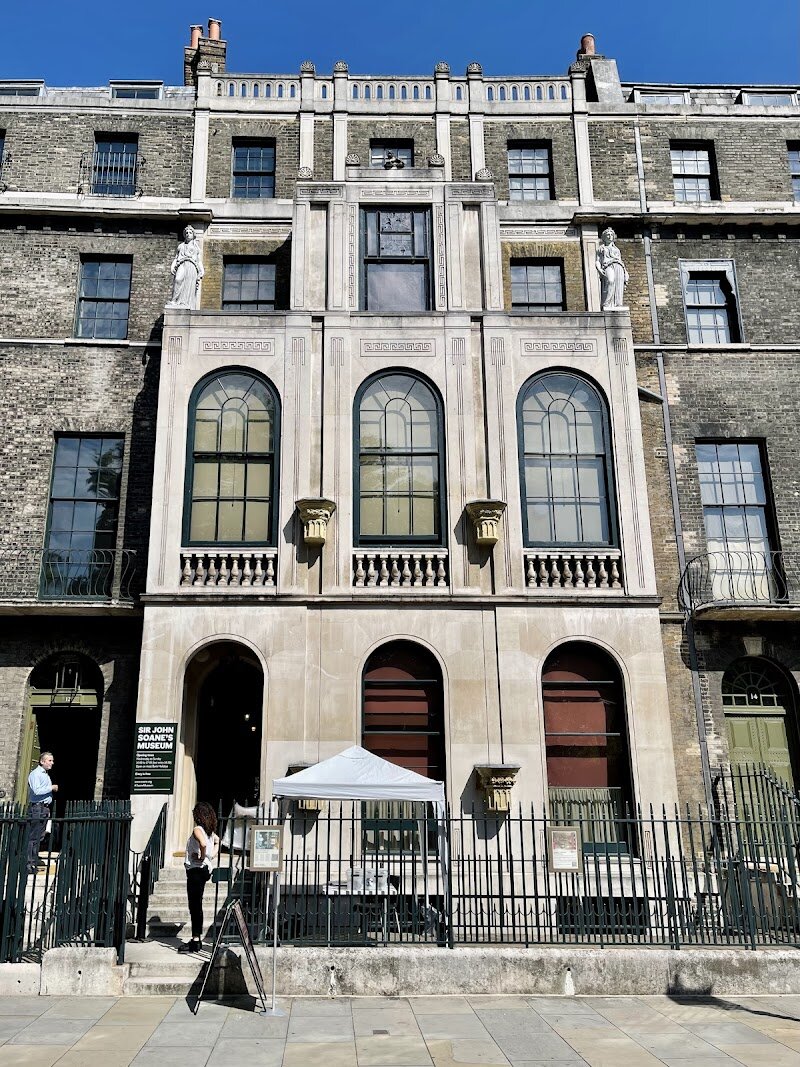
Step into the enchanting world of **Sir John Soane’s Museum**, a hidden gem in the heart of London where history, art, and imagination come alive for visitors of all ages. Once the home of the brilliant Regency architect Sir John Soane, this atmospheric museum is a treasure trove bursting with wonders—from ancient Egyptian relics and medieval sculptures to masterpieces by Turner and Canaletto, all displayed in a labyrinth of beautifully preserved rooms. What makes this place truly special is its sense of discovery: every corridor and chamber reveals unexpected curiosities, ingenious architectural features, and Soane’s playful inventions, like the Picture Room’s secret panels that ingeniously display triple the art in a single space. Families and curious travelers will delight in exploring this “house of marvels,” where Soane’s passion for collecting and storytelling is evident at every turn. The museum’s history is just as fascinating: Soane, determined to share his collection and ideas, secured an Act of Parliament in 1833 to preserve his home exactly as he left it—offering visitors today a rare, time-capsule experience of a great mind and his era. Whether you’re an art lover, aspiring architect, or simply seeking inspiration, Sir John Soane’s Museum promises an unforgettable journey into creativity and curiosity.

This museum was designed to punish a son from beyond the grave. In 1833, Sir John Soane fought through Parliament itself to reverse centuries of inheritance law, ensuring his own child would inherit absolutely nothing from these three Georgian townhouses at Lincoln's Inn Fields. Standing before this elegant facade of Number 13, you're looking at Britain's most vindictive architectural legacy. Soane, son of a humble bricklayer who rose to design the Bank of England for forty-five years, despised his son George so intensely that he spent his final years legally weaponizing his own death. George had committed the unforgivable sins of accumulating debts and writing anonymous newspaper attacks calling his father a charlatan. Step inside and you'll discover Soane's ultimate revenge... a treasure-crammed labyrinth where every mirror, hidden passage, and secret skylight serves his eternal spite. In the basement, deliberately designed as a Roman tomb, sits the sarcophagus of Egyptian pharaoh Seti the First. When Soane acquired this three-thousand-year-old prize for two thousand pounds after the British Museum refused it, he threw three celebration parties for nearly one thousand guests. The law still binds these rooms exactly as Soane left them in 1837, his hatred preserved in amber for eternity.

museum

The Sherlock Holmes Museum

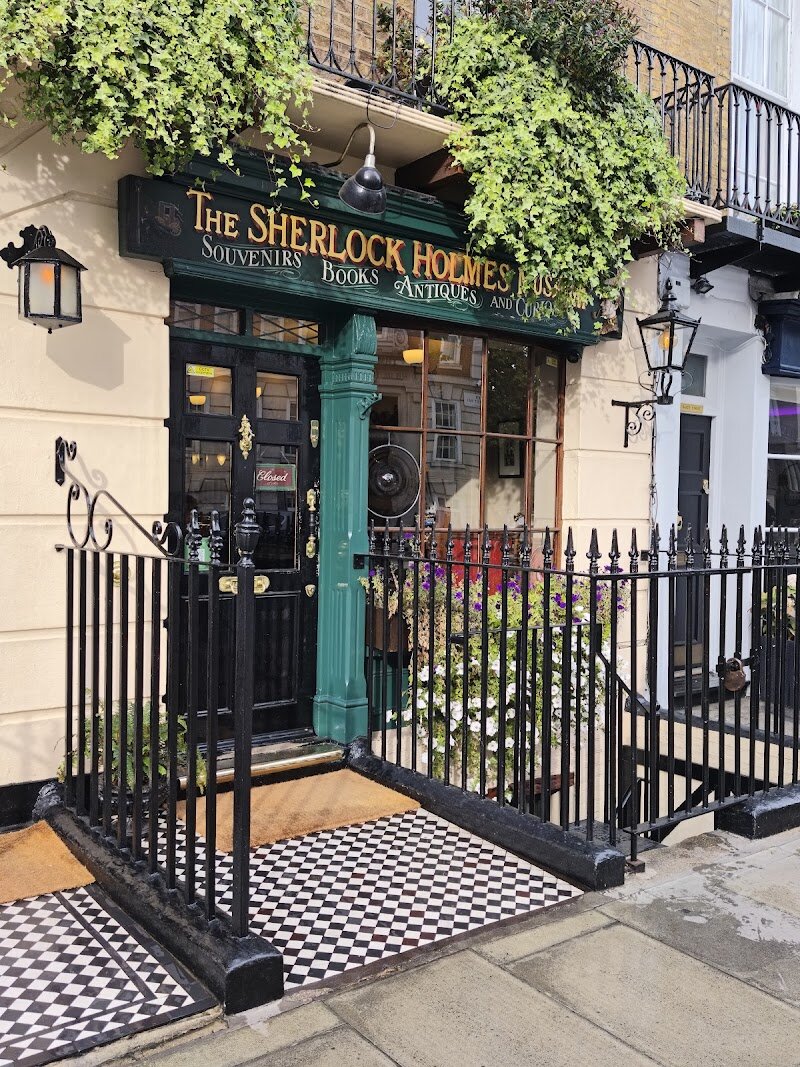
Step into the world of mystery and imagination at **The Sherlock Holmes Museum**, nestled on London’s legendary Baker Street—a must-see for families and curious travelers alike. Housed in a charming Georgian townhouse dating back to 1815, this museum brings to life the Victorian era immortalized by Sir Arthur Conan Doyle’s famous detective stories. As you wander through rooms meticulously recreated as Sherlock Holmes and Dr. Watson’s home, you’ll discover authentic Victorian furnishings, period artifacts, and iconic items from the stories—like Holmes’s violin, trusty magnifying glass, and his unmistakable deerstalker hat. Children and adults alike are invited to peer into the detective’s cluttered study, explore Mrs. Hudson’s quarters, and even spot wax figures of beloved characters, making it feel as if you’ve stepped straight into a classic Holmes adventure. Beyond its immersive displays, the museum offers a unique blend of history and fiction, letting visitors experience the era when Holmes’ adventures captivated readers worldwide. Whether you’re a lifelong fan or just discovering the stories, **The Sherlock Holmes Museum** promises a fun, interactive journey through the heart of literary London.

Seventeen steps! That's exactly how many stairs you're about to climb, just like in the story "A Scandal in Bohemia" - and someone counted them on purpose when they built this museum in 1990! This Georgian townhouse from 1815 is over 200 years old, which means it's been standing here for about TEN of your lifetimes. Here's the crazy part - when Arthur Conan Doyle wrote about 221B Baker Street, this address didn't even exist! The street only went up to number 100 back then. The city council had to specially create this magical address just for the museum. Can you spot the blue plaque as you enter? And get ready to meet some very special costumed characters who might just help solve your next mystery!

building

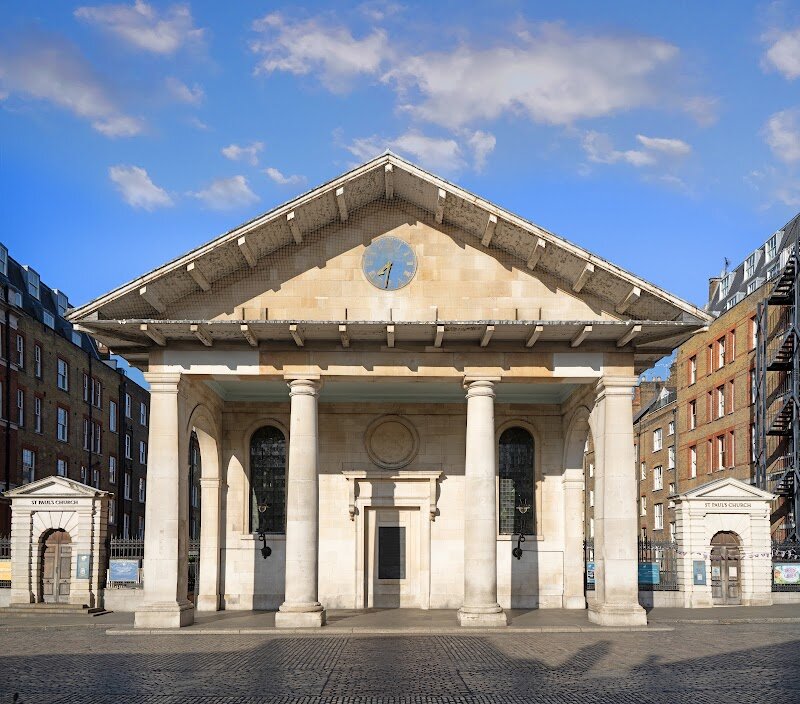
St Paul’s Church Covent Garden

Nestled in the lively heart of Covent Garden, **St Paul’s Church**—affectionately known as *The Actor’s Church*—offers families and curious travelers a unique blend of history and culture. Designed by the renowned architect Inigo Jones in 1631, it was commissioned by the 4th Earl of Bedford with the playful request for a building “not much better than a barn.” Jones responded with what he called “the finest barn in England,” creating a striking yet simple Tuscan-style church that stands out amid the bustling piazza. This church holds a special place in London’s story as the first purpose-built Anglican church since the Reformation. Its unusual layout—with the grand portico intended as the entrance but ultimately facing the altar—adds to its quirky charm. Known for its strong ties to the theater community, St Paul’s is a hub for performances, memorials, and events celebrating London’s dramatic arts. Visitors can stroll through the tranquil churchyard gardens, admire the elegant architecture, and perhaps catch a glimpse of a rehearsal or festival that brings the space to life. Whether you’re seeking a quiet escape or a window into London’s creative spirit, St Paul’s Church is a place where history and artistry meet in the heart of the city.

This church is built completely backwards. That grand portico you're facing on the Covent Garden piazza? It's England's most elaborate fake door, sealed shut for nearly 400 years because Inigo Jones got his compass directions wrong when designing it in 1631. The 4th Earl of Bedford commissioned what became the first purpose-built Protestant church in England, asking Jones for something "not much better than a barn." Jones famously replied, "Then you shall have the handsomest barn in England" — and delivered exactly that using Vitruvius's ancient Etruscan temple design. But when bishops realized the altar would face west instead of the traditional east, they flipped the entire layout, leaving that magnificent doorway permanently bricked up. What stands here replaced the medieval convent gardens that gave this square its name — Covent Garden literally means "convent garden" where monks once grew vegetables for Westminster Abbey. Walk around to Bedford Street for the real entrance and you'll step into what locals call "The Actors' Church," where plaques commemorate everyone from Gilbert and Sullivan to Charlie Chaplin. The churchyard holds an even darker first — Margaret Ponteous, buried here April 12th, 1665, was London's first recorded victim of the Great Plague. Today, street performers claim the space where that false door should open, unknowingly continuing centuries of theatrical tradition in this backwards barn that changed English church architecture forever.

museum

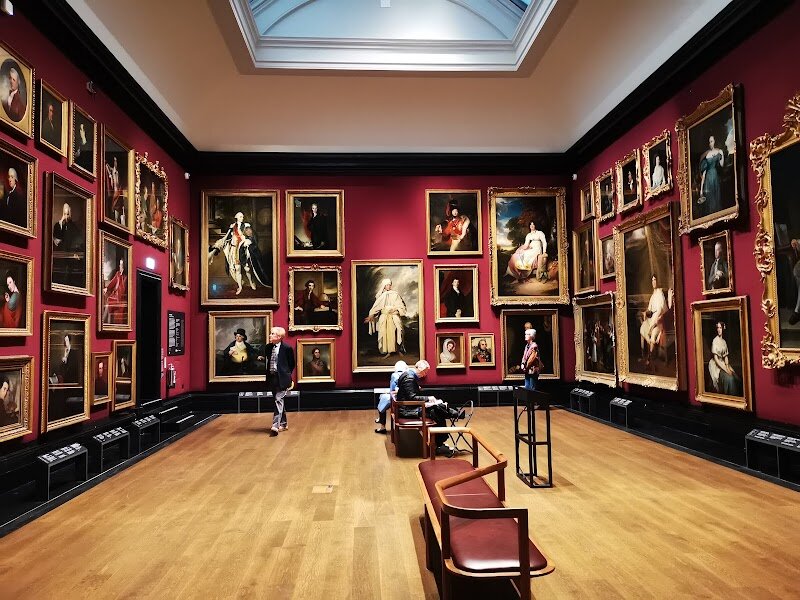
National Portrait Gallery

Step into the National Portrait Gallery in London and embark on a journey through the faces and stories that have shaped British history. Founded in 1856 as the world’s first dedicated portrait gallery, this extraordinary institution invites families and curious travelers to encounter kings and queens, scientists and writers, activists and icons—each portrait capturing a moment in time and a spark of personality. With a collection spanning over 220,000 works, from striking Tudor paintings to vibrant contemporary photography, there’s something to fascinate every age and interest. What makes the Gallery truly special is its focus on people—the famous, the innovative, and sometimes the unsung—whose achievements and lives reflect the evolving story of a nation. Children and adults alike can explore not just art, but the real human stories behind it, discovering how culture, identity, and creativity are woven together. Interactive exhibits, family-friendly trails, and ever-changing exhibitions ensure every visit offers something new. Whether you’re captivated by Shakespeare’s enigmatic gaze or inspired by modern trailblazers, the National Portrait Gallery is a vibrant celebration of Britain’s past and present, promising wonder and discovery around every corner.

Right now, curators are dusting the world's tiniest portrait... a masterpiece smaller than your thumbnail that measures just 19 millimeters by 16 millimeters, depicting Henrietta Anne, Duchess of Orleans from the 17th century. You're standing before the National Portrait Gallery, where this microscopic marvel lives alongside 215,000 other faces that shaped British history over five centuries. This Italian Renaissance fortress of red brick and Portland stone, designed by Ewan Christian, opened its doors in 1896 after the collection had wandered homeless through London for forty years. The gallery made headlines as arguably the world's first national museum dedicated entirely to portraits... but their very first acquisition in 1856 was a gamble that still sparks debate today - the Chandos portrait, believed to be the only painting of William Shakespeare created during his lifetime. As you step through these grand arched entrances into the soaring galleries, you're entering a place where tragedy once struck... in 1909, Room 27 witnessed a murder-suicide as a couple argued over a painting before visitors' horrified eyes. The gallery harbored a peculiar rule until 1969 - no portraits of living people could hang here unless they wore a crown, meaning only royalty escaped the ten-year death requirement. From Julia Margaret Cameron's dreamlike Victorian photographs to Lewis Carroll's whimsical Christ Church Album, every corridor whispers stories of genius, scandal, and power that transformed a nation.

landmark

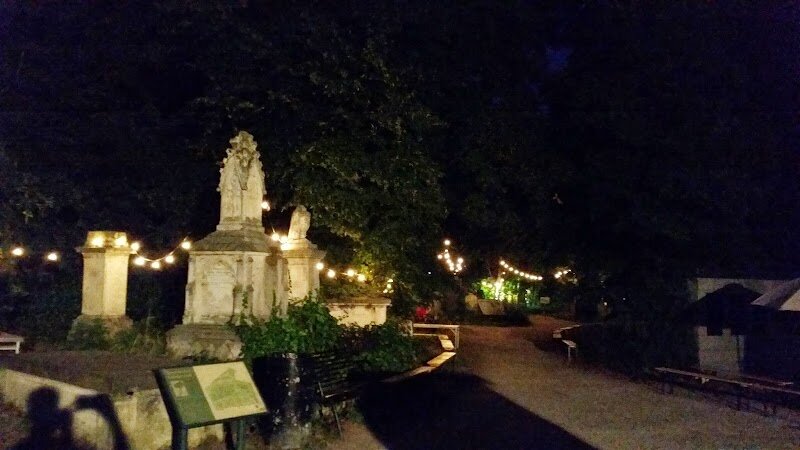
Tower Hamlets Cemetery Park

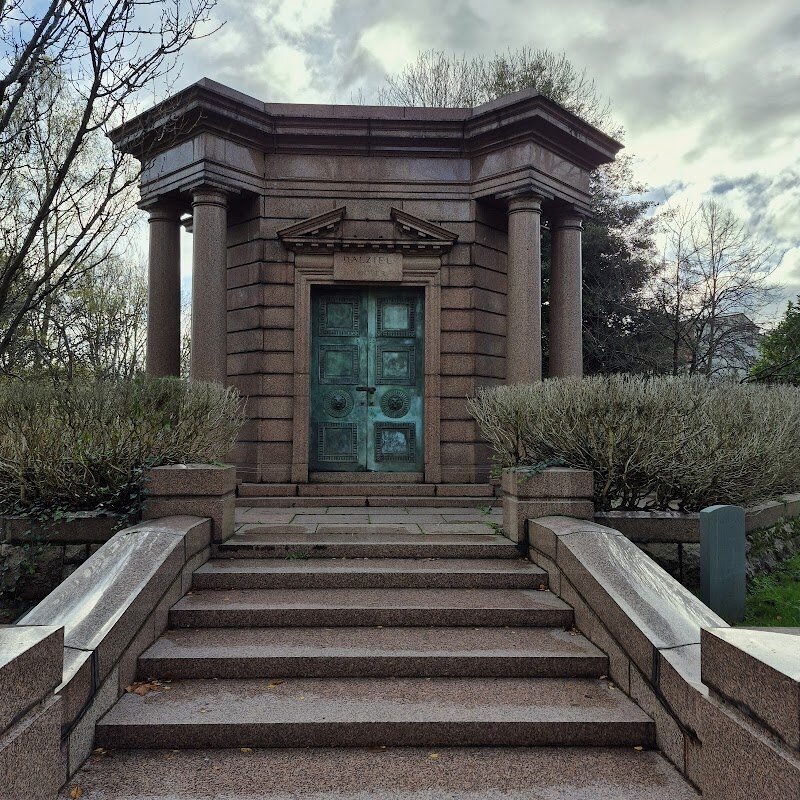
Tower Hamlets Cemetery Park is a hidden gem in London’s East End—a place where history, nature, and community beautifully intertwine. Once a bustling Victorian burial ground, it opened in 1841 as part of the city’s “Magnificent Seven” cemeteries, created to solve London’s overcrowded churchyards and designed as a tranquil garden cemetery with diverse landscapes. Over 350,000 people from all walks of life were laid to rest here, making it the most working-class among London’s grand cemeteries, with public graves for those unable to afford private plots. Today, families and curious travelers can wander peaceful woodland paths shaded by mature trees, discover wildflowers and wildlife thriving among historic gravestones, and stumble upon fascinating stories—like the music hall singer Alec Hurley or pioneering social reformer Clara Grant. Kids can explore nature trails, while adults appreciate the rich heritage, including monuments commemorating Barnardo’s children and remnants of Victorian architecture. Managed as a nature reserve and community space, the park offers a unique blend of quiet reflection, local history, and vibrant biodiversity—a truly special spot for discovery and connection in the heart of the city.

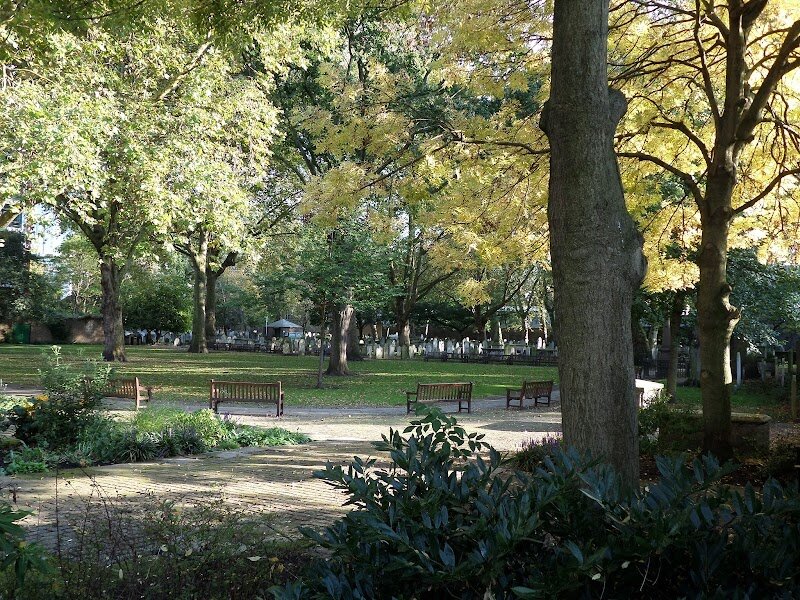
The year is 1940, and German bombs are screaming down from the sky... five times they hit this very cemetery, and you can STILL see the shrapnel scars on gravestones in that north-west corner over there! This isn't just any old graveyard - you're standing in one of London's "Magnificent Seven" Victorian cemeteries, where 350,000 people rest beneath your feet. That's like burying everyone in Iceland! Hunt for those wartime battle scars - they're history you can actually touch!

museum

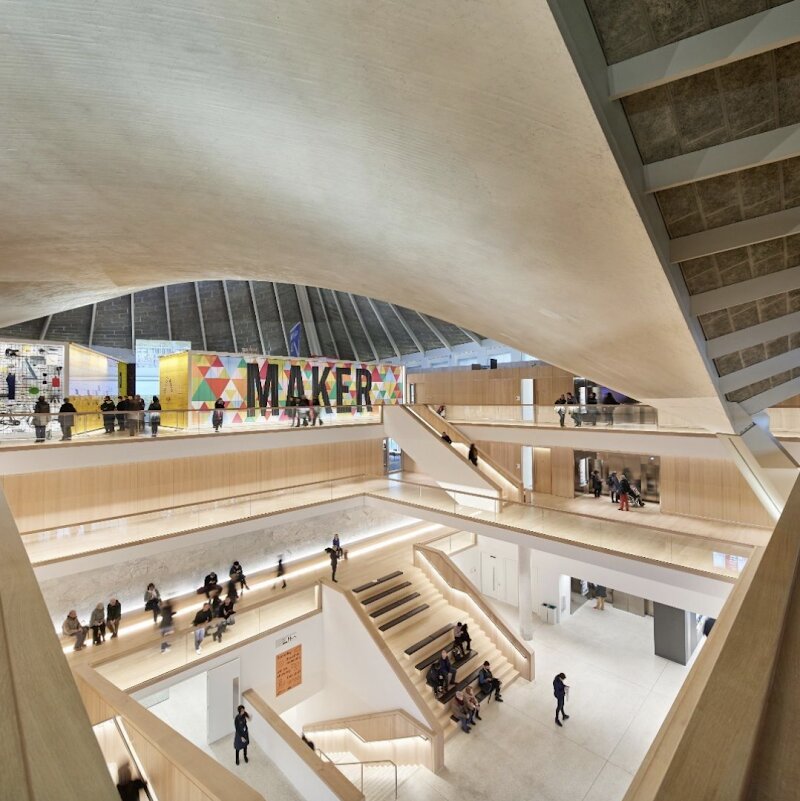
the Design Museum

Step into the Design Museum in London and discover a vibrant world where creativity shapes the way we live, work, and play. Founded by visionary designer Terence Conran, the museum began its journey in the 1980s as a small project in the Victoria and Albert Museum’s basement, later moving to a converted banana warehouse on Shad Thames. Today, it stands as a global destination for design lovers and curious families alike, welcoming nearly a million visitors each year. What sets the Design Museum apart is its dedication to showcasing the power and impact of design—from everyday objects to groundbreaking architecture and futuristic concepts. Visitors of all ages can explore interactive exhibitions featuring everything from iconic furniture and fashion to digital innovations and playful hands-on installations. Past exhibitions have celebrated legendary designers like Zaha Hadid and explored the creative pulse of cities around the world. With its striking architecture and ever-changing displays, the museum invites everyone to question, imagine, and get inspired by the world of design. Whether you’re a family looking for a fun, educational outing or a traveler eager to see how design shapes our future, the Design Museum promises an experience that is as thought-provoking as it is unforgettable.

The year is 1962, and workers are installing the most BONKERS roof in London - a twisty copper shell that looks like a giant's pretzel! This wild blue building on Kensington High Street once displayed treasures from every corner of the old British Empire, but sat empty as a ghost house for fourteen whole years. Then in 2016, Sir Terence Conran spent 17 and a half MILLION pounds to wake it up as the Design Museum! That crazy pretzel roof is still there, now protecting nearly a thousand amazing objects inside - from the London Olympics torch to your iPhone. Can you spot that shimmering copper twisting above you?

landmark

Gardens of Peace ® Muslim Cemetery (Elmbridge Road)

Nestled on Elmbridge Road in London, **Gardens of Peace® Muslim Cemetery** offers a serene and dignified sanctuary for reflection, remembrance, and unity. Founded in 2002 as the first dedicated Muslim cemetery in the UK, this tranquil space was created to serve the community’s need for faith-appropriate burials—a vision that has blossomed into a place of solace for families and visitors alike. What sets Gardens of Peace apart is its commitment to equality and simplicity: each grave is marked by a modest marble slab, and all are aligned toward Mecca, reflecting the Islamic tradition of humility and collective dignity in death. The grounds themselves are beautifully landscaped, featuring fig and olive trees—both mentioned in the Qur’an—alongside immaculate lawns and a peaceful Ottoman-inspired courtyard. Visitors can explore thoughtfully segmented sections for children, adults, and even spaces dedicated to miscarriages and stillbirths, highlighting the cemetery’s compassionate ethos. The atmosphere invites quiet contemplation, making it a meaningful destination for families and curious travelers seeking to understand London’s rich cultural tapestry. As a registered charity, Gardens of Peace stands as a testament to community spirit, welcoming all who seek peace and connection in a place shaped by tradition, respect, and hope for the future.

Every blade of grass here grows in perfect formation, as if nature itself understands the solemnity of this place. You're standing at the Gardens of Peace Muslim Cemetery on Elmbridge Road in Hainault, where 21.5 acres of former green belt land were transformed into something extraordinary in the early 2000s. When Mohamed Omer and his team designed this space, they made a revolutionary decision that still strikes visitors today... every single grave is identical. Walk forward and you'll see what I mean. Row upon row of simple earth mounds, each covered in moss-like vegetation, stretching across the manicured landscape like waves frozen in time. No towering monuments, no elaborate headstones, just uniform marble plaques bearing names and dates. This isn't by accident, it's Islamic tradition made visible... in death, we are all equal. By 2014, just five years after opening, this cemetery was already seventy percent full, testament to the desperate need it filled for London's Muslim community. The demand was so overwhelming that they had to acquire additional sites. But here's what makes this place truly special... when the Good Funeral Awards named it Cemetery of the Year, they weren't just recognizing beautiful landscaping. They were honoring a place where every design choice, from the prayer rooms near the entrance to the careful preservation of existing wildlife, reflects the Islamic principle that we are temporary stewards of the earth.

landmark

Bunhill Fields Burial Ground

Bunhill Fields Burial Ground is a hidden gem in the heart of London, offering families and curious travelers a peaceful retreat steeped in fascinating history. Once known as "Bone Hill," this atmospheric site began as a hillside piled high with bones from St Paul’s Cathedral in the 16th century, later becoming a sanctuary for those who lived outside the mainstream church. Over 123,000 people found their final resting place here between 1665 and 1854, including some of Britain’s most influential thinkers—like John Bunyan, Daniel Defoe, and William Blake—whose tombs can still be visited today. Strolling through Bunhill Fields, visitors are surrounded by centuries-old monuments and leafy pathways, making it an evocative place to spark young imaginations or enjoy a reflective family walk. The grounds are now a Grade I listed public garden, managed to preserve its tranquil charm amidst the city’s bustle. Whether you’re a history buff, a literary enthusiast, or just seeking a quiet spot to explore, Bunhill Fields invites you to discover stories of nonconformity, resilience, and creativity woven into London’s past.

Over 2,000 weathered headstones lean at curious angles around you, each marking just a tiny fraction of the 123,000 bodies packed beneath your feet in these 4 acres. You're standing on what was literally called "Bone Hill" – back in 1549, over 1,000 cartloads of human bones from St Paul's Cathedral were dumped right here and covered with soil, creating such a massive hill that three windmills spun on top of it. This place became London's rebel cemetery, never consecrated by the Church, perfect for the brilliant misfits buried here. John Bunyan wrote Pilgrim's Progress, Daniel Defoe gave us Robinson Crusoe, William Blake painted angels in his garden, and Thomas Newcomen invented the steam engine that powered the Industrial Revolution. They're all sleeping under these crooked stones, along with 122,996 other nonconformists who refused to follow the rules... even in death. The windmills are long gone, but their rebellious spirit lives on in every tilted headstone.

building

Imperial College London

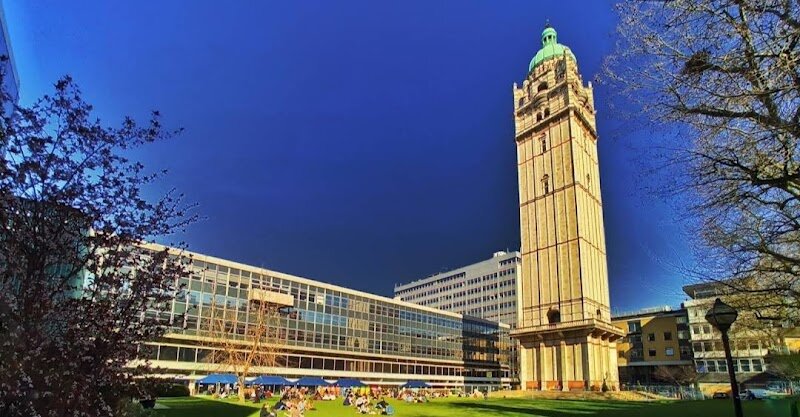
Imperial College London stands as a beacon of scientific discovery and innovation in the heart of South Kensington, surrounded by some of London’s most iconic museums and cultural treasures. Founded in 1907 from the merger of several distinguished institutions, Imperial’s roots trace back to Prince Albert’s vision of a grand “Albertopolis”—a district where learning and culture would flourish side by side. Over the decades, Imperial has played a vital role in shaping modern science, from pioneering wartime research to producing Nobel laureates and world-changing inventions. Families and curious visitors can wander through its historic campus, where striking architecture like the Queen’s Tower and the Royal School of Mines building tell stories of resilience and progress through two world wars. The college’s close ties to the Natural History Museum and Science Museum make it a perfect starting point for a day of exploration and discovery. Whether you’re inspired by tales of scientific breakthroughs or simply want to soak up the vibrant academic atmosphere, a visit to Imperial College London offers a fascinating glimpse into the past, present, and future of innovation.

Three hundred students dropped their textbooks and picked up rifles in 1914 - that's one third of Imperial College London's entire student body marching off to World War One! Standing here on Exhibition Road, you're looking at a university born from crisis in 1907, when Spanish flu was raging and war was brewing across Europe. King Edward VII himself laid the foundation stone for that grand Royal School of Mines building in 1909 - it's like having the King build your school playground! Inside these walls, fourteen future Nobel Prize winners once studied, making this South Kensington campus more prize-packed than any treasure chest. The coolest secret? This whole place started because three rival colleges were basically forced to become best friends and share their toys!

building

St. Paul's Cathedral

St. Paul’s Cathedral rises majestically above London, its iconic dome a symbol of resilience and hope for over 300 years. Families and travelers alike are drawn to this architectural masterpiece, designed by Sir Christopher Wren and completed in 1710 after the Great Fire of London. Inside, you’ll walk beneath soaring Baroque arches, marvel at intricate mosaics, and discover the remarkable **Whispering Gallery**—where even a whisper travels along the curved walls. Adventurous visitors can climb 528 steps to the **Golden Gallery** for breathtaking panoramic views of the city. But St. Paul’s is more than just a feast for the eyes. It has witnessed pivotal moments in British history, from royal weddings to the funeral of Sir Winston Churchill, and famously survived the Blitz during World War II, standing as a beacon of endurance. The cathedral’s crypt is the largest in Europe, housing heroes and visionaries from centuries past. Every visit reveals new stories—of faith, engineering genius, and the enduring spirit of London. Whether you’re seeking inspiration, history, or simply a family adventure, St. Paul’s Cathedral offers an unforgettable journey through the heart of the city.

Every single day, visitors walk unknowingly over the bones of five destroyed cathedrals beneath their feet here at St. Paul's Churchyard. You're standing on Ludgate Hill, the highest point in the City of London, where a Roman temple to Diana once welcomed ancient worshippers two thousand years ago. Christopher Wren's magnificent cathedral rising before you is actually the SIXTH attempt to build a church on this exact spot. The medieval cathedral that stood here before had Europe's tallest spire until lightning struck it down in 1561... and Cromwell's soldiers later used the ruins as a stable for their horses during the English Civil Wars. That soaring dome you see, crafted from gleaming Portland stone, held the record as London's tallest building for 253 years, from 1710 to 1963. During the Blitz, it became a beacon of hope for Londoners huddled in bomb shelters below. In 1914, suffragettes nearly succeeded in bombing the Bishop's throne with explosives hidden in a mustard tin. Step through those classical doors, and you'll enter a space that took thirty-five years and over two hundred million pounds in today's money to complete.

building

London Business School

London Business School is a fascinating destination in the heart of London, seamlessly blending rich history with cutting-edge learning. Set within the beautifully restored Old Marylebone Town Hall—a Grade II-listed landmark dating back to the early 1900s—this iconic institution is a testament to London’s tradition of reinvention. The school’s Sammy Ofer Centre, named after a celebrated philanthropist, brings together classical architecture and bold modern design, creating a vibrant hub where global business leaders, thinkers, and curious visitors come together. Families and travelers will be captivated by the building’s grand stonework, elegant marble interiors, and the contemporary glass and steel entrance that links historic spaces with new lecture theatres and seminar rooms. As you explore, imagine the civic history of the Town Hall, once a venue for political events, now transformed into a place where future leaders are inspired. Visitors can admire the impressive architecture, soak in the academic atmosphere, and perhaps catch a glimpse of students from around the world exchanging ideas. London Business School invites everyone to experience a living legacy—where history, learning, and innovation meet in the very heart of the city.

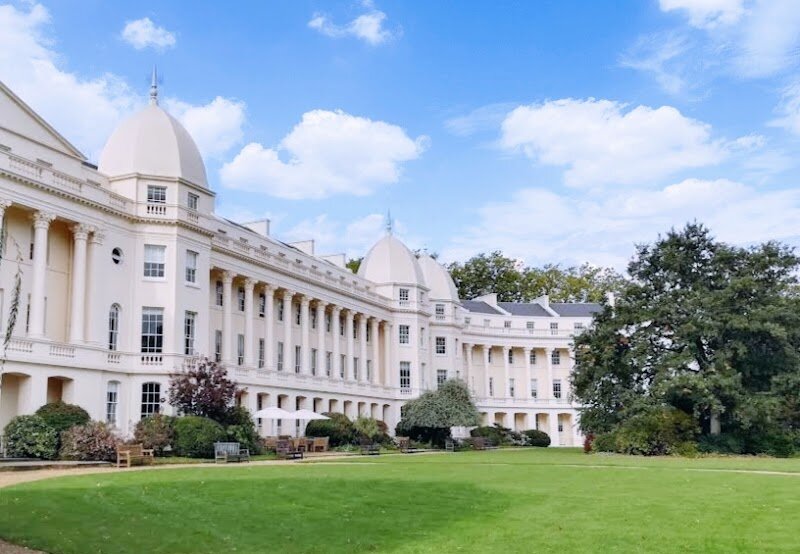
This fancy building is completely backwards - it was built as 26 separate houses in 1823 but now it's one giant business school! Look up at that roofline and count those ten pointy cupolas sticking up like golden crowns - architect John Nash designed them to make each house look super important. The whole front is covered in massive Corinthian columns that are taller than three giraffes stacked up! Here's the really wild part - you're standing where King Henry the Eighth used to chase deer through a thick forest over 500 years ago, but now future business leaders study where nobles once lived. William Crockford, who ran London's fanciest gambling club, lived right here at number 26 in the 1840s - imagine the secret deals made in these rooms! This Grade One listed treasure proves that sometimes the best schools hide inside the most beautiful old houses.

museum

Madame Tussauds London

Step into the world of **Madame Tussauds London**, where history, celebrity, and artistry come together in a truly unforgettable experience. Founded in 1835 by Marie Tussaud—an extraordinary French sculptor whose waxworks first captivated audiences over two centuries ago—this iconic museum has evolved from its mysterious origins, including the famed *Chamber of Horrors*, into a dazzling showcase beloved by families and travelers alike. What makes Madame Tussauds special is its unique blend of past and present. Wander through immersive zones featuring more than 300 lifelike wax figures—from historical royalty and world leaders to global superstars, movie icons, and sporting legends. Capture the thrill of standing beside your favorite celebrities, greet the British royal family, or snap a selfie with cultural icons. The interactive exhibits invite visitors of all ages to step into scenes from blockbuster films, take part in music performances, and even relive pivotal moments in history. With its rich heritage and ever-evolving galleries, Madame Tussauds London offers a playful, educational adventure where curiosity meets creativity—making it a must-see for anyone seeking the magic behind the faces that shaped our world.

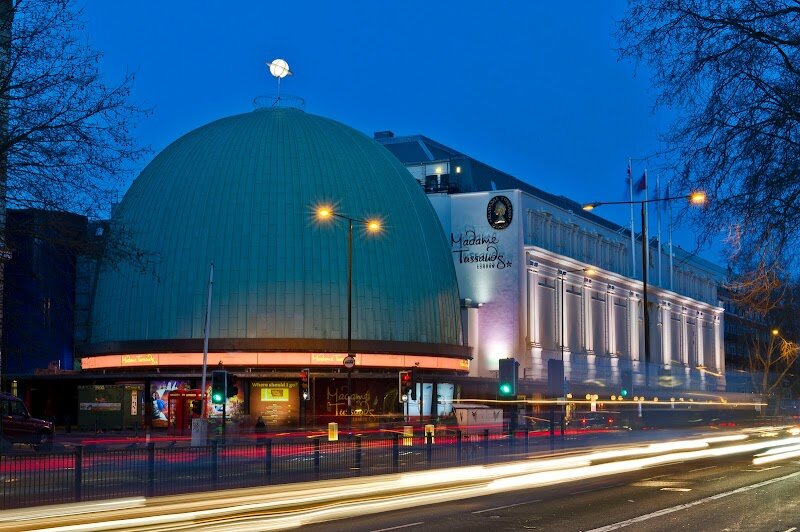
Workers are still discovering secrets embedded in these Marylebone Road walls, nearly 150 years after Marie Tussaud's grandson first laid the foundation stones in 1883. Standing before this Victorian masterpiece, you're looking at what began as Europe's most macabre entertainment venue, where the Chamber of Horrors first advertised its gruesome delights in 1843. That distinctive dome looming to your left? It housed the London Planetarium until 2006, when Madame Tussauds absorbed it entirely, creating one of the world's most unusual architectural marriages between waxworks and astronomy. The original building's red brick facade conceals a fascinating truth - this site replaced Marie Tussaud's cramped Baker Street quarters, where she'd been trapped since 1835, unable to return to France because of the Napoleonic Wars raging across Europe. As you step inside, you'll enter galleries that opened on July 14, 1884 - the same date as Bastille Day, a fitting coincidence for a woman who'd sculpted death masks of French Revolution victims. The interior soars with Victorian confidence, its halls designed to accommodate the massive crowds that made this London's first true blockbuster attraction, drawing more visitors than any museum of its era. What most guests never realize is that beneath your feet lie the foundations of what became Britain's first entertainment corporation - Madame Tussaud & Sons incorporated in 1889, pioneering the business model that would eventually span four continents.

landmark

Bomber Command Memorial

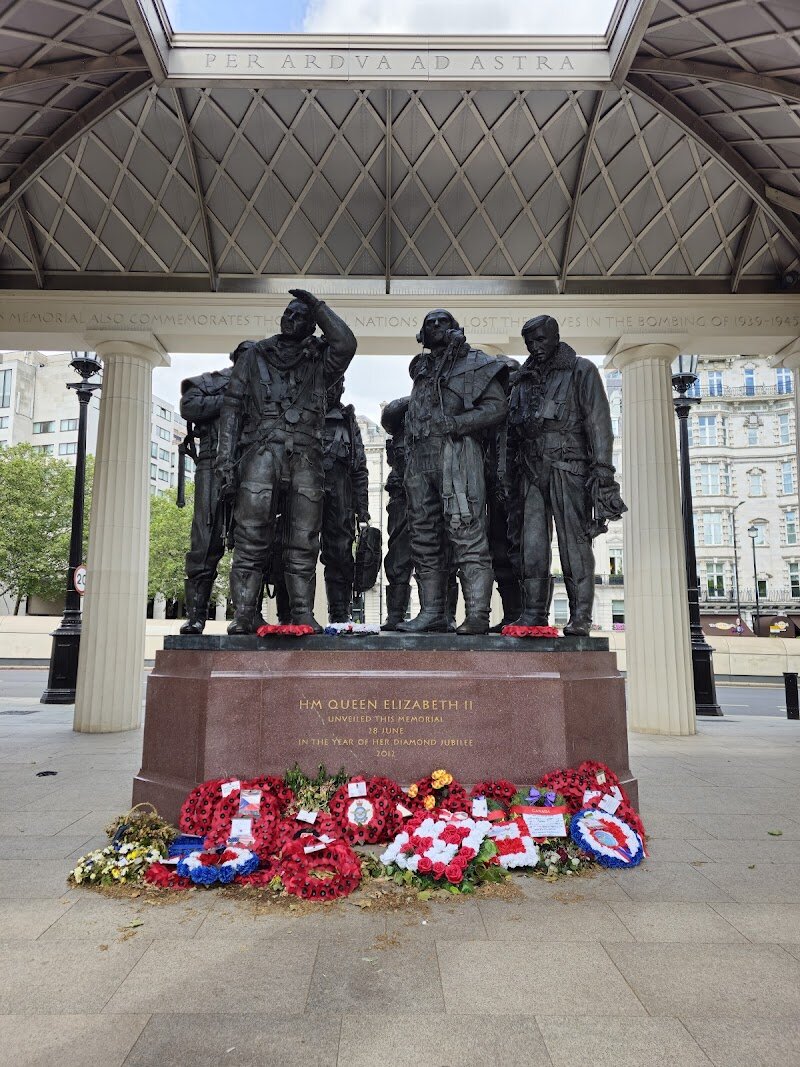
The **Bomber Command Memorial** in London’s Green Park is a moving tribute that brings history to life for visitors of all ages. Unveiled by Her Majesty The Queen in 2012, this powerful monument honors the 55,573 aircrew from the United Kingdom, Commonwealth, and other Allied nations who lost their lives serving in RAF Bomber Command during World War II. What makes this memorial truly special is its striking design: at its heart stand seven bronze statues, representing a bomber crew frozen in a moment of reflection and courage. Above them, the open roof lets daylight stream in, symbolizing the endless sky these young men once flew through. Look up and you’ll see the roof incorporates aluminum from an actual WWII Halifax bomber, connecting the monument to real stories of bravery and sacrifice. For families and curious travelers, the memorial offers a chance to pause and reflect on the extraordinary challenges faced by ordinary people, and to share in a story that shaped the world. Whether you’re drawn by the poignant sculptures, the evocative atmosphere, or the rich historical context, a visit here is both an educational journey and a heartfelt tribute to the past.

Sunlight streams through the roof above you right NOW, landing exactly where seven bronze airmen stand forever frozen in time! This incredible memorial in Green Park wasn't built until 2012 - making it the LAST group of World War Two heroes to finally get honored, even though Bomber Command airmen had the most dangerous job of all! Look up and you'll see something mind-blowing... actual pieces of aluminum from a real Halifax bomber that crashed in Belgium are built RIGHT into that roof above your head. These brave pilots were just 22 years old - not much older than teenagers - when Queen Elizabeth herself unveiled this memorial. Can you spot all seven crew members? Each bronze figure is nine feet tall!

landmark

Alexandra Palace

Perched atop a hill with sweeping views of London, **Alexandra Palace**—fondly known as "Ally Pally"—is a vibrant blend of history, entertainment, and natural beauty that has been enchanting visitors for over 150 years. Originally opened in 1873 as the “Palace of the People,” it was envisioned as a grand space for recreation, education, and spectacle, and quickly became a beloved community landmark. After a dramatic fire just weeks after its debut, the palace was rebuilt and reopened in 1875, symbolizing the resilience and spirit of Londoners. Families and curious travelers will find endless delights here, from exploring lush parklands and boating lakes to catching live music, theatre, and art exhibitions in the palace’s ornate halls. The site’s storied past includes hosting the first-ever women’s football match in England and serving as a sanctuary during times of war, making every visit a journey through living history. Whether you’re enjoying panoramic city views, discovering interactive exhibits, or simply picnicking in the gardens, Alexandra Palace offers a unique day out where heritage meets adventure and every generation can find something to inspire.

Fifteen million bricks... that's what it took to rebuild this place after it burned down just sixteen days after opening in 1873. Standing here at Alexandra Palace on Muswell Hill, you're looking at North London's answer to Crystal Palace, though this one's got way more drama in its story. This Italian-style brick fortress replaced farmland on one of London's highest ridges, and those four corner towers you see? They're not decorative - each one holds 16,000 gallons of water, built after that devastating fire to make sure it never happened again. The original theatre inside could pack in 10,000 people, making it one of the largest in Victorian London. But here's what really puts Ally Pally on the map - in the 1930s, that unassuming room up there became the world's first television studio. The BBC broadcast the very first TV programs from this building, making television history right here in North London. And if you think that's wild, wait until you hear about the Japanese village they built in the grounds back in 1875, complete with authentic buildings shipped from Vienna. Today, the ice rink downstairs runs 364 days a year - one of the hardest working rinks on the planet. Not bad for a place that was literally called the "Palace of the People."

museum

Tate Britain

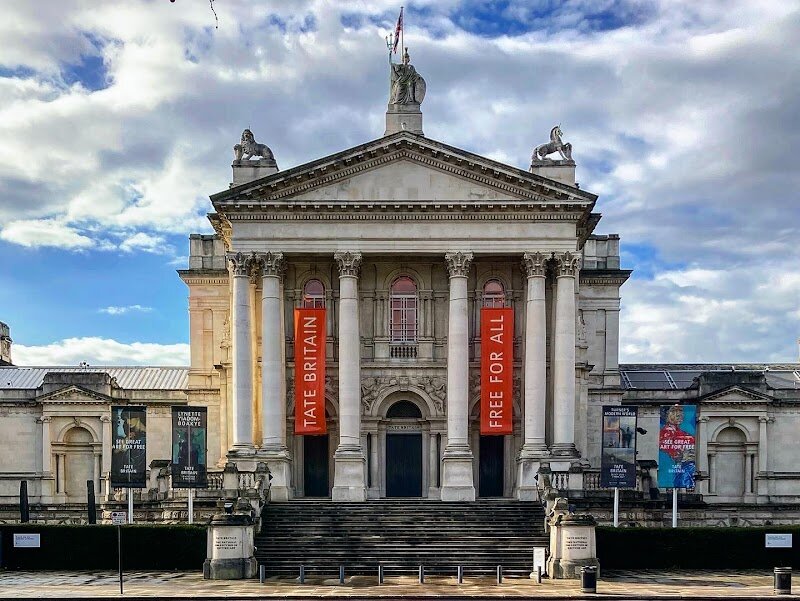
Tate Britain, nestled on the banks of the Thames in Millbank, is a treasure trove of British art and a captivating destination for families and curious travelers alike. Founded in 1897 thanks to the vision and generosity of sugar magnate Henry Tate, this historic gallery showcases the nation’s artistic journey from the 1500s to today, making it one of the oldest and most distinguished museums in London. Stepping inside, visitors are greeted by masterpieces that trace centuries of creativity—from dramatic Tudor portraits to vivid Pre-Raphaelite scenes and cutting-edge contemporary works. Tate Britain’s collection is unrivaled, offering highlights such as John Everett Millais’ *Ophelia* and J.W. Waterhouse’s *The Lady of Shalott*, as well as ever-changing exhibitions that spark imagination in all ages. Families can explore interactive displays and storytelling sessions designed to inspire young minds, while art lovers will find plenty to intrigue and delight in the gallery’s rich tapestry of styles and stories. Whether you’re discovering Britain’s artistic heritage for the first time or returning to enjoy a new exhibition, Tate Britain promises a vibrant, engaging experience at the heart of London’s cultural scene.

Every morning at precisely 9 AM, the heavy doors of Tate Britain swing open above the buried bones of Britain's most notorious criminals... You're standing on the exact site of Millbank Prison, where thousands of convicts awaited transportation to Australia until 1890. Sir Henry Tate, the sugar magnate, chose this haunted ground deliberately in 1893 — he believed art could transform even the darkest places. When these classical doors opened on July 21st, 1897, they revealed something extraordinary: the world's largest collection of Turner's work, nearly 300 oil paintings and 30,000 sketches hidden away in his studio until his death. Walk through Sidney Smith's grand portico and you'll enter the Clore Gallery, where architect James Stirling played an architectural trick — each wall deliberately mimics the building beside it, creating a chameleon effect most visitors never notice. Turner's final unfinished masterpiece, Norham Castle, Sunrise, hangs here... still wet with morning light he painted but never lived to complete. In these halls, prisoners' chains became brushstrokes, and darkness transformed into Britain's most luminous artistic legacy.

museum

Churchill War Rooms

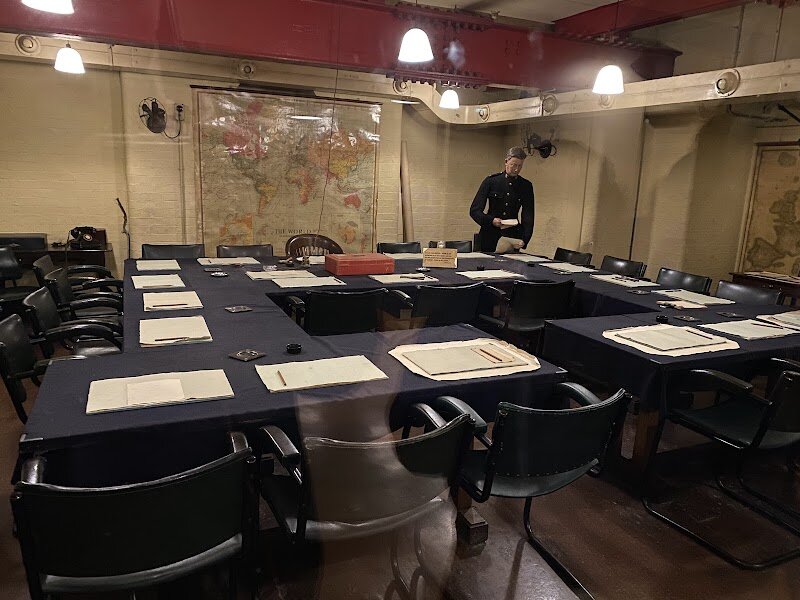
Hidden beneath Westminster’s busy streets, the **Churchill War Rooms** offer a captivating journey into the heart of Britain’s World War II history. This underground maze was once the top-secret headquarters where Winston Churchill and his team made critical decisions that shaped the course of the war. Families and curious travelers alike can step into the preserved rooms where the government worked around the clock, experiencing the tense atmosphere and ingenious wartime adaptations—like the silent phones and noiseless typewriters designed to minimize distractions. Kids and adults can marvel at the iconic **Map Room**, still covered in pinholes from tracking convoys and battles, and explore the interactive Churchill Museum, which brings Churchill’s life and leadership to vivid life. The War Rooms’ concrete-reinforced walls, chosen for their protection against bombing raids, still echo with the urgency of history. Visitors can wander through corridors left almost untouched since 1945, discovering stories of strategy, resilience, and innovation. For anyone fascinated by secret bunkers, wartime intrigue, or the extraordinary character of Churchill himself, the Churchill War Rooms promise an unforgettable adventure into London’s past.

115 cabinet meetings took place in these very rooms beneath your feet during World War Two, making this basement complex under King Charles Street one of the most consequential underground locations in modern history. What looks like an ordinary government building entrance above you actually conceals Churchill's secret wartime headquarters, where he and his cabinet literally lived underground for months at a time. You're standing above what was once the New Public Offices building, hastily converted in 1938 when planners realized London would face devastating bombing. The genius was hiding in plain sight... nobody suspected the most crucial decisions of the war were being made directly beneath the Treasury building's steel frame structure. As you descend, you'll walk through rooms frozen in time since August 16th, 1945, when the lights were switched off for the first time in six years. That three-meter-thick concrete slab installed above these rooms in December 1940... it could only withstand a 500-pound bomb, so secrecy was their real protection. Five hundred people worked down here at the height of the war, including Churchill's cook who moved underground only after her kitchen at Number 10 got bombed. The most incredible secret? What everyone thought was Churchill's private toilet actually housed an encrypted telephone connecting him directly to American presidents Roosevelt and Truman. The technology was so advanced, voices were wrapped in white noise that only special receivers could decode. These rooms remained untouched for nearly forty years until they opened as a museum in 1984, preserving the exact moment when victory was finally declared and the underground war machine could rest.

museum

The National Gallery

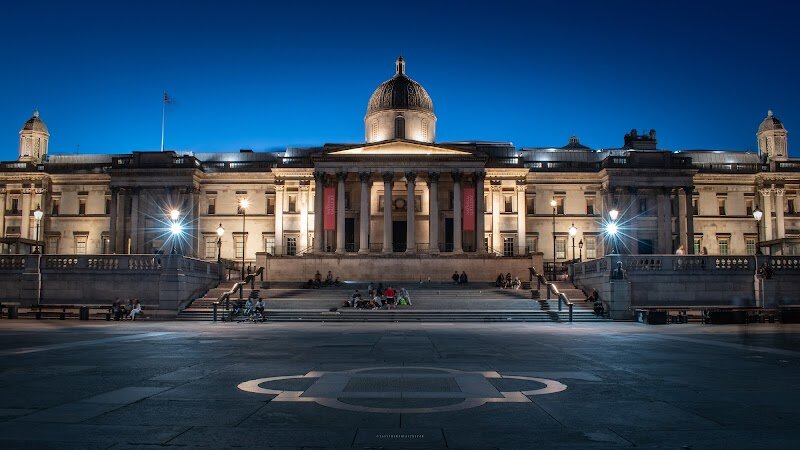
The National Gallery in London is a treasure trove of artistic masterpieces, inviting families and curious travelers to embark on a journey through centuries of creativity and culture. Located in the heart of Trafalgar Square, the Gallery stands as a symbol of public accessibility, having opened its doors in 1824 with a mission to make world-class art available to everyone. Unlike many European museums, its collection was built specifically for the public, not from royal holdings, making it a truly national institution. Step inside and you’ll discover over 2,300 paintings, spanning from the mid-13th century to 1900, including iconic works by Leonardo da Vinci, Van Gogh, Monet, and Botticelli. Families can marvel at vibrant Renaissance scenes, explore the drama of Dutch landscapes, or be captivated by the light-filled Impressionist masterpieces. The Gallery’s layout encourages exploration, with inviting spaces and interactive exhibits that spark curiosity in visitors of all ages. Whether you’re an art aficionado or discovering painting for the first time, the National Gallery offers an inspiring experience where history, imagination, and beauty converge—all in a setting designed for everyone to enjoy.

460 feet of frustration, that's what architect William Wilkins faced when he designed this building back in 1832. See, he could only make it one room deep because there was literally a workhouse and military barracks crammed right behind where we're standing! Those two side porticoes you're looking at? They're actually public walkways that HAD to stay open - imagine trying to design around that constraint. Here's the kicker though - those gorgeous columns holding up the entrance? They're recycled from Carlton House, King George IV's demolished palace. And those sculptures decorating the facade were originally meant for Marble Arch but got dumped here instead when Nash ran out of money. The whole building had to be shoved back 50 feet just so people could still see St Martin-in-the-Fields church from Pall Mall. Inside, over 2,000 masterpieces wait in those top-lit galleries, including the world's most visited Van Gogh Sunflowers - and it's all completely free.

museum

Grant Museum of Zoology

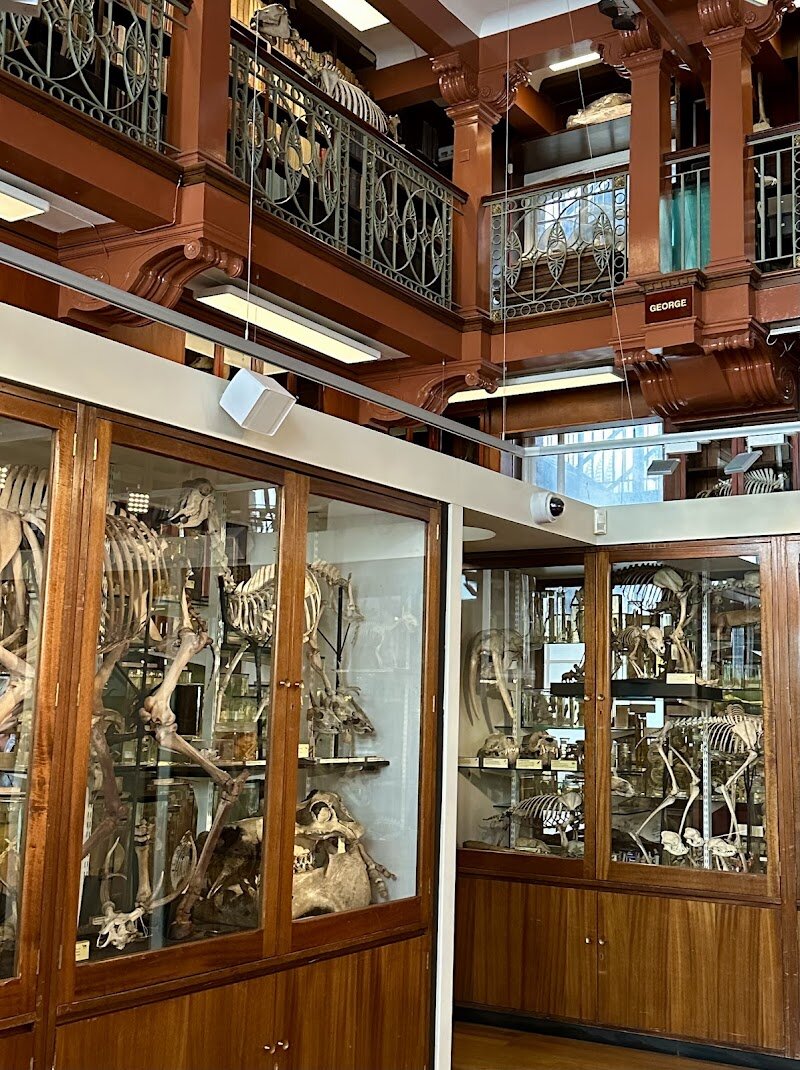
Step into a world of wonder at the **Grant Museum of Zoology**, London’s last remaining university zoological museum and a true hidden gem for families and curious travelers. Founded in 1828 by the pioneering Robert Edmond Grant—England’s first professor of zoology—the museum began as a teaching collection and still radiates the charm of a Victorian cabinet of curiosities. Visitors are greeted by rows of wooden and glass cases, brimming with over 68,000 specimens, from the skeleton of the extinct quagga (one of only seven in existence) to the mysterious Tasmanian tiger and even a collection of brains and bisected heads. More than a treasure trove of natural oddities, the museum offers thought-provoking exhibits that explore the connections between science, history, and Britain’s colonial past. Interactive displays and themed family trails invite hands-on learning, sparking conversations about biodiversity, extinction, and humanity’s impact on the natural world. Whether you’re marveling at rare creatures or diving into stories of empire and discovery, the Grant Museum promises an experience both fascinating and unforgettable—perfect for adventurous minds of all ages.

That glass case on your right holds one of the world's seven remaining quagga skeletons... the very last of a South African zebra species that vanished in 1883. You're standing in London's final university natural history museum, tucked inside what was once UCL's medical school library in the Rockefeller Building on University Street. The Victorian wooden cases around you tell an incredible story that started in 1828 when Robert Edmond Grant, Charles Darwin's former teacher, created this collection as England's first zoology teaching museum. For 168 years, only students could peek at these 68,000 specimens crammed into every drawer and cabinet. The public didn't get inside until 1996. Look closely at those jellyfish models... they're actually handcrafted glass from the famous Blaschka workshop, so delicate they seem to float in their cases. Darwin himself might have studied specimens just like these when Grant was shaping his revolutionary thinking about evolution.

landmark

Highgate Cemetery

Highgate Cemetery is one of London’s most enchanting and atmospheric destinations, inviting families and curious travelers to step into a world where history and nature intertwine. Opened in 1839 as part of the city’s “Magnificent Seven” cemeteries, Highgate was created to address the overcrowding of inner-city churchyards, quickly becoming a fashionable resting place for Victorian London’s elite. Wandering its winding paths, visitors are surrounded by a stunning tapestry of Gothic tombs, Egyptian-style mausoleums, and wild, untamed greenery, making every visit feel like an adventure through a secret garden. The cemetery is the final resting place of remarkable figures such as Karl Marx, George Eliot, and George Michael, offering a unique glimpse into Britain’s cultural heritage. Children and adults alike will be captivated by the stories etched in weathered stone and the wildlife that flourishes among the graves, from foxes to songbirds. Whether you’re exploring for the history, the famous residents, or the sheer beauty of the landscape, Highgate Cemetery promises a memorable and thought-provoking experience for all ages.

This cemetery is completely backwards! Karl Marx's grave has been moved... twice! The revolutionary thinker who wanted to change the world started in a tiny plot 100 meters north of here, then in 1956 got this massive bronze head monument that's THREE TIMES bigger than a basketball! Even weirder, 6,000 people once marched from central London to visit his grave in 1884 but got turned away by scared police who locked the gates. The first person ever buried here in 1839 was Elizabeth Jackson from Soho - imagine being the very first guest at this Victorian party that's still going strong!

museum

The Old Operating Theatre Museum and Herb Garret

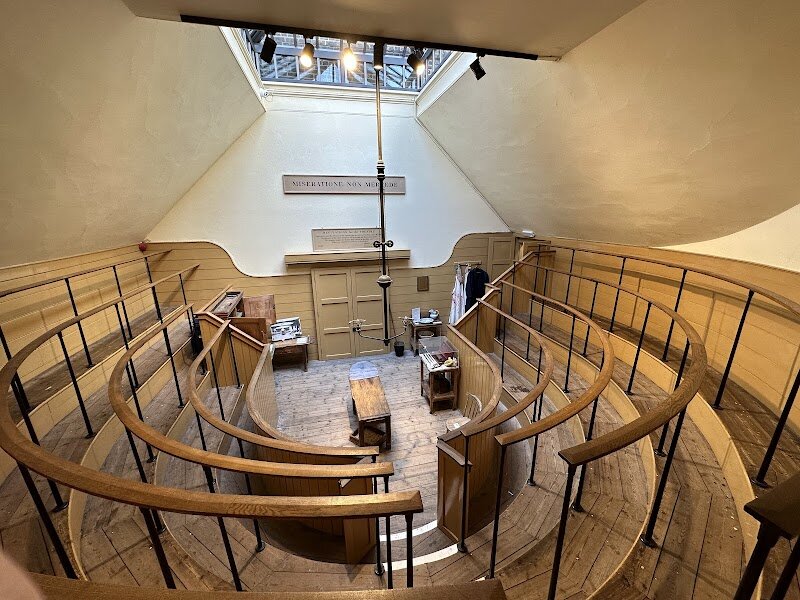
Step inside the attic of an old London church and uncover the secrets of **Europe’s oldest surviving operating theatre**, where the drama of Victorian surgery once played out before crowds of eager medical students. The Old Operating Theatre Museum and Herb Garret is a one-of-a-kind destination that brings history to life in the most vivid—and sometimes chilling—way. Here, families and curious travelers can explore the very room where, from 1822, surgeons performed astonishing operations without the benefit of anesthesia or antiseptics, relying on speed and skill as sunlight streamed through the original skylight. Wander through the **Herb Garret**, the hospital’s former pharmacy, where the air once hung heavy with the scent of drying medicinal plants, and discover cabinets filled with quirky medical instruments, prosthetics, and centuries-old remedies. Engaging talks and interactive demonstrations let visitors of all ages imagine the challenges and triumphs of early medicine—an experience that’s both educational and unforgettable. Hidden for nearly a century and rediscovered in the 1950s, this atmospheric museum offers a fascinating glimpse into the world of healing and human resilience, making it a must-see for anyone seeking London’s most intriguing stories.

Sawdust mixed with blood once carpeted these wooden floors... layers upon layers of it, congealed into a grim testament that renovation workers had to slice through with cement cutters when this space was rediscovered in 1956. You're standing beneath the timber-framed roof of St Thomas' Church, built in 1703, where Europe's oldest surviving operating theatre hides in the garret above your head. This isn't just any old church attic. In 1822, hospital governors carved out a women's operating theatre up there, complete with tiered wooden benches where medical students watched surgeries performed without anesthesia or antiseptics. The rope marks you can still see on these ancient beams once held bundles of drying herbs, opium poppies among them, when this served as the hospital's apothecary. Florence Nightingale herself walked through this very building in 1859, establishing her legendary nursing school right here on St Thomas Street. When the hospital moved to Lambeth in 1862, workers simply boarded up the theatre's entrances... and forgot about it for ninety-five years. Raymond Russell, researching hospital history, stumbled upon this blood-soaked time capsule that would become one of London's most haunting museums.

building

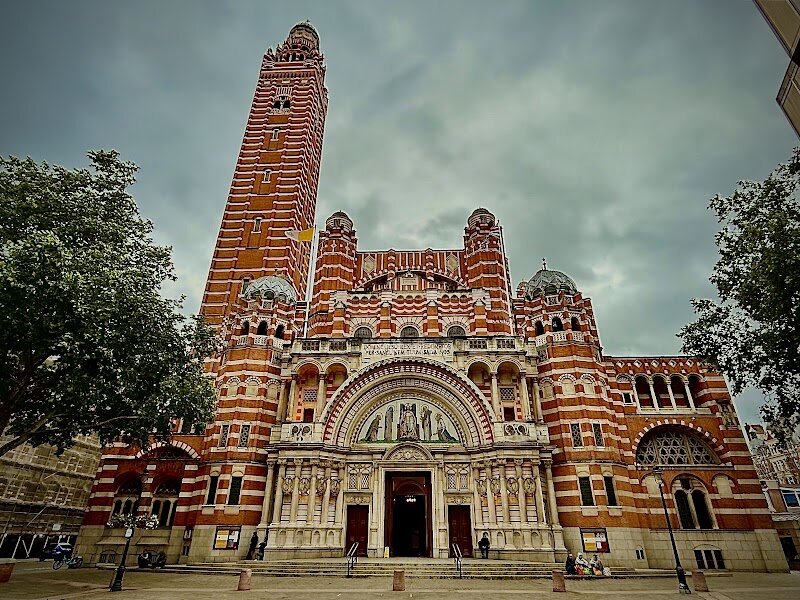
Westminster Cathedral

Step inside **Westminster Cathedral** and discover one of London’s most striking and unexpected landmarks—a dazzling blend of history, artistry, and spiritual grandeur. Unlike its Gothic neighbor, Westminster Abbey, this cathedral stuns visitors with its bold **Byzantine Revival architecture**: soaring domes, striped red-brick and Portland stone exteriors, and an interior that glows with intricate mosaics and marble inspired by ancient churches of Italy and Byzantium. Completed in 1903, Westminster Cathedral was dreamed into existence by architect John Francis Bentley and Cardinal Herbert Vaughan, who sought to create a statement of faith that was both modern and timeless. Their vision resulted in a vast, open nave and a captivating array of side chapels, each with its own colorful story and design. For families and curious travelers, the cathedral offers a feast for the senses—wander beneath its cavernous domes, marvel at the shimmering mosaics, and experience the peaceful hush that invites reflection. Beyond its architectural wonder, the cathedral is alive with music, including renowned choral performances that fill the space with awe. Whether you’re drawn by faith, history, or beauty, Westminster Cathedral promises a memorable journey into the heart of London’s cultural and spiritual heritage.

Twelve and a half million handmade bricks... that's what it took to build this towering Byzantine marvel between 1895 and 1903, each one shaped by hand in an age when machines were taking over the world. As you gaze up at Westminster Cathedral's distinctive red brick and white Portland stone stripes stretching along Victoria Street, you're looking at Cardinal Herbert Vaughan's brilliant act of architectural defiance... he deliberately chose this exotic Byzantine style to avoid competing with his Gothic neighbor, Westminster Abbey, just down the road. John Francis Bentley, the architect, had never even visited the Byzantine monuments that inspired this design when he first drew up the plans. Yet he created something extraordinary... a building that soars 284 feet into the London sky through its campanile, Saint Edward's Tower, making it one of the tallest structures in Westminster. Those striped walls you see were copied from the candy-stripe mansion flats that already lined Ambrosden Avenue, proving even grand cathedrals can borrow from their neighbors. Step inside and you'll discover the cathedral's beautiful secret... it's deliberately unfinished. Bentley designed those soaring brick vaults to eventually gleam with marble and mosaics from 120 different varieties spanning five continents, but the bare brickwork creates what one critic called "primeval grandeur." The nave stretches 109 feet high... exactly four feet taller than Westminster Abbey's... because sometimes even cardinals enjoy a little friendly competition.

landmark

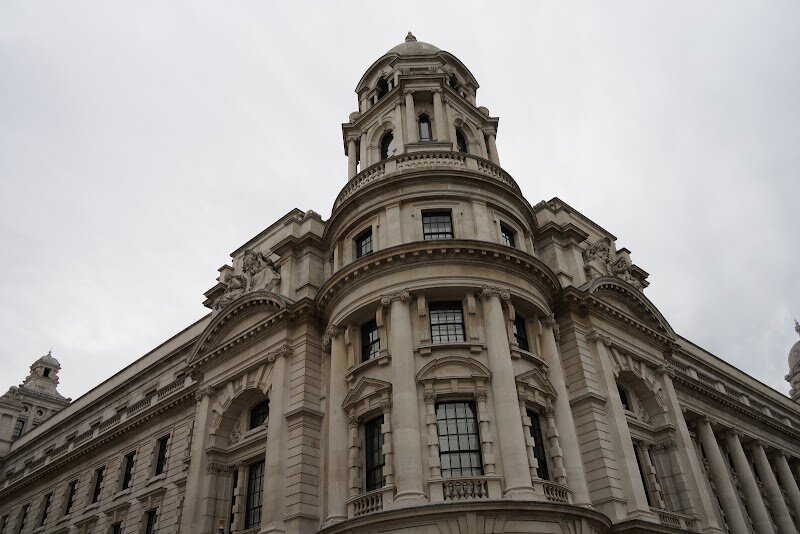
Old War Office Building

Step into the storied halls of the **Old War Office Building**, an iconic London landmark where the drama of history meets modern elegance. Originally completed in 1906, this grand neo-Baroque edifice was the nerve center for Britain’s military operations, orchestrating strategic decisions through two world wars and pivotal moments of the 20th century. Its imposing façade, crowned by four majestic domes and adorned with sculptures symbolizing Peace, War, Truth, and Victory, invites curious travelers and families to imagine the footsteps of generals, spies, and statesmen who once roamed its 1,100 rooms. Today, the building’s transformation into Raffles London at The OWO blends its historical gravitas with contemporary luxury, making it a must-see destination for those eager to connect with Britain’s past while enjoying world-class hospitality. Visitors can marvel at the intricate Edwardian architecture, explore grand corridors and richly detailed interiors, and soak in the atmosphere where the fate of nations was once decided. Whether you’re a history buff or simply seeking a memorable family experience, the Old War Office promises a journey through time in the very heart of London.

James Bond was invented right here! Ian Fleming worked as a spy in this massive 1,100-room building - that's like 20 schools stacked together! This trapezoid fortress disguised its weird shape with four fancy domes, and it's where Winston Churchill planned World War Two battles. Built in 1906 for over a million pounds - like spending a billion today! For 60 years, this Whitehall building was Britain's war headquarters. Now it's London's fanciest hotel!

museum

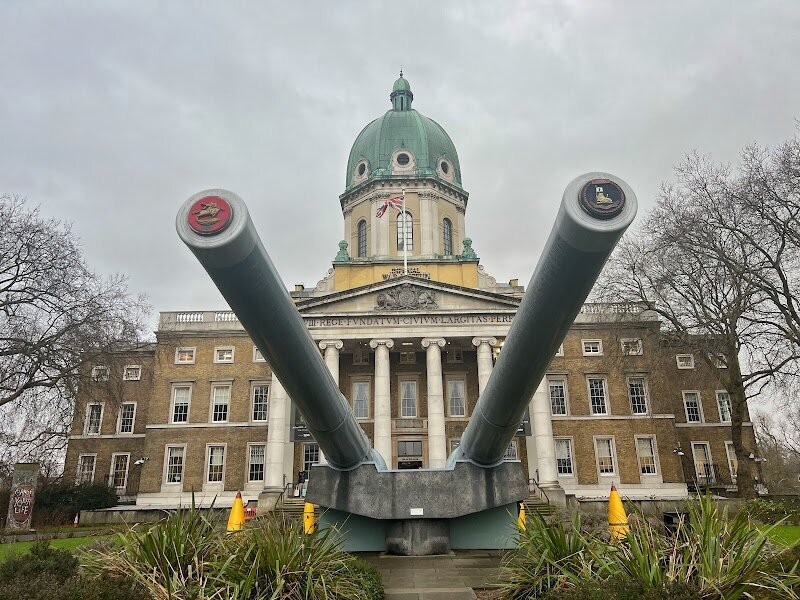
Imperial War Museum

Step into history at the Imperial War Museum in London, where the past comes alive through dramatic stories of courage, conflict, and resilience. Housed in a striking former hospital building crowned with a grand dome, this museum has been a national treasure since 1920, founded to honor the experiences and sacrifices of Britain and the Commonwealth in times of war. Today, its mission embraces all conflicts since 1914, making it a uniquely comprehensive window into modern wartime history. Families and curious travelers will be captivated from the moment they enter the soaring atrium, where iconic tanks, planes, and rockets hang overhead—sparking wonder in visitors of all ages. Explore immersive galleries that recreate the trenches of World War I, uncover the realities of life during the Blitz, and reflect on stories of protest, resilience, and hope. The museum’s powerful exhibits blend personal testimony, authentic artifacts, and interactive displays, ensuring every visit is both educational and deeply moving. Whether you’re a history buff or simply curious, the Imperial War Museum offers an unforgettable journey through the events that shaped our world, inviting visitors to connect with the past—and each other—in meaningful ways.

Fifteen inches wide - bigger than a large pizza - these massive naval guns guard the entrance like giant metal doormen! Look up in the Central Hall where real tanks and warplanes hang from the ceiling like the world's most incredible toy box. This building holds 33 million war artifacts - more items than people in all of Canada - making it Britain's ultimate military treasure chest. Can you spot the piece of the Berlin Wall or count the aircraft floating above like sleeping metal birds?

building

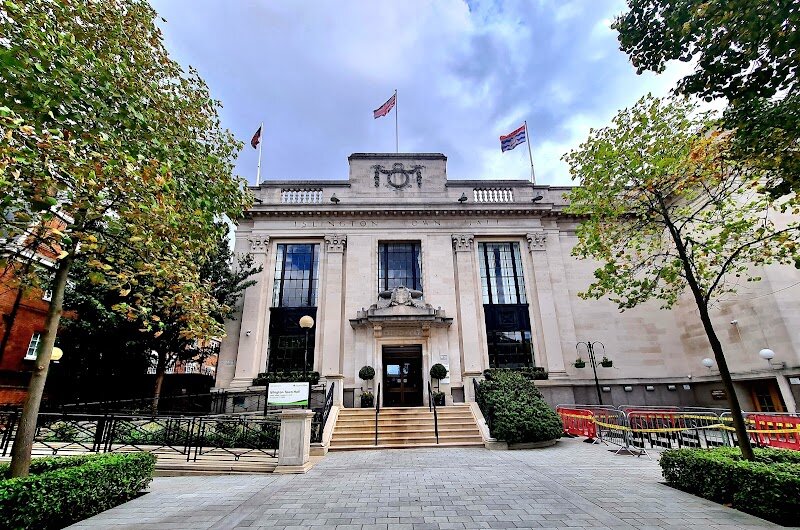
Islington Town Hall

Islington Town Hall is a striking landmark on Upper Street, blending the charm of English Baroque and Neoclassical styles in a way that’s both dignified and inviting. Built in the 1920s by architect E.C.P. Monson, this Grade II listed building stands out with its Portland stone façade, elegant portico, and a unique copper-clad clock turret—details that hint at its rich civic history. Stepping inside, visitors are greeted by opulent marble corridors, an imposing staircase, and lavishly decorated council chambers with carved oak paneling and plush red upholstery. Families and curious travelers will love exploring the grand interiors, which evoke the borough’s proud heritage and the spirit of local democracy. Islington Town Hall isn’t just about politics—it’s a living piece of history where community celebrations, weddings, and cultural events bring the halls to life. Children can marvel at the ornate ceilings, while adults appreciate the craftsmanship and stories embedded in its walls. Whether you’re a history buff, architecture lover, or just looking for a memorable stop in vibrant Islington, this town hall offers a fascinating glimpse into London’s civic past and present.

Beneath your feet right now, civil defense engineers are maintaining a secret nuclear bunker, carved into the earth during the height of the Cold War paranoia in the 1980s. This hidden fortress lies directly under Islington Town Hall, where you're standing at Upper Street in North London. Look up at this elegant Portland stone facade before you... those Corinthian pilasters and that striking coat of arms crown a building with an extraordinary construction story. Architect Edward Charles Philip Monson had to build this place in THREE separate phases between 1922 and 1929, because the political parties kept changing their minds about how grand it should be. The Conservative council that replaced Labour in 1922 nearly canceled the whole project. Step through those doors and you'll find Pevsner's famous "lavish marble imperial stair" leading to an octagonal council chamber. But here's what makes this place truly special... on March 15th, 1930, when Mayor Alderman William Manchester officially opened these halls, Arsenal celebrated their very first FA Cup victory right here. Twenty-three years later, Queen Elizabeth II herself walked these marble steps during her coronation year. You're standing where chess genius William Beverley once lived, the man who cracked the impossible "magic knight's tour" puzzle.

museum

Royal College of Physicians

Step into over 500 years of medical history at the **Royal College of Physicians in London**, the city’s oldest medical college, founded by royal charter from King Henry VIII in 1518. This remarkable institution was established to protect the public from unqualified practitioners and has shaped the standards of medicine in England ever since. Today, it continues its mission in a striking, Grade I-listed modernist building beside Regent’s Park—a destination in itself for architecture lovers. Families and curious travelers will find the College’s story both fascinating and accessible. Explore exhibits that reveal dramatic moments from the history of medicine, from the fight against quack doctors to breakthroughs in public health and the College’s role in founding the NHS. Marvel at treasures like rare medical instruments, centuries-old books, and the beautiful medicinal garden, which offers a tranquil retreat and a living link to the healing arts. Whether you’re interested in science, history, or simply discovering London’s hidden gems, the Royal College of Physicians invites you to uncover the people, ideas, and innovations that have transformed medicine—and continue to shape our world today.

The year is 1518, and King Henry VIII just signed a piece of paper that would save millions of lives... right here where you're standing became England's very first official medical school! This stunning building you see towering above you wasn't built until 1964 though - that's about as long as your grandparents have been alive times two! The famous architect Sir Denys Lasdun designed this concrete castle to look like a modern fortress, and it's so special it's called "Grade I listed" - that's like getting a gold star from the Queen herself! As you walk through those massive glass doors, you'll step into halls where doctors have been learning to heal people for over 500 YEARS - that's longer than America has even existed! Hidden in the basement is a secret medicinal garden with almost 1,000 different healing plants from around the world - it might be the most amazing plant treasure hunt in all of Britain! Look for William Harvey's actual wooden pointer that he used to show people how hearts pump blood for the very first time!

building

Kensington Town Hall

Kensington Town Hall in London is a striking blend of modern design and civic tradition, making it a fascinating destination for families and curious travelers alike. Designed by renowned architect Sir Basil Spence and completed in 1976, the building stands out with its bold, contemporary look—featuring long banded bronze-tinted windows and rich red Roman brickwork that harmonizes with its historic neighbors. Unlike traditional town halls, this one is laid out around a welcoming square courtyard, intended as a relaxed gathering place for locals and visitors. Stepping inside, you’ll find spaces designed not just for official council business but also for public events and community celebrations. Children and adults alike can marvel at the innovative architecture, where few right angles create surprising perspectives and playful shadows. Don’t miss the magnificent great hall and council chamber, both framed by dramatic brickwork, or the courtyard’s giant redwood planted in memory of Sir Winston Churchill—a unique touch that connects civic history with living heritage. Whether you’re exploring as a family or delving into local culture, Kensington Town Hall offers a window into the evolving story of London’s communities, all within a setting that’s as welcoming as it is architecturally intriguing.

This concrete fortress was cursed! The famous architect Sir Basil Spence died exactly 10 days before his Brutalist masterpiece was finished in 1976 - he never got to see Princess Anne officially open it. But here's the coolest secret: hidden in the inner courtyard grows a giant redwood tree that Winston Churchill's wife planted way back in 1967, before this building even existed! The whole thing cost 11.6 million pounds - that's like buying 2,320 fancy sports cars! Two grand old houses called Niddry Lodge and the Red House were knocked down to make room for this angular concrete giant. Can you spot that red tree towering above the brutal grey walls?

building

Waltham Forest College

Waltham Forest College, nestled in the vibrant heart of Walthamstow, is a place where history and community spirit come together to create a truly unique destination for families and curious travelers alike. Founded in 1938 as the South-West Essex Technical College and School of Art, the college's grand building quickly became a local landmark, drawing over 25,000 visitors to its very first open day. Its corridors echo with stories of resilience—during World War II, the college served as a vital naval base, training military personnel while continuing civilian education even during air raids and blackout conditions. Today, visitors can sense that legacy of adaptability and pride in every corner. The college buzzes with creative energy, offering not just academic achievement but a lively student culture and a rich tapestry of events and exhibitions that welcome the public. Exploring Waltham Forest College, you’ll discover fascinating wartime memorabilia, impressive architecture from the 1930s, and a warm community atmosphere that celebrates both its storied past and its ongoing role as a hub for learning and innovation. A visit here is more than a history lesson—it’s a chance to experience the enduring can-do spirit of east London.

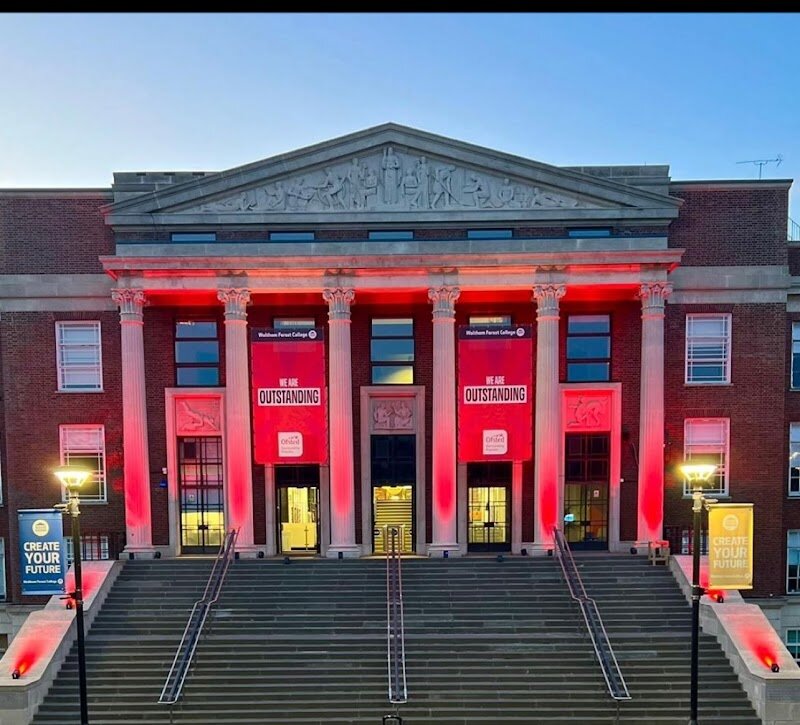
Twenty-two students walked through these doors on October 1st, 1939, when this building first opened as the South-West Essex Technical College and School of Art... but they had no idea they were entering what would soon become a secret naval training base. During World War Two, these very halls echoed with the marching boots of Auxiliary Territorial Service members from 1942, as young women prepared for military service alongside sailors and naval personnel who transformed this educational sanctuary into a wartime fortress. The grand Grosvenor House that once stood here went up in flames in 1945, taking with it decades of academic history... yet from those ashes rose something remarkable. This institution earned the extraordinary nickname "the people's university" because it championed inclusion when most colleges turned away working-class students. Standing here on Forest Road, you're looking at a building that defied every educational convention of its time. That imposing brick facade you see before you houses one of London's most successful transformation stories. Inside these walls, over twenty million pounds is currently reshaping the interior spaces where once naval officers planned wartime strategies. Today, seven thousand students pass through these corridors annually, making this one of London's largest further education providers... all because twenty-two brave students took a chance on an untested college eighty-six years ago.

museum

London Museum Docklands

Step into the Museum of London Docklands and uncover the extraordinary story of London’s river, port, and people—a tale stretching from Roman times to the city’s modern skyline. Housed in a beautifully preserved Georgian sugar warehouse beside the gleaming towers of Canary Wharf, this museum invites families and curious travelers to wander through immersive galleries and life-sized recreations of historic dockside streets. What makes this museum truly special is its unflinching look at the Docklands’ rich, yet complex, legacy. Once a bustling hub for global trade, these docks saw the arrival of exotic goods—and people—from every corner of the world, shaping London into a vibrant, multicultural metropolis. Yet, the exhibits also reveal the darker chapters of history, including the city’s pivotal role in the transatlantic slave trade, explored in powerful displays like “London, Sugar & Slavery”. Children can dive into hands-on adventures in the dedicated Mudlarks gallery, while all ages are transported back in time in “Sailortown,” a walk-through Victorian dockside neighborhood. With twelve galleries packed with artifacts, stories, and interactive experiences, the Museum of London Docklands is a hidden gem—offering eye-opening journeys for the whole family through the heart of London’s maritime past.

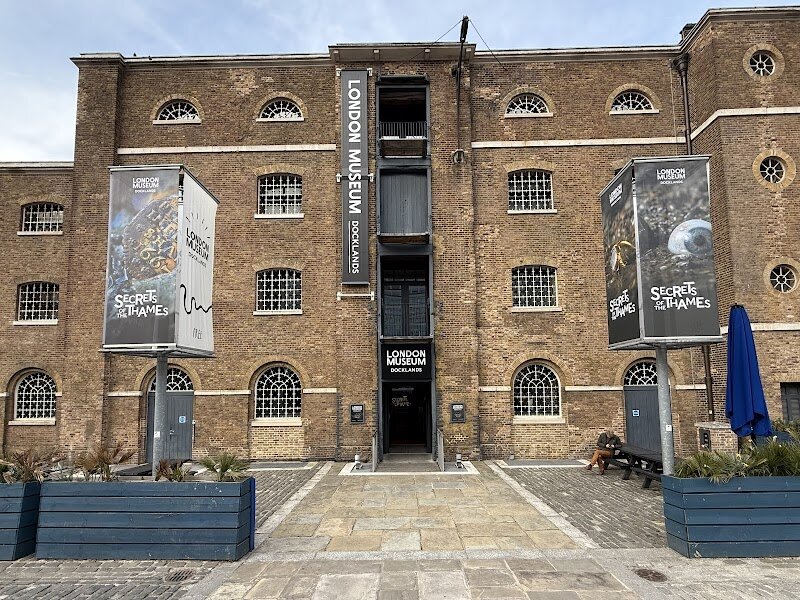
This warehouse held London's most dangerous treasure - sugar that would literally slice you apart! No 1 West India Warehouse stretched half a MILE in 1803, making it the longest brick building on Earth - longer than 25 school buses! The sugar stored in these massive Georgian walls was so sharp and gritty it cut dock workers so badly they named a nearby street Blood Alley. Today, as you explore West India Quay, you're standing where the British Empire's sweetest cargo once drew blood!

building

Southwark Cathedral

Southwark Cathedral is a captivating blend of ancient history and breathtaking architecture, nestled on the vibrant south bank of the Thames. With roots stretching back to 606 AD, it stands as one of London’s oldest places of worship, its foundations echoing centuries of faith, resilience, and transformation—from Roman pagan rituals to a medieval Augustinian priory, and later, a parish church deeply intertwined with the city’s story. Families and curious travelers will find much to explore here: wander beneath soaring Gothic arches and marvel at the intricate stained-glass windows, some commemorating figures like William Shakespeare, whose brother is buried within the cathedral. Discover hidden corners, spiral stone staircases, and tranquil chapels that invite quiet reflection, while the 13th-century retrochoir offers a glimpse into the cathedral’s earliest surviving architecture. Outside, the peaceful churchyard and herb garden provide a welcome retreat from the city’s bustle. Southwark Cathedral is more than a historic landmark—it’s a living space where the spiritual and the everyday meet, offering an enriching experience for visitors of all ages. Whether you’re drawn by its rich literary connections, its remarkable architecture, or the sense of serenity within its ancient walls, this hidden gem is an unforgettable stop in the heart of London.

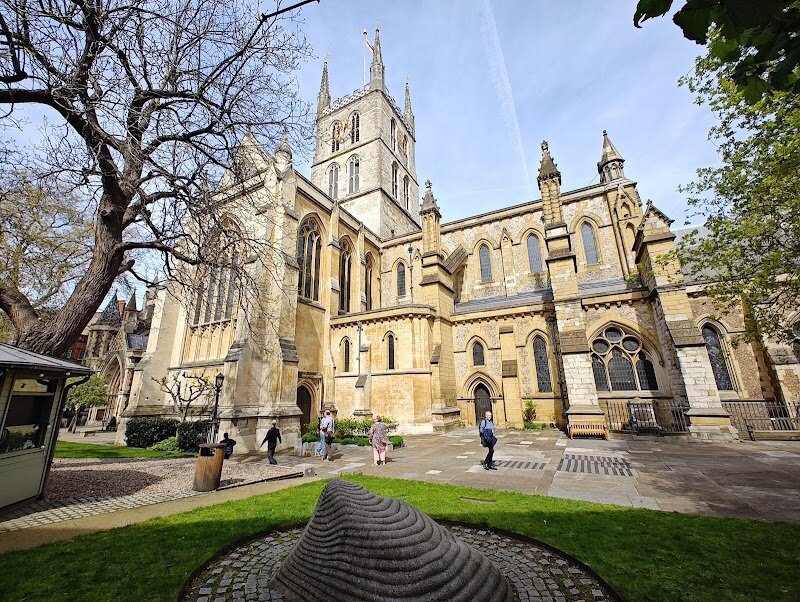
This sacred stone giant waited eight hundred years to become a cathedral... despite welcoming worshippers since AD 606, when Bishop Mellitus first planted a wooden monastery on this Thames-side plot. Standing before its Gothic facade, you're gazing at England's most patient church - it served God faithfully for nearly nine centuries before Parliament finally granted it cathedral status in 1905. As you step through these ancient doors near London Bridge, you'll discover the 13th-century retrochoir behind the altar - the oldest surviving fragment of stone that's witnessed kings, plague, and revolution. But here's what most visitors miss: that magnificent carved screen towering before you was erected in 1520 by Bishop Fox of Winchester, its three bands of intricate stonework hiding secrets in every corner. Look up at that soaring 160-foot tower - it's not just for show. Shakespeare's own acting company climbed those spiral stairs regularly, and today you'll find the Bard himself memorialized here in alabaster, forever watching over this place where his fellow players once prayed. The nave beneath your feet? Completely rebuilt in the 1800s, yet it perfectly mimics medieval craftsmanship... a Victorian love letter to Gothic glory that still echoes with a thousand years of whispered prayers.

building

Westminster Abbey

Westminster Abbey is a breathtaking treasure at the heart of London, where over a thousand years of British history come alive for visitors of all ages. This iconic Gothic masterpiece has been the stage for every royal coronation since 1066, making it the “House of Kings” and the final resting place for 17 monarchs, including Elizabeth I and Mary I. Families and curious travelers can wander through grand vaulted halls lined with hundreds of memorials, discovering the stories of kings, queens, poets like Chaucer and Tennyson, scientists, and national heroes. Children and adults alike will marvel at the ancient Coronation Chair, still used in ceremonies today, and the moving tomb of the Unknown Warrior—a place where world leaders pause to reflect. The Abbey’s stunning stained glass, soaring arches, and intricate sculptures offer a feast for the senses and a glimpse into the artistry of the Middle Ages. As you explore, you’ll feel the pulse of British tradition, from royal weddings to daily worship, in a place that remains a living part of the nation’s story. Westminster Abbey isn’t just a historic site—it’s an unforgettable journey through time, perfect for families and history lovers alike.

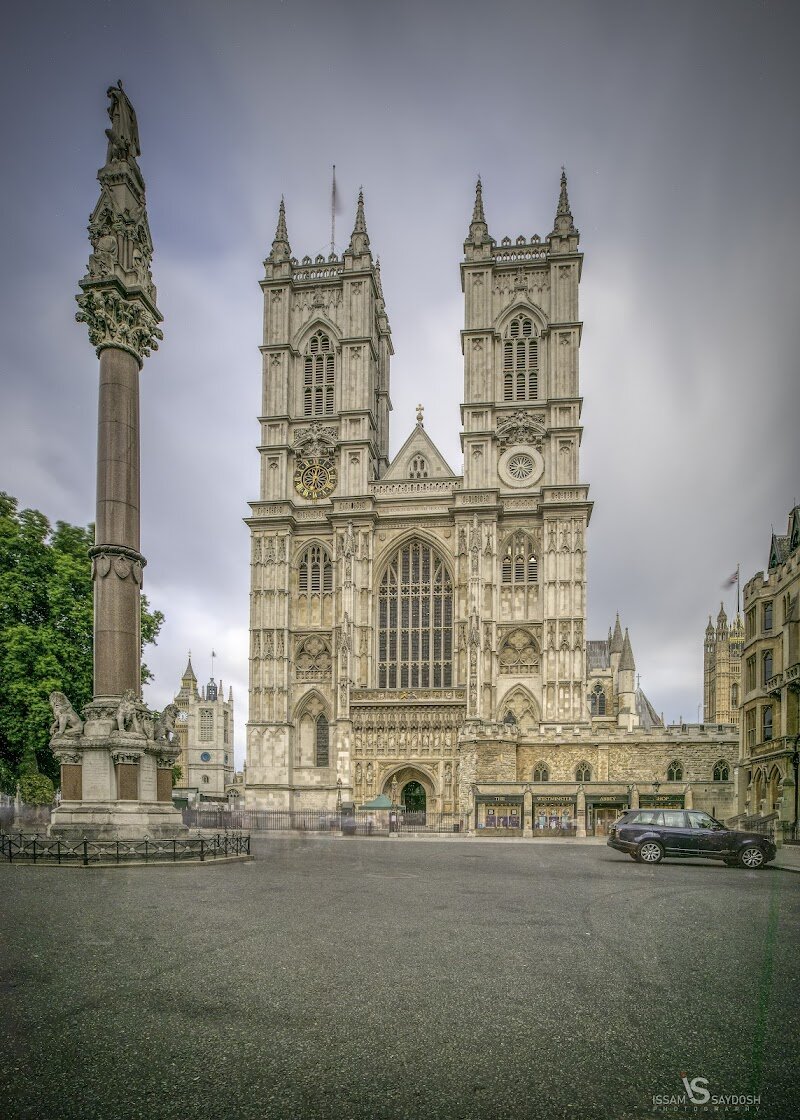
Forty monarchs have been crowned in this ancient stone church, but the very first coronation on Christmas Day 1066 went absolutely WRONG! When William the Conqueror was getting crowned, his Norman soldiers outside heard cheering and thought it was an attack, so they set fire to houses around Dean's Yard! The terrified king sat trembling on his throne while smoke poured through the massive doors. That chaotic day started a tradition lasting nearly a thousand years!

building

Holy Trinity Brompton

Holy Trinity Brompton (HTB) stands as one of London’s most vibrant and influential Anglican churches, nestled between the iconic museums of South Kensington and the chic boutiques of Knightsbridge. Founded in 1829 to serve a rapidly growing community, this Grade II listed building blends rich history with a dynamic present, offering a unique experience for families and curious travelers alike. HTB is world-renowned as the birthplace of the Alpha Course, a program that has introduced millions globally to the basics of the Christian faith. The church’s welcoming atmosphere is palpable, with lively worship services, community gatherings, and engaging children’s activities that make families feel right at home. Visitors can explore beautifully restored interiors, discover spaces for quiet reflection, or join in energetic Sunday services attended by thousands each week. What truly sets HTB apart is its spirit of innovation and community outreach. The church is a hub for creativity, hosting music events, thought-provoking talks, and initiatives that seek to transform society for the better. Whether you’re drawn by its architectural charm, curious about its spiritual legacy, or simply seeking a warm, inclusive community in the heart of London, HTB offers a memorable and uplifting experience for all.

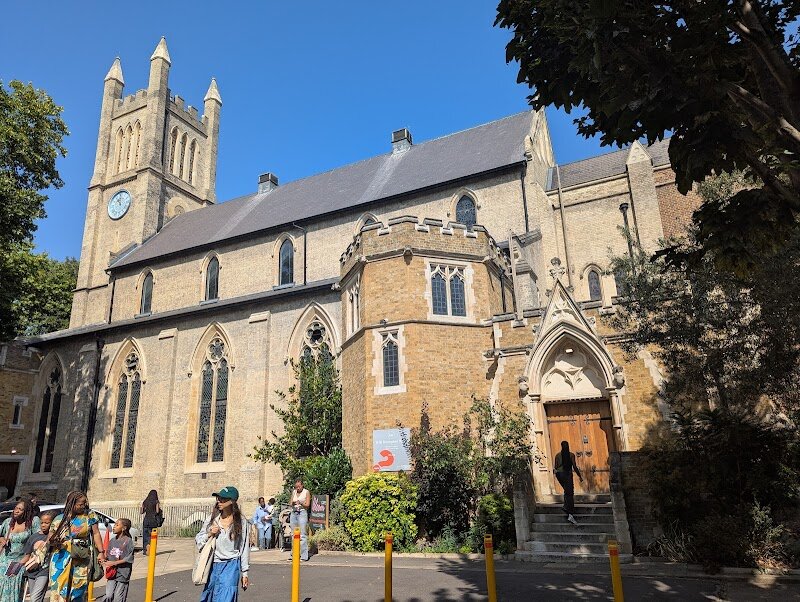
The year is 1852, and the Anglican vicars of Holy Trinity Brompton are doing something absolutely extraordinary... they're selling a portion of their own consecrated land to their Catholic neighbors to build what would become the magnificent Brompton Oratory right next door. This act of religious generosity created the long, peaceful driveway you see stretching from Brompton Road, effectively gifting this Grade II listed church its treasured tranquillity in the heart of bustling Knightsbridge. Standing before this Gothic Revival masterpiece, you're looking at architect Thomas Leverton Donaldson's £10,407 creation from 1829 - that's over a million pounds in today's money. The Church Building Commission funded most of it because this area was exploding with new residents in the 1820s, and the single parish church of Kensington simply couldn't cope. What makes this building truly unique is what happened inside during the 1980s - every single pew was ripped out and replaced with moveable chairs, making Holy Trinity Brompton one of the most flexible worship spaces in London. As you step through those doors, you'll discover the rebuilt crypt below houses not just meeting rooms, but one of London's most atmospheric church bookshops, where the scent of old books mingles with centuries of prayer.

building

The Old Marylebone Town Hall

The Old Marylebone Town Hall is a captivating London landmark where history and celebration meet in grand style. Built between 1914 and 1920, its majestic **Edwardian Graeco-Roman architecture**—complete with Portland stone façade, soaring Corinthian pillars, and a striking Wren-inspired tower—offers a picturesque setting that enchants visitors of all ages. Families and curious travelers will delight in exploring a building that has witnessed a century of local life, from council debates to countless weddings, including those of legendary figures like Paul McCartney and Ringo Starr. Step inside and you’ll find seven unique ceremony rooms, each named after a different London district, brimming with character and perfect for celebrating milestones. The grand staircase and ornate chambers provide unforgettable backdrops for photographs and storytelling, making every visit feel special. Whether you’re attending an event, marveling at its architectural splendor, or simply soaking up its vibrant atmosphere, the Old Marylebone Town Hall invites you to become part of its rich tapestry—a place where London’s past and present come together in joyful harmony.

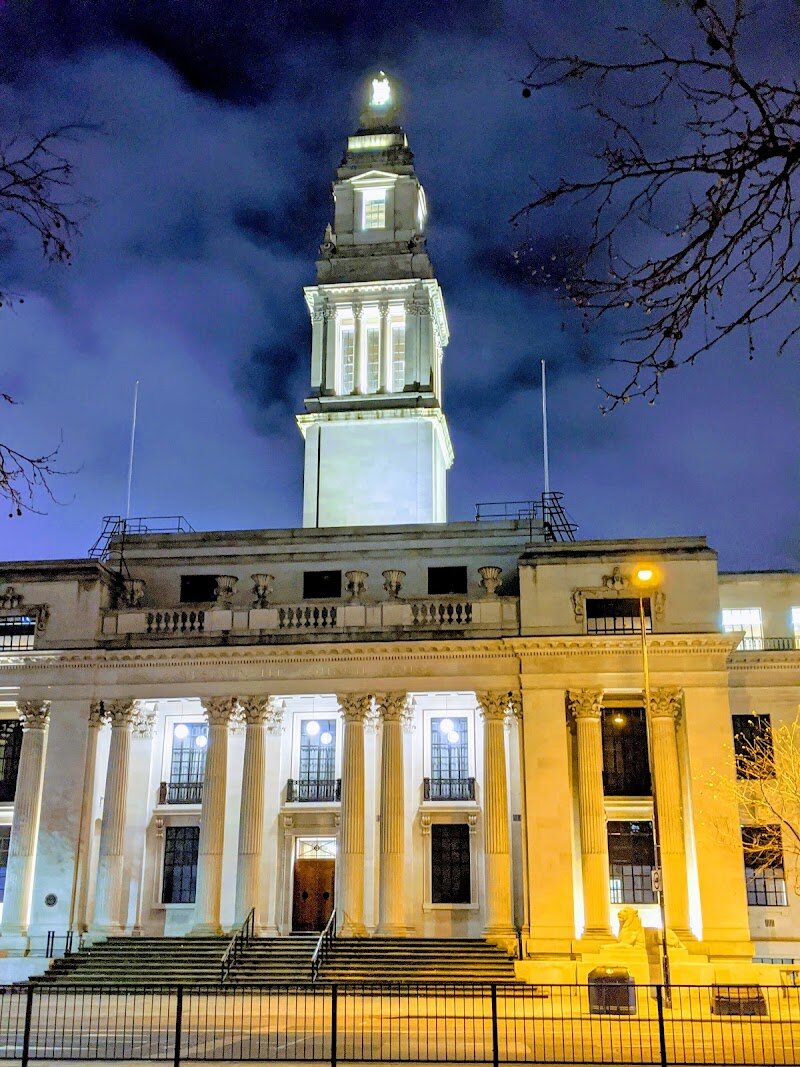
Those two magnificent stone lions guarding the entrance aren't just decorations - they've watched over 120,000 weddings since 1920! You're standing at Britain's most famous wedding venue, where TWO Beatles said "I do" - Paul McCartney got married here twice, and Ringo Starr too! This Edwardian palace took six whole years to build because World War One interrupted construction. Look up at that tower - it's designed like a Christopher Wren church spire, but it's hiding something amazing: there are secret figures carved into the ceilings inside! Can you spot them when you go in? This place has seen more "I do's" than any other building in London - that's like your entire school getting married every single day for 300 years straight!

building

Queen Mary University of London

Queen Mary University of London stands as a vibrant testament to academic excellence and social progress in the heart of East London. Founded on the rich legacies of four historic institutions dating back to 1785, including the famed St Bartholomew’s Hospital Medical College and Westfield College, Queen Mary weaves together centuries of history with a modern, welcoming spirit. Families and curious travelers will find themselves immersed in a dynamic campus atmosphere where Victorian architecture meets cutting-edge research facilities, such as the award-winning Blizard Building and the beautifully restored Octagon library, once the centerpiece of the original People’s Palace. Walking the grounds, visitors can sense the university’s enduring commitment to community, innovation, and inclusivity—a tradition rooted in its founding mission to improve lives through education and social justice. Explore leafy courtyards, bustling student villages, and inspiring exhibitions celebrating milestones in science, medicine, and the arts. Whether you’re tracing the footsteps of pioneering doctors or marveling at the blend of old and new, Queen Mary offers a unique window into London’s educational and cultural heritage, making it a memorable destination for all ages.

The year is 1931, and flames are devouring the Queen's Hall as students and locals watch their beloved People's Palace burn through the night of February 26th... but from those ashes rose something even more remarkable. You're standing before the Queens' Building, where Queen Victoria herself cut the ribbon on May 14th, 1887, launching an extraordinary experiment in bringing education to London's East End. Look at this red-brick Victorian facade designed by Edward Robert Robson - it was funded by a ghost. John Thomas Barber Beaumont died in 1840, but his will specifically left money to educate people near Beaumont Square, and 47 years later, his vision became reality. The Prince of Wales laid the foundation stone in June 1886, making this a truly royal project from the ground up. Step inside and you'll discover the crown jewel - the Octagon. This magnificent circular library stretches 23 metres across, inspired by the British Library's Reading Room, with two cast-iron galleries spiraling up three storeys to an elegant dome. As you crane your neck upward, you'll spot busts of eight literary giants - Shakespeare, Chaucer, Milton, Byron, and others - watching over readers like literary guardians. Here's what most visitors miss: on December 12th, 1934, Queen Mary herself presented the royal charter that transformed this fire-scarred building into Queen Mary College, making it the only university in London personally chartered by a reigning queen.

landmark

lastminute.com London Eye

The lastminute.com London Eye is a dazzling icon on London’s skyline, offering families and curious travelers a breathtaking new perspective on the city. Rising 135 meters above the South Bank of the Thames, this giant observation wheel—originally known as the Millennium Wheel—was conceived by architects David Marks and Julia Barfield as a celebration for the new millennium. Since its first rotation on New Year's Eve 1999, the London Eye has become the UK’s most popular paid attraction and a global symbol of British innovation and culture. Step into one of the 32 futuristic glass capsules and prepare for an unforgettable journey. As you gently ascend, panoramic views unfold: Big Ben, St Paul’s Cathedral, and the winding Thames—all framed by London’s vibrant cityscape. The experience is both peaceful and thrilling, inviting guests of all ages to spot landmarks, snap photos, and see London from an entirely new vantage point. Over 25 years, the London Eye has been the centerpiece of celebrations, lighting up for everything from New Year’s Eve fireworks to cultural events and royal occasions. It’s more than just a ride—it’s a place where history, architecture, and wonder come together for memories that last a lifetime.

Workers are still adjusting the massive tensioned cables beneath your feet... because even after 25 years, the London Eye continues to require constant engineering precision to support its revolutionary cantilevered design. Standing here at Riverside Building, County Hall, you're witnessing what was once considered impossible - a 135-meter observation wheel that appears to float above the Thames without traditional support columns. The drama began on December 31st, 1999, when Prime Minister Tony Blair ceremonially opened this marvel... but passengers had to wait another 69 days because of a catastrophic capsule clutch failure that engineers frantically worked to resolve. David Marks and Julia Barfield's audacious 1993 design had never been attempted at this scale - a cantilevered Ferris wheel that defied conventional engineering wisdom and cost over 175 million pounds to prove it could work. Here's what most visitors miss: those 32 sealed capsules you see rotating aren't just passenger compartments - they're precision-engineered pods that must maintain perfect level positioning through computerized gyroscopic systems, each weighing 10 tons when fully loaded. When this opened on March 9th, 2000, it claimed the title of world's tallest Ferris wheel, and by 2025, over 85 million passengers have experienced London from this impossible vantage point. Originally intended as a temporary millennium celebration with just a five-year lease, this "temporary" attraction has become as permanent a London icon as the Parliament buildings glowing across the Thames below you.

building

Natural History Museum

Step into a world where history and science come alive at London’s **Natural History Museum**, a true “cathedral of nature” that has inspired curiosity since it opened its grand Romanesque doors in 1881. Built to showcase the wonders collected by explorers like Charles Darwin and James Cook, the museum’s origins trace back to the 18th-century collection of Sir Hans Sloane, making it as rich in stories as it is in specimens. Families and curious travelers are greeted by the breathtaking architecture and a sense of adventure that fills every hall. Marvel at awe-inspiring dinosaur skeletons, get up close with sparkling gemstones, or wander through immersive galleries exploring everything from the tiniest insects to the largest mammals. The museum’s ever-evolving displays mean there’s always something new to discover, whether you’re peering into the mysteries of the deep ocean or watching real scientists at work in the Darwin Centre. Beyond the exhibits, the museum’s legacy as a research powerhouse and its pivotal role during historic moments like the World Wars add layers of intrigue and depth. The Natural History Museum is a place where the past meets the future, inviting visitors of all ages to explore, imagine, and be amazed.

Workers are still adjusting the lighting around Hope, the 128-year-old blue whale skeleton that replaced the world's most famous dinosaur in 2017. You're standing before Alfred Waterhouse's masterpiece on Cromwell Road – Britain's first steel-framed, terracotta building, completed in 1881 as a literal cathedral to nature. That gorgeous terracotta facade you see wasn't just aesthetic... it was chosen specifically to resist London's filthy Victorian air pollution. Step inside this Romanesque wonder and you'll enter the space where Dippy the Diplodocus held court for 112 years. Andrew Carnegie spent the equivalent of £272,000 today to give this 105-foot cast to King Edward VII, making it the most-viewed dinosaur skeleton in history. But here's what most visitors miss – this entire museum exists because a wealthy doctor named Hans Sloane died in 1753 and Parliament snagged his 71,000-item collection for just £20,000, a fraction of its value. The man who made it all possible was Sir Richard Owen – he literally invented the word "dinosaur" and fought tooth and claw to get these natural treasures out of the cramped British Museum in Bloomsbury. Standing here in South Kensington's museum quarter, you're surrounded by specimens that include two of the three original dinosaurs Owen used to define the entire group back in 1842. Not bad for a building that started with one man's curiosity about the natural world.

landmark

Brompton Cemetery

Brompton Cemetery, nestled in the heart of Kensington and Chelsea, is one of London’s most atmospheric and family-friendly green spaces—a place where history and nature intertwine beautifully. Opened in 1840 as one of the city’s famed “Magnificent Seven” Victorian cemeteries, it was designed as both a peaceful resting place and a grand outdoor cathedral, inspired by Rome’s St Peter’s Basilica. Here, visitors can stroll along elegant, tree-lined avenues and marvel at over 35,000 monuments ranging from simple headstones to ornate mausoleums and mysterious catacombs, many of which are accessible by tour. Families and curious travelers alike will find endless fascination in Brompton’s stories: it is the final resting place of over 200,000 people, including trailblazers like suffragette Emmeline Pankhurst and pioneering doctor John Snow. Children can spot wildlife among the wildflowers, while adults enjoy the cemetery’s tranquil beauty and remarkable architecture, from sweeping colonnades to the striking domed chapel. Whether you’re seeking a peaceful walk, a brush with history, or a setting familiar from films, Brompton Cemetery offers an unforgettable experience for all ages.

That ornate chapel standing before you hides a secret beneath its Victorian carpet... in 2014, restoration workers discovered an original Bath and York stone floor laid out in perfect radial patterns, like the spokes of a giant wheel, hidden for over 150 years. You're standing in Britain's most exclusive cemetery... not because of its famous residents like suffragette leader Emmeline Pankhurst or cholera-fighting Dr. John Snow, but because in 1852, Brompton became the first and ONLY London cemetery to become Crown property. While its six sister cemeteries in the "Magnificent Seven" remained private enterprises, this 39-acre plot along Fulham Road earned royal protection. Architect Benjamin Baud designed these sweeping colonnades to mirror St. Peter's Square in Rome, transforming former market gardens into an outdoor cathedral. But look closely at those colonnade doors... they're marked with ancient serpent symbols guarding the catacombs that tunnel beneath your feet, where thousands rest in underground chambers. Over 205,000 souls from 40 different nationalities lie here, yet somehow this Victorian necropolis pulses with life. As you walk these limestone paths, you're treading where London's growing pains became Britain's most beautiful solution to death itself.

building

Union Chapel

Union Chapel in London is a remarkable Victorian masterpiece that invites families and curious travelers to step into a world where history, community, and creativity converge. Completed in 1877 and designed by visionary architect James Cubitt, the chapel’s unique octagonal layout and Gothic Revival style set it apart from any other church in the city, earning it Grade I-listed status and a reputation as an architectural gem. But Union Chapel is far more than a stunning building. Born from a union of Anglicans and nonconformists in 1799, it was founded on the principle of being a “Friend for All,” and that spirit still thrives today. Visitors are welcomed not just by its breathtaking stained glass and soaring dome, but by a vibrant community hub where you can attend inspiring concerts, family-friendly events, and even discover the historic Sunday School halls. Whether you’re drawn by the renowned acoustics—hailed as some of the best in London—or simply wish to soak in the atmosphere where prime ministers once worshipped, Union Chapel offers an experience that blends awe-inspiring heritage with a lively, inclusive heart.

Those red rubber bricks you see glowing in the sunlight hide one of London's most impossible success stories... Twenty-six people started meeting in a house back in 1799, but look up at this towering Gothic masterpiece - they built it to hold 1,700 worshippers! That's like your entire school plus fifty more classes all fitting inside! This chapel broke every rule by mixing Anglicans and rebels together, and architect James Cubitt designed it as a SECRET OCTAGON hidden inside what looks like a rectangle. Even crazier - that rumbling sound you might hear isn't traffic... it's one of Britain's last hydraulic organs still powered by water pressure, just like a giant musical fountain! Two Prime Ministers worshipped here, including Gladstone, making this humble Compton Terrace chapel a powerhouse that shaped Victorian Britain!

building

Catholic Church of Saint James

Step into the awe-inspiring **Catholic Church of Saint James** in London, a sanctuary where history and architectural grandeur meet to create a truly memorable experience for families and curious travelers alike. Rising majestically in the heart of the city, the church’s soaring Early English Gothic design—crafted entirely from stone—immediately captivates visitors, its height and intricate detailing conferring a sense of solemn majesty. Founded on a site with roots tracing back to the Spanish embassy’s chapel in the late 18th century, Saint James’s story is woven with international intrigue, royal connections, and community spirit. The present building, opened in 1890, was envisioned by Edward Goldie, whose ambitious design drew inspiration from French Gothic masterpieces and Westminster Abbey, resulting in double aisles and a striking interior that rewards exploration. Inside, families will discover a treasure trove of art and devotion: statues of Saint James the Greater, richly carved chapels, and shrines that invite reflection. The church’s vibrant history comes alive with tales of royal visits, Spanish patronage, and a legacy as a local landmark. Whether you’re seeking quiet contemplation, architectural wonder, or a glimpse into London’s multicultural past, Saint James warmly welcomes all who enter its doors.

Two gilt crowns gleam high above the choir stalls, marking where Spanish royalty once sat during Mass. Here at 22 George Street stands St James's, Spanish Place - a Gothic masterpiece that breaks every rule of church construction. Unlike traditional churches that face east toward the rising sun, this 1890 beauty deliberately turns its back on convention, built entirely of gleaming stone that somehow never feels oppressive despite its massive weight. The entrance you're looking at? It's an exact copy of Lichfield Cathedral's main doorway, while inside awaits something truly extraordinary. That golden statue of Our Lady was the second religious statue erected in any London church after the Reformation - revolutionary for 1840. The architect Edward Goldie won this commission partly thanks to divine intervention... Canon Barry had promised 100 Masses for departed souls, praying for a suitable site. Miraculously, this plot became available for exactly £30,000 - the precise amount the parish had saved.

building

St James's Piccadilly

St James’s Piccadilly is a hidden gem in the heart of London, inviting families and curious travelers to step into a world where history and vibrant city life blend seamlessly. Designed by the legendary Sir Christopher Wren and consecrated in 1684, this elegant Anglican church has stood witness to centuries of London’s ever-changing character, from its days amid open fields to surviving the devastation of the Blitz and rising anew. Inside, you’ll discover stunning architecture—red brick and Portland stone outside, with graceful galleries, soaring Corinthian columns, and exquisite carvings by master craftsman Grinling Gibbons within. The historic organ, with origins dating back to 1686, still fills the space with music, especially during the church’s much-loved free lunchtime and evening concerts—perfect for introducing children to live performances in an inspiring setting. Beyond its spiritual roots, St James’s Piccadilly is a lively community hub. Families can browse bustling outdoor markets offering everything from artisan foods to crafts, while the tranquil Southwood Garden, created as a post-war memorial, provides a peaceful spot to reflect and unwind. Whether you’re seeking a slice of London’s rich past, a cultural experience, or simply a welcoming place to pause, St James’s Piccadilly offers something special for every visitor.

Two thousand people. That's how many folks Christopher Wren crammed into this red brick beauty when he finished it in 1684, making St James's the ultimate crowd-pleaser of its day. You're standing outside what Wren himself called his masterpiece - not St Paul's Cathedral, but this seemingly modest church on Piccadilly that he designed with revolutionary clear glass windows to flood the interior with natural light. Here's what'll blow your mind... the whole thing was built as the centerpiece of Henry Jermyn's posh housing development, like the anchor store of a 17th-century mall. Step inside and you'll see Wren's genius - that soaring barrel-vaulted ceiling supported by Corinthian columns, with galleries wrapping around three sides so everyone could actually see and hear the service. The Grinling Gibbons font and reredos survived the 1940 Blitz that nearly flattened this place, though that spire above you? Pure fibreglass replica from the 1950s restoration.

museum

The Photographers' Gallery

Step inside **The Photographers’ Gallery**, London’s vibrant hub for visual storytelling and creative exploration. Founded in 1971 as the UK’s first public gallery devoted solely to photography, this pioneering space has played a key role in elevating photography from documentary to fine art. Housed in a striking five-storey former warehouse in Soho, the gallery invites visitors of all ages to discover world-class exhibitions featuring renowned international artists and groundbreaking British talent. Families and curious travelers will find plenty to inspire: from immersive exhibitions and interactive digital displays to engaging educational workshops designed to spark creativity in visitors young and old. The gallery’s lively café and bookshop offer a welcoming spot to relax and browse, while the Print Sales Gallery lets you take a piece of the experience home. A highlight for many is the prestigious Deutsche Börse Photography Foundation Prize, which celebrates innovation and excellence in contemporary photography. With its ever-evolving program and the new Soho Photography Quarter outdoor space, The Photographers’ Gallery is not just a place to view photographs—it’s a dynamic destination where stories come to life and everyone is invited to join the conversation.

Behind that sleek modernist glass facade on Ramillies Street, bales of silk and cotton once filled these very rooms... This 1910 textiles warehouse held bolts of fabric destined for London's finest tailors until a visionary named Sue Davies saw something extraordinary in its bones. Standing here, you're witnessing a revolution that began fifty-four years ago when Sue Davies literally re-mortgaged her own house to create Britain's FIRST public gallery devoted entirely to photography. She started small in a converted Lyon's Tea Bar in Covent Garden, but her dream demanded more... much more. In 2012, after a dramatic £3.5 million transformation by Irish architects O'Donnell and Tuomey, this former warehouse became photography's cathedral. As you step inside, those soaring ceilings that once sheltered textile machinery now showcase three floors of revolutionary imagery. The gallery introduced British audiences to photographic legends like Robert Capa and Sebastião Salgado for the very first time. Each floor reveals different stories... from emerging artists on the ground level to established masters above. But here's what makes this corner of Soho truly special - in 2022, they created the Soho Photography Quarter right outside these doors, transforming this pedestrian street into an outdoor exhibition space where art spills beyond these warehouse walls into the very heart of London's creative quarter.

museum

The British Museum

Step into the **British Museum** in London and embark on a thrilling journey across two million years of human history. Founded in 1753 and opening its doors in 1759, this iconic institution was the world’s first public national museum, created to make the wonders of the world accessible to all. Today, it houses an astonishing collection of over **eight million objects**, spanning every continent and era—from ancient Egyptian mummies and the legendary **Rosetta Stone** to the majestic Parthenon sculptures. Families and curious travelers alike will find treasures and stories around every corner. Kids can marvel at glittering treasures from lost civilizations or try to decode ancient scripts, while adults immerse themselves in the art, science, and daily life of cultures past and present. The awe-inspiring Queen Elizabeth II Great Court, Europe’s largest covered public square, offers a light-filled space perfect for gathering and reflection. What truly makes the British Museum special is its unique ability to connect visitors—young and old—to the shared story of humanity. Every gallery invites you to explore, question, and imagine, making each visit a fresh adventure in discovery.

The ceiling above you is made entirely of papier-mâché. Yes, you heard that right - this grand dome stretching 140 feet across, once the second-widest in the world after Rome's Pantheon, is essentially paper and glue suspended from cast iron struts. When Sydney Smirke designed this architectural marvel in 1857, he created what was essentially the world's most elegant book storage solution, housing 25 miles of shelves around its circular walls. Before this Greek Revival masterpiece rose on Great Russell Street, a 17th-century mansion called Montagu House stood here until its demolition in 1823. As you step through Robert Smirke's iconic columned entrance, you're following in the footsteps of Karl Marx, who spent years researching Das Kapital in the Reading Room, alongside Lenin, Bram Stoker, and Arthur Conan Doyle. During the Blitz, German bombs destroyed over 250,000 books in a single night, but this remarkable dome survived to tell its tales.

building

University of London

The University of London stands as a beacon of innovation and inclusivity in the heart of the city, captivating families and curious travelers alike with its remarkable history and vibrant atmosphere. Founded in 1836, it was created as a pioneering alternative to Oxford and Cambridge, opening its doors to students of all backgrounds and faiths—an audacious move that reshaped higher education in England. Today, the university is a unique federation of world-renowned colleges, including University College London and King’s College London, each with its own character and academic excellence. Wander through the elegant Bloomsbury campus and you’ll encounter striking architecture, leafy squares, and centuries-old traditions. Don’t miss the chance to spot the famous auto-icon of philosopher Jeremy Bentham at UCL, a quirky testament to the university’s radical roots. Visitors can explore public exhibitions, art galleries, and cultural events hosted across the colleges, making it an inspiring destination for all ages. Whether you’re drawn by its storied past, its commitment to diversity, or its lively student energy, the University of London offers a fascinating window into the intellectual and cultural life of Britain’s capital.

The year is 1943, and George Orwell's wife Eileen is walking through these very doors to her desk at the Censorship Department, unknowingly inspiring what would become the Ministry of Truth in "Nineteen Eighty-Four." You're standing before Senate House, the towering Art Deco masterpiece that was London's second tallest building when it opened in 1937, beaten only by St Paul's Cathedral. This 210-foot, 19-floor giant was built with Rockefeller Foundation money and designed by Charles Holden, the genius behind London's iconic Underground stations. But here's what most people miss – those gleaming Portland Stone walls weren't just chosen for beauty. They were specifically selected to withstand London's notoriously sooty, acid-laden air that was destroying other buildings. During World War Two, this became the secret headquarters for Britain's propaganda machine, the Ministry of Information, inspiring not just Orwell but also Graham Greene's "The Ministry of Fear." Today, as you step inside, you're entering one of the UK's largest academic libraries, housing over 2 million books across what was originally planned as a massive complex stretching from Montague Place to Torrington Street – though only this tower was ever completed when funds ran dry.

museum

Victoria and Albert Museum

The Victoria and Albert Museum (V&A) in London is a treasure trove for curious travelers and families alike, offering an inspiring journey through 5,000 years of human creativity. Founded in 1852 and named after Queen Victoria and Prince Albert, the V&A was envisioned as a place where art could be enjoyed by everyone, nurturing the imagination of both visitors and British designers. Housed in the heart of South Kensington’s “Albertopolis,” the museum’s stunning galleries span 12.5 acres and showcase over 2.8 million objects, from dazzling jewelry and ornate costumes to medieval sculpture and contemporary design. Wander through galleries brimming with wonders: marvel at a towering plaster cast of Michelangelo’s David, intricate textiles, and vibrant ceramics from every corner of the globe. Children will love interactive exhibits and the peaceful central garden—a perfect spot for families to relax and reflect after exploring. The V&A’s ever-changing exhibitions, hands-on workshops, and family-friendly activities make every visit unique and memorable. Whether you’re fascinated by history, captivated by fashion, or simply seeking a place to ignite your curiosity, the Victoria and Albert Museum promises a day of discovery and delight for all ages.

The year is 1899, and Queen Victoria is laying a foundation stone on Cromwell Road for what she desperately wanted to call the "Albert Museum" – but here you are at the Victoria and Albert Museum instead, her compromise with history. Look up at that red brick and Portland stone facade stretching 720 feet in front of you – it's actually a brilliant disguise, because this whole area used to be called unfashionable Brompton until museum authorities rebranded it as "South Kensington" to sound posh. Step inside and crane your neck upward in the entrance hall – that's Dale Chihuly's spectacular glass sculpture dangling overhead, weighing 3,800 pounds including its chain. This building houses the world's largest collection of decorative arts, but my favorite secret? During World War Two, these very galleries doubled as a school for children evacuated from Gibraltar. The first Director called this place "a refuge for destitute collections" – quite the understatement for what became cultural royalty.

building

City Hall

London’s City Hall is a striking symbol of modern London, instantly recognizable for its futuristic, bulbous shape on the south bank of the Thames, right beside iconic Tower Bridge. Designed by renowned architect Norman Foster and opened in 2002, City Hall was conceived as the headquarters for the Mayor of London and the Greater London Authority, but it stands out for much more than its political role. Families and curious travelers will be fascinated by its unique ovoid design, which isn’t just for show—it was engineered to maximize energy efficiency and minimize environmental impact, reflecting London’s commitment to sustainability. Inside, a dramatic 500-meter helical walkway spirals up through the building, offering a sense of openness and transparency and providing visitors with ever-changing views of the city and the building’s interior. At the top, “London’s Living Room” is an exhibition and meeting space with an open viewing deck, occasionally accessible to the public, where you can enjoy sweeping panoramas of London’s skyline. As part of the vibrant More London development, City Hall is surrounded by lively public spaces and The Scoop amphitheatre, making it an inviting destination for all ages to explore, learn, and be inspired by the city’s blend of history and innovation.

Workers are still unpacking boxes inside London's newest seat of power, three years after the Mayor and London Assembly made their dramatic escape from one of the world's most expensive civic buildings. You're standing outside The Crystal, a striking glass-clad angular structure that became City Hall in 2022, saving Londoners a staggering £55 million over five years compared to the eye-watering rent on Norman Foster's famous egg-shaped building by Tower Bridge. The street beneath your feet tells an extraordinary story that nearly vanished from history. Kamal Chunchie Way was chosen by over 1,500 voting Londoners to honor a Sri Lankan pioneer who founded 'The Coloured Men's Institute' right here in the Royal Docks back in 1926. Chunchie spent his life savings helping discriminated ethnic-minority sailors and their families, creating London's first major race relations organization just steps from where you stand. Inside this Perkins & Will-designed structure, the sleek glass walls and modern exhibition spaces couldn't be more different from the traditional oak-paneled chambers most people expect from government buildings. The Royal Docks location isn't accidental - this regenerating area represents Mayor Sadiq Khan's vision of moving London's political center eastward, closer to the diverse communities that make up modern London rather than the historic power corridors of Westminster.

museum

Somerset House

Somerset House is a stunning neoclassical landmark on the banks of the Thames, inviting families and curious travelers to step into centuries of London’s rich history. Once the grand vision of Edward Seymour, Duke of Somerset, the site began as a Renaissance palace for royalty and evolved into the elegant 18th-century masterpiece seen today. Its magnificent courtyard, framed by monumental wings and adorned with fifty-five playful fountain jets, is a hub of creativity and family fun—perfect for children to dash among the water in summer or for everyone to enjoy the festive ice rink in winter. Beyond its architectural grandeur, Somerset House pulses with cultural life. Visitors can explore world-class art exhibitions, hands-on workshops, and vibrant festivals set against a backdrop of soaring columns, nautical sculptures, and historic facades. The building’s storied past—once home to queens and the scene of lavish royal gatherings—adds a sense of discovery to every visit. Whether you’re exploring its interactive installations or simply soaking in the riverside views, Somerset House offers an inspiring blend of history, creativity, and family-friendly excitement in the heart of London.

That imposing gateway before you rises from the blood of a traitor... Edward Seymour, Duke of Somerset, was beheaded on Tower Hill in 1552, never seeing his Renaissance dream completed. This was England's FIRST taste of Italian architecture, those elegant Doric and Ionic pillars you see echoing through the Strand facade breaking centuries of Gothic tradition in a kingdom hungry for continental sophistication. As you pass through these very stones, you're walking where young Princess Elizabeth once paced as an unwanted royal sister, making Somerset House her first palace. But the real drama unfolded when Anna of Denmark seized this residence in 1603, transforming it into the most controversial building in Britain... for nearly ninety years, every Queen of England called these chambers home, and most were Catholic in a fiercely Protestant nation. Look closely at that elegant courtyard ahead - beneath Sir William Chambers' neoclassical masterpiece from 1776 lie the foundations of Anna's extraordinary waterworks, where fountains once danced and secret grottos whispered of forbidden faiths. The Danish Queen spent four years creating what historians call the most ambitious architectural project of James I's entire reign. Today, as you step inside toward the Courtauld Gallery, you'll discover Van Gogh's haunting self-portrait with that famous bandaged ear... housed in walls that once echoed with the prayers and secrets of England's most powerful women, who ruled from shadows while their husbands wore the crown.

building

Chelsea Old Town Hall

Chelsea Old Town Hall is a treasure in the heart of London’s Chelsea, captivating families and curious travelers alike with its blend of rich history and timeless elegance. Set along the iconic King’s Road, this striking building dates back to the late 19th century and embodies the grandeur of Victorian and Edwardian architecture, with a stately neoclassical façade and ornate interiors that inspire awe from the moment you arrive. More than just a beautiful landmark, Chelsea Old Town Hall has long been a vibrant hub for the community. Generations have gathered here for everything from lively art exhibitions and bustling antique fairs to joyous family weddings and cultural celebrations. Step inside and you’ll discover the Main Hall, with its soaring vaulted ceiling, glittering chandeliers, stained glass, and murals—a setting that sparks the imagination of visitors young and old. For families, the Town Hall offers a unique glimpse into Chelsea’s storied past and its ongoing role as a meeting place for creativity and connection. Whether you’re exploring with children, attending a fascinating event, or simply marveling at the architecture, Chelsea Old Town Hall invites you to be part of its living history.

£35,000. That's what it cost in 1907 to build the front half of the building you're standing before – equivalent to about £4.5 million today. But here's the wild part: Chelsea Old Town Hall is actually two buildings pretending to be one, and you can see the seam if you know where to look. The neoclassical facade facing King's Road was designed by Leonard Stokes, but walk around to Chelsea Manor Gardens and you'll find the older, grander rear section from 1886 – complete with a door that locals still use daily. The original 1860 Vestry Hall on this Earl Cadogan-donated site was deemed so structurally unsound in 1882 that they had to tear down the front and graft Stokes' extension onto John McKean Brydon's "luxurious" replacement. Those giant Roman Ionic columns? They're hiding a building that's literally inside-out, where the back became the front of Chelsea's most elegant architectural deception.

landmark

Primrose Hill

Primrose Hill is one of London’s most enchanting green spaces, offering families and curious travelers a perfect blend of history, beauty, and adventure. Rising gracefully to 63 meters, this gentle hill rewards visitors with sweeping 360-degree views of the city skyline—one of just six protected vistas in London—making it a favorite spot for picnics, kite flying, and memorable family photos. Steeped in history, Primrose Hill was once a dense forest teeming with wild animals, part of the royal hunting grounds for King Henry VIII. Over time, it transformed into open meadows, and by Elizabethan times, it was named for the primrose flowers that still bloom here each spring. The hill has witnessed fascinating chapters of London’s past, from royal hunts to mysterious 17th-century events and even legendary prophecies. Today, visitors can stroll along leafy paths, relax on grassy slopes, or wander through the surrounding neighborhood of pastel-hued Victorian terraces and charming cafés. Whether you're seeking a peaceful escape, a place for children to play, or simply a unique vantage point to admire London, Primrose Hill invites everyone to experience its timeless magic.

Every few minutes, someone climbs to this exact spot where three innocent men once swayed from nooses, their bodies silhouetted against the London skyline. You're standing 63 meters above sea level on what was briefly known as Greenberry Hill, named after the surnames of Robert Green, Henry Berry, and Lawrence Hill - Catholic laborers hanged here in 1679 for a murder they didn't commit. The victim was Sir Edmund Berry Godfrey, found impaled on his own sword in a ditch right here in October 1678, his death sparking one of England's most notorious witch hunts. But this hill has witnessed far grander gatherings... In 1864, one hundred THOUSAND people marched through London's streets to reach this very slope, creating what newspapers called the largest cultural celebration in the city's history. They came to plant Shakespeare's Tree - that oak you see there - turning Primrose Hill into a Victorian music festival for the Bard's 300th birthday. Beneath your feet runs London's first railway tunnel, carved through the hill in 1838, while above you stretches one of the city's six protected viewpoints. The William Blake inscription at the summit captures the mystical pull of this place: "I have conversed with the spiritual sun. I saw him on Primrose Hill." From royal hunting ground to execution site to people's gathering place, this hill has collected centuries of London's most dramatic moments in its gentle slopes.

landmark

Tower of London

Step into over 900 years of drama, intrigue, and legend at the **Tower of London**, one of the world’s most iconic castles and a true treasure for families and curious travelers alike. Rising majestically on the banks of the Thames, this fortress was begun by William the Conqueror in 1066 and has stood witness to royal triumphs, infamous betrayals, and some of the most pivotal moments in British history. Inside its ancient stone walls, you’ll discover tales of imprisoned queens, daring escapes, and the mysterious fate of the Princes in the Tower. Marvel at the dazzling **Crown Jewels**, still guarded by the famous Yeoman Warders (“Beefeaters”), and meet the legendary ravens, said to protect the very kingdom itself. Children and adults can explore winding passages, imposing towers, and interactive exhibitions that bring the past vividly to life. Whether you’re fascinated by medieval armor, royal secrets, or simply love a good ghost story, the Tower’s mix of history, myth, and spectacle promises a memorable adventure for every visitor.

The year is 1671, and 77-year-old Talbot Edwards is about to face the most audacious heist in British history... right here in the Tower's Jewel House. Thomas Blood, an Irish officer with nerves of steel, has just flattened St Edward's Crown with a mallet, trying to stuff it under his cloak while his accomplices grab the orb and sceptre. The old keeper bleeds from a head wound, but somehow raises the alarm before Blood can escape through these very gates. Standing before you now, this thousand-year-old fortress holds secrets most visitors never discover. Those Norman stones beneath the White Tower? They traveled over 200 miles from Caen, France, carried by William the Conqueror's masons who spent twenty years creating something England had never seen. The cost was astronomical... equivalent to building three entire warships. But here's what will astound you - despite the Tower's fearsome reputation, only seven people were actually executed within these walls before the 20th century. The real executions happened outside on Tower Hill, where 112 souls met their end. And that dry moat surrounding you? Until recently, it was a churning waterway, fifty meters wide at high tide, filled and emptied by Thames sluices that Edward I engineered in the 1270s. The Crown Jewels you'll see inside aren't even the originals... they're magnificent recreations from 1661, forged after Parliament destroyed the medieval regalia during the Civil War.

Discover London
Your Way

Expert Narration

Choose from professor, storyteller, or local friend perspectives for each location.

AI-Powered Stories

Discover hidden histories and fascinating facts powered by advanced AI research.

Location-Aware

Stories automatically play as you approach each landmark during your walk.

Ready to explore London? Get the full audio experience
Download on the App Store