

Waytale
Rome cityscape

Rome

Where Every Stone Tells an Ancient Story

Discover Rome through AI-powered audio stories for kids and families. Experience historic landmarks, museums, and hidden gems with expert narration and local insights that bring the city to life.

50 Stories
AI Narrated
7 Voices

Free to download · No account required

building

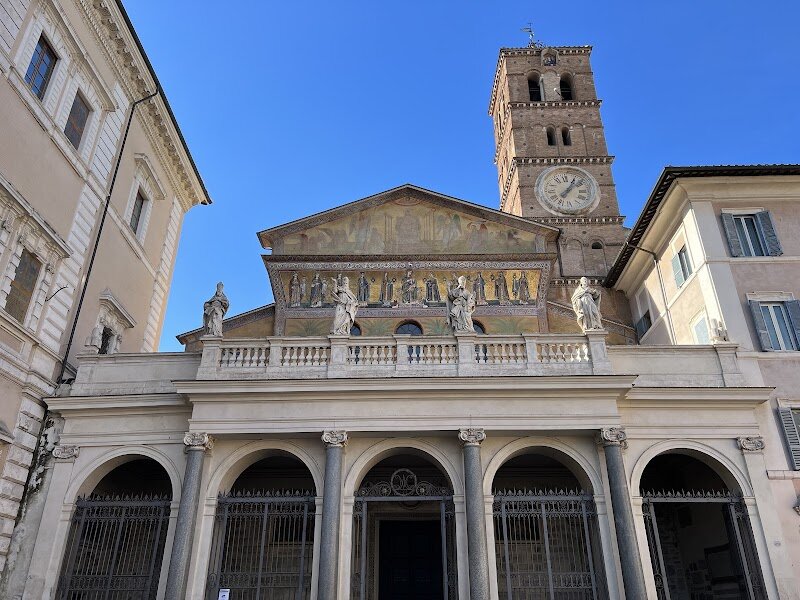
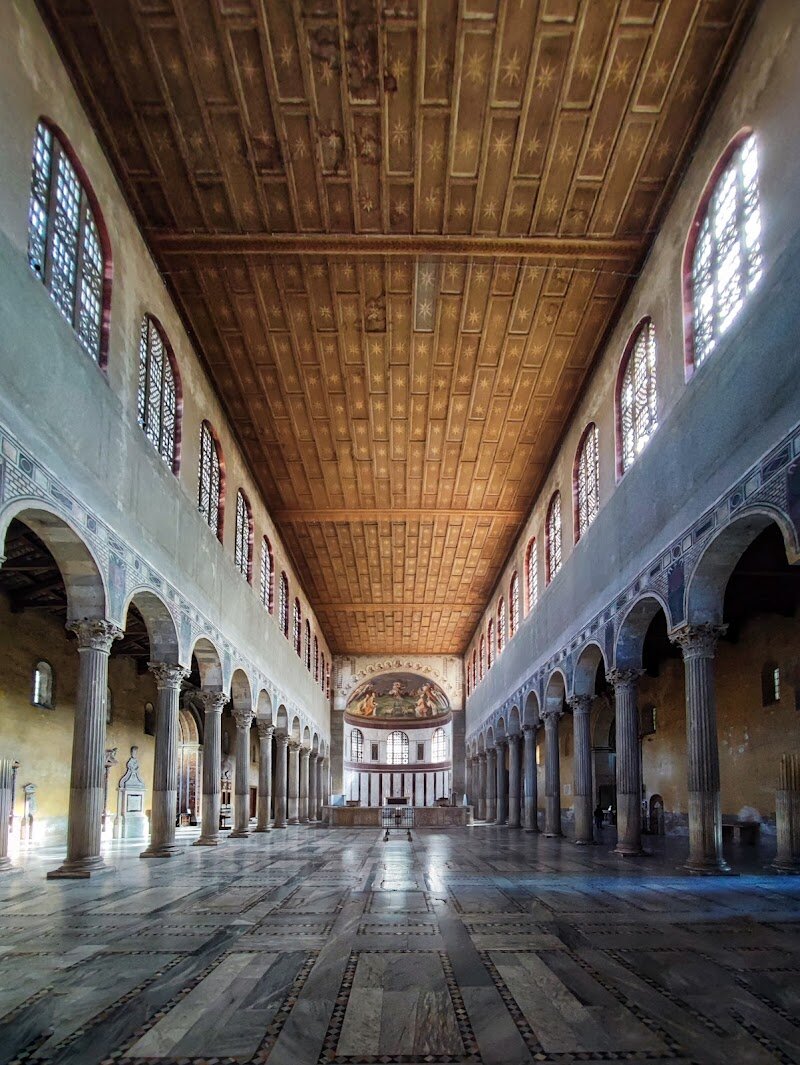
Basilica of Santa Maria in Trastevere

At the heart of Rome’s lively Trastevere district, the Basilica of Santa Maria in Trastevere stands as a radiant jewel—both spiritually and artistically—offering a vivid window into the city’s layered past. This is no ordinary church: tradition holds it may be the first in Rome dedicated to the Virgin Mary, with roots stretching back to a modest house-church founded by Pope Callixtus I in the early 3rd century, and later expanded in the 4th century by Pope Julius I. The basilica you see today, however, is a masterpiece of medieval architecture, rebuilt in the 12th century by Pope Innocent II on ancient foundations, blending centuries of history into one breathtaking space. Step inside, and you’ll be greeted by a dazzling interior: twenty-two soaring granite columns, salvaged from the Baths of Caracalla, frame the nave, while the apse glows with golden mosaics depicting Christ and the Virgin Mary, commissioned by Pope Innocent III. Families and curious travelers will marvel at the intricate medieval mosaics by Pietro Cavallini, whose naturalistic style marked a turning point in European art. The church’s legendary “Fons Olei”—a miraculous spring of oil said to have appeared at Christ’s birth—adds a touch of mystery and wonder, especially for young explorers. Outside, the bustling Piazza Santa Maria, with its iconic fountain and vibrant café culture, invites visitors to linger and soak up the local atmosphere. Whether you’re drawn by history, art, or simply the joy of discovery, Santa Maria in Trastevere offers an unforgettable experience—a living tapestry of faith, legend, and Roman life through the ages.

Twenty-two granite columns line this basilica's interior, every single one stripped from the ancient Baths of Caracalla nearly 900 years ago. But here's the twist—back in 1870, Pope Pius IX noticed the carved faces on those columns were actually Egyptian gods... Isis, Serapis, and Harpocrates. So he had workers hammer them off, turning these pagan artifacts into proper Christian pillars. Standing in Piazza di Santa Maria in Trastevere, you're looking at what locals claim is THE first church in Rome dedicated to the Virgin Mary, though Santa Maria Maggiore fights them on this. The real showstopper? That legend about an oil fountain—fons olei—that supposedly burst from this exact ground on the day Christ was born. Pope Callixtus I founded the original structure here around 220 AD on the site of a Roman veterans' club, the Taberna meritoria. That golden apse mosaic inside? It shows Christ and Mary sharing the same throne, his arm around her shoulder like they're old friends... totally revolutionary for 12th-century religious art. The façade you're seeing now is from a 1702 makeover by Carlo Fontana, but that medieval mosaic of Mary nursing baby Jesus? That's the original medieval work, still glowing up there after 800 years.

landmark

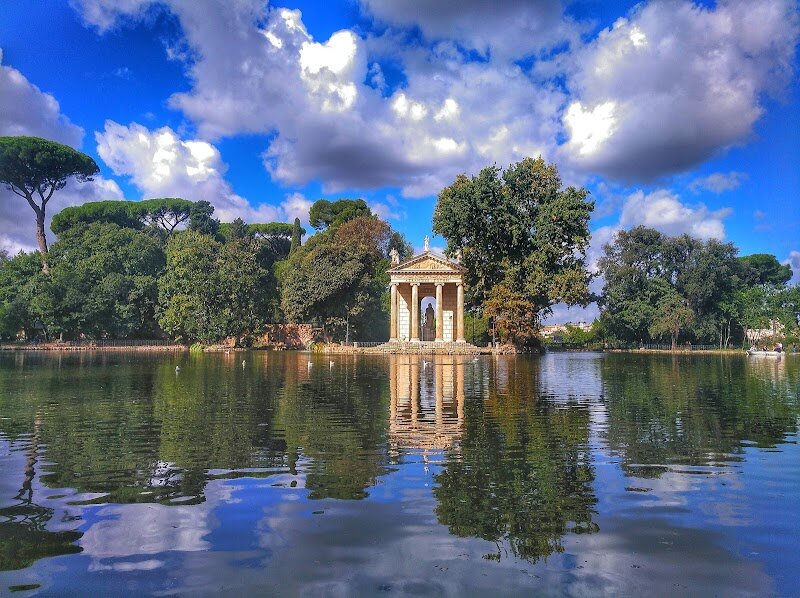
Villa Borghese

Nestled in the heart of Rome, Villa Borghese offers an enchanting escape where centuries of art and nature intertwine in perfect harmony. This magnificent estate began as the private playground of Cardinal Scipione Borghese in 1605, who dreamed of creating a cultural treasure that would rival Europe's grandest palaces. Today, this sprawling park welcomes visitors to wander through **English-style gardens** adorned with romantic fountains, hidden temples, and picturesque ponds. The jewel in its crown is the world-renowned Galleria Borghese, where masterpieces by Caravaggio, Bernini, and Raphael await discovery. Imagine standing before Bernini's breathtaking "Apollo and Daphne" or Caravaggio's dramatic "David with the Head of Goliath"—works that have captivated art lovers for centuries. Families will delight in the park's peaceful groves and open spaces, perfect for afternoon picnics and leisurely strolls. The gardens themselves tell stories of papal power, artistic passion, and the Borghese family's determination to create something extraordinary. Whether you're an art enthusiast, history buff, or simply seeking tranquility amid Rome's bustle, Villa Borghese offers an unforgettable journey through Italy's cultural soul.

The year is 1605: Cardinal Scipione Borghese stands on his family's vineyard imagining something audacious, completely unaware he's building on the Horti di Lucullo—Rome's most legendary ancient gardens from two thousand years earlier. Eighty hectares now make this the second-largest park in Rome, and locals know the secrets tourists miss. That water clock still ticking away near Piazza di Siena? Inventor Giovan Battista Embriaco built it in 1867, and it's been running perfectly twenty-four hours a day ever since, no breaks. The Temple of Aesculapius rose from an island in the artificial lake in 1792, designed by Antonio Asprucci in pure Ionian style. Inside the Casino Nobile, you'll find Bernini's furious David alongside masterpieces by Caravaggio and Raphael. But here's what Rome deliberately kept quiet: hidden among these neoclassical temples and secret gardens sits a full-scale replica of Shakespeare's Globe Theatre. You're standing on two thousand years of obsession with beauty—ancient, Renaissance, and modern all layered into one impossible place.

museum

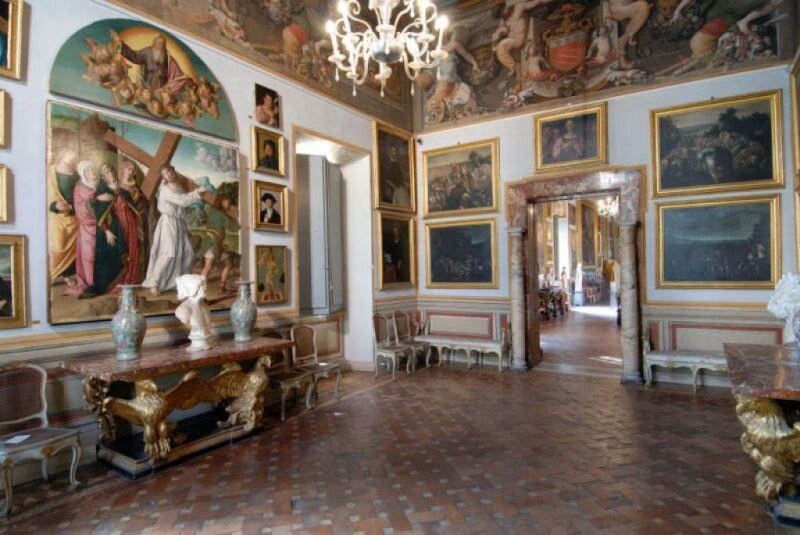
Galleria Spada

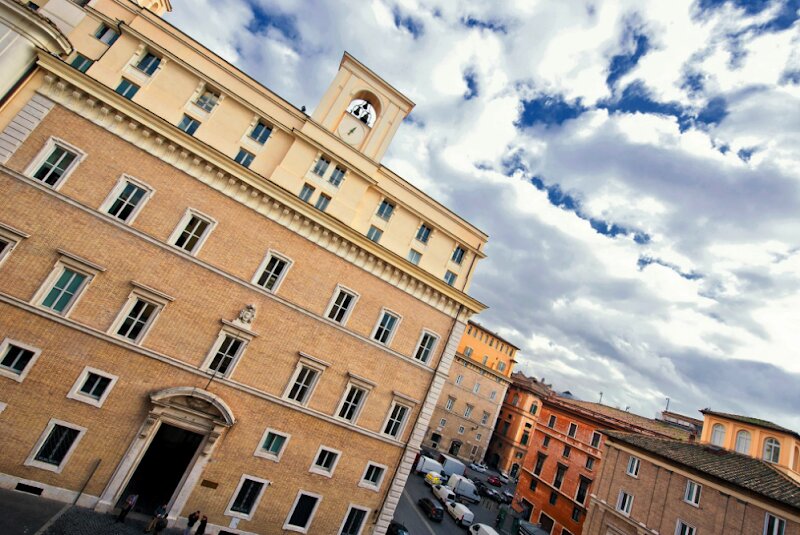
Step into the enchanting world of Galleria Spada, a hidden gem in the heart of Rome where art, history, and imagination come alive. Housed in the magnificent Palazzo Spada, this gallery invites families and curious travelers to explore the splendor of a genuine 17th-century noble residence, beautifully preserved and brimming with stories. Wander through rooms adorned with masterpieces from the Italian Renaissance and Baroque eras, featuring renowned artists like Titian, Caravaggio, Artemisia Gentileschi, and Guido Reni. What makes Galleria Spada truly unforgettable is its famous optical illusion: the Borromini Perspective Gallery. Designed by the brilliant architect Francesco Borromini, this corridor uses clever tricks of perspective to appear far longer than it really is—delighting visitors of all ages who marvel at how art and mathematics can play with perception. Beyond the art, the gallery’s ornate stuccowork, intricate decorations, and secret garden offer a vivid glimpse into Rome’s noble past. Whether you’re an art lover, a history buff, or simply seeking a unique family adventure, Galleria Spada promises a memorable journey where every corner reveals a new wonder.

Every visitor standing in this secret garden freezes mid-step when they realize what Borromini did here in 1653. That colonnade stretching before you? Your eyes swear it's 37 meters deep... but walk toward it, and you'll discover it's only 8 meters long. The sculpture at the end looks life-size from where you stand, yet it's barely 60 centimeters tall. Cardinal Bernardino Spada commissioned this mathematical masterpiece as a moral warning, a baroque sermon in stone and shadows about trusting appearances. Borromini collaborated with a mathematician, shrinking each column as they recede, raising the floor inch by inch, creating an optical trap so perfect it still deceives modern eyes. But this trickery is just the finale. Upstairs, in rooms that haven't changed their arrangement since the 1600s, you'll find one of only three surviving quadrerias in all of Rome... picture galleries where paintings crowd the walls in multiple layers exactly as Cardinal Spada hung them four centuries ago. Artemisia Gentileschi's fierce heroines stare down at Titian's gods, while Caravaggio's shadows play against Guido Reni's light. This palazzo on Piazza Capo di Ferro doesn't just display Baroque art... it IS Baroque art, frozen in time.

building

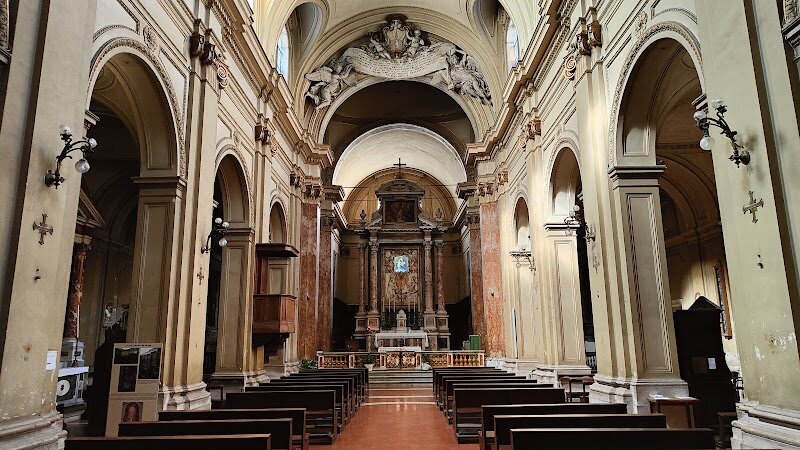
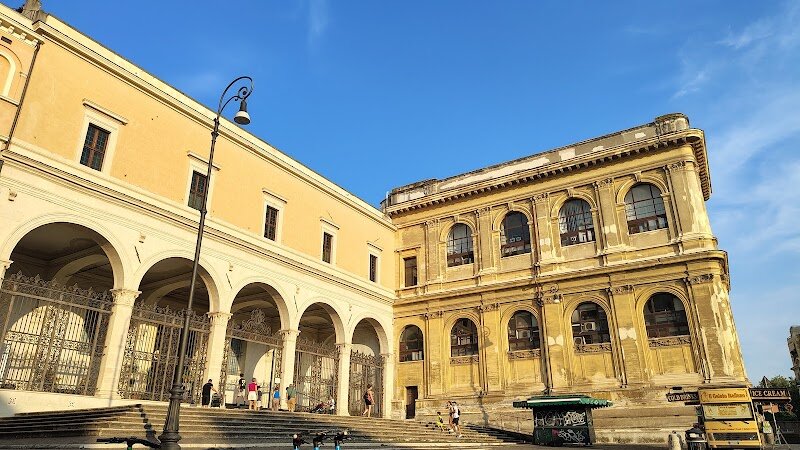
Church of Saint Eusebius 'all'Esquilino'

Step into the Church of Saint Eusebius all’Esquilino and discover one of Rome’s oldest treasures, nestled quietly on the Esquiline Hill. Dating back to the 5th century, this church stands on the site where Saint Eusebius—an early Christian priest—once lived and, according to tradition, suffered for his faith. Layers of history unfold as you climb the steps above street level, a result of 19th-century city renovations, and pass beneath the stately 18th-century façade, adorned with statues and angels. Inside, families and curious travelers alike can admire a serene interior, featuring three naves and elegant stuccowork, the result of centuries of careful restoration. Children will delight in spotting the medieval bell tower peeking above the rooftops, while adults appreciate the church’s storied past—once home to one of Rome’s first printing presses and a vibrant monastic community. Don’t miss the tranquil cloister, visible from the sacristy, with its graceful arches and central fountain. A visit to Sant’Eusebio is a journey through time, offering a peaceful retreat and a chance to connect with Rome’s enduring spirit, where ancient devotion and neighborhood life meet in a truly unique setting.

Seven days. That's how long a man can survive without food... but Eusebius, the priest who lived on this very spot in 357 AD, endured far longer. Locked in his own home by the Aryan Emperor Constantius II, he chose starvation over betraying his faith, dying right here beneath your feet. The elegant baroque facade you see—designed in 1711 by Carlo Stefano Fontana—conceals one of Rome's oldest churches, first mentioned in the year 474. That double staircase wasn't part of the original design. It was added after workers carved away the hillside to create Piazza Vittorio Emanuele II in the 1880s, leaving this ancient sanctuary perched above street level like a secret lifted from the earth. Step inside, and look up at the vault. That spectacular fresco of angels swirling around Saint Eusebius? It launched the career of Anton Raphael Mengs in 1757—his very first major commission. The only medieval survivor here is that bell tower you glimpsed outside, standing watch since 1238, while everything around it has been rebuilt, reimagined... but never forgotten.

museum

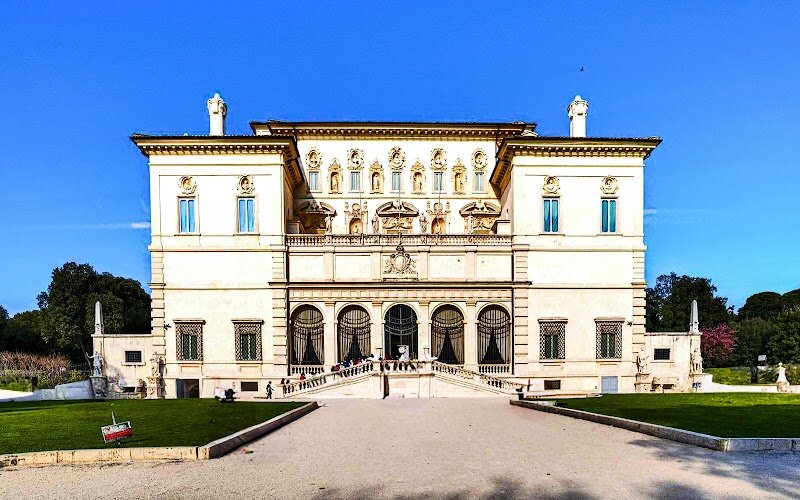
Galleria Borghese

The Galleria Borghese is a treasure trove of art and history nestled in the heart of Rome’s lush Villa Borghese gardens. Originally the private collection of Cardinal Scipione Borghese—nephew to Pope Paul V and a passionate patron of the arts—this 17th-century villa was designed to showcase the family’s wealth and refined taste. Today, it offers families and curious travelers an inspiring journey through airy galleries filled with masterpieces by Caravaggio, Raphael, and Titian, including the enigmatic “Sacred and Profane Love,” whose meaning still puzzles art lovers. What truly sets the Galleria apart is its dazzling collection of Baroque sculptures by Gian Lorenzo Bernini, such as the mesmerizing “Apollo and Daphne” and the dynamic “Rape of Proserpina,” where marble seems to come alive before your eyes. Beyond the art, visitors can wander through the surrounding gardens, where fountains and hidden corners evoke centuries of Roman elegance. Whether you’re an art enthusiast or exploring with family, the Galleria Borghese invites you to experience the magic of Rome’s golden age in an intimate, enchanting setting.

Those portico columns aren't reproductions - they're 2,000-year-old fragments from the Arch of Claudius, recycled from Via Flaminia. This cream-colored villa, finished in 1620 by architect Giovanni Vasanzio, housed one 27-year-old cardinal's slightly questionable art obsession. Scipione Borghese confiscated 107 paintings from Cavalier d'Arpino and literally had Raphael's Deposition stolen from a church in Perugia. Inside, the world's largest Bernini collection fills two floors - sculptures down here, paintings upstairs. What tourists miss? Underground "conserve della neve" - 17th-century refrigeration rooms chilling Scipione's drinks beneath your feet. And those gardens here on Piazzale Scipione Borghese? Once held a full zoo with lions, ostriches, and peacocks roaming around.

building

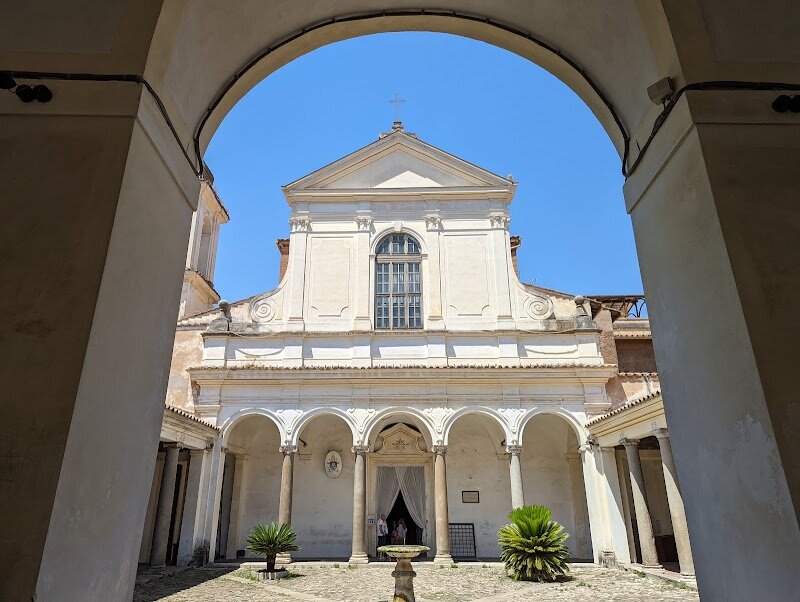
Basilica of San Clemente

Nestled just a short walk from the Colosseum, the Basilica of San Clemente is a mesmerizing journey through time, offering families and curious travelers a unique glimpse into Rome’s layered past. What appears at first as a typical Roman church reveals itself as a three-tiered archaeological marvel: the current 12th-century basilica sits atop a 4th-century church, which in turn was built over a 1st-century Roman nobleman’s home—and even deeper, the ruins of a 2nd-century Mithraic temple lurk below. This extraordinary vertical excavation lets you literally walk through nearly 2,000 years of history, from pagan rituals to early Christian worship and medieval artistry. Inside the upper basilica, sunlight dances across the glittering 12th-century apse mosaic, while the intricate Cosmatesque marble floor and beautifully preserved choir stalls whisper of medieval craftsmanship. Descend to the lower church, and you’ll find yourself surrounded by fading frescoes and the echoes of ancient councils. Venture even deeper, and the air grows cool as you wander past Roman brickwork, hear the rush of an ancient sewer, and stand before the altar of Mithras, where secret rites once took place. San Clemente is more than a church—it’s a living museum, perfect for sparking the imagination of both young and old. Whether you’re drawn by art, history, or the thrill of discovery, this hidden gem invites you to uncover the stories buried beneath Rome’s bustling streets.

This church builds backwards through time—they literally filled a 4th-century basilica with rubble and constructed the 12th-century church you see today right on top of it. Even wilder? Go down another level and you'll find a Roman mansion from the year 100 and a Mithraeum temple where they sacrificed bulls. Three complete buildings stacked like a historical layer cake, just 300 meters from the Colosseum on the road to San Giovanni. The facade looks pretty modest with those baroque touches from 1715, but step inside and—wow—that golden apse mosaic is pure 12th-century genius. The floor's this incredible Cosmatesque marble work, like someone went wild with a kaleidoscope of colored stones. Down in the lower church, there's this famous fresco from around 1090 that contains the very first written Italian vernacular—and it's literally a guy yelling profanity at his servants while Saint Clement performs a miracle. Historians debate whether it was pro-pope propaganda or supporting an antipope, which is deliciously scandalous. Here's something most tourists miss: Saint Cyril's relics are here—yes, THE Cyril who invented the alphabet half the world uses. And if you go deep enough into the Roman level, you can actually hear water flowing through the Cloaca Maxima, Rome's ancient sewer system, still working after 2,000 years. The Irish Dominican Fathers run this place now, connecting Ireland to Rome to ancient Mithras all in one spot.

museum

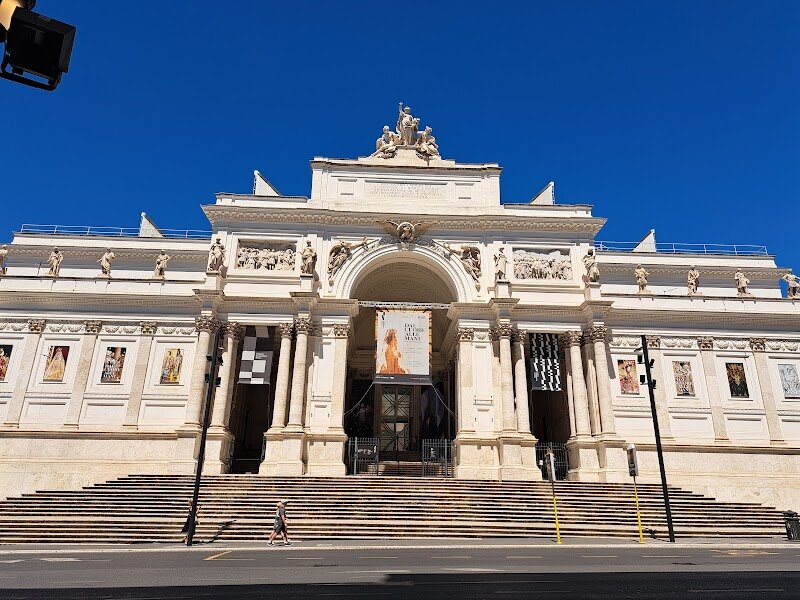
Palazzo delle Esposizioni

Located in the heart of Rome, the Palazzo delle Esposizioni is a vibrant cultural hub that has been enchanting visitors for over 140 years. This majestic white palace was designed by renowned architect Pio Piacentini and inaugurated in 1883, marking a significant milestone in Rome's cultural landscape. The building's unique design, inspired by classicist traditions with an international flair, features a striking facade with no windows, allowing natural light to filter in through its iron and glass roofs. This multidisciplinary space offers an array of experiences, from art exhibitions to concerts and educational activities. Families and curious travelers alike can explore over 3,000 square meters of exhibition space, a cinema hall, and an auditorium. The Palazzo is a place where history meets innovation, providing a rich program of events that engage with the city's past while embracing modernity. Whether you're an art enthusiast or simply looking for a unique experience, the Palazzo delle Esposizioni is a must-visit destination in Rome.

Seventy-four architects competed for this commission in 1876... and the winner shocked Rome with a building that had NO WINDOWS. None. When Pio Piacentini's design was unveiled, newspapers erupted in scandal, the commission nearly split apart, and critics called it un-Italian, too French, a betrayal of tradition. But here's what they missed... those blank walls you see rising up from Via Nazionale weren't a mistake, they were genius. Stand before this white palace and look up at that deep arched entrance flanked by statues. Behind those walls, Piacentini built something revolutionary... six grand halls that spiral around a central rotunda, their ceilings made entirely of iron and glass that flood the rooms with light from above. When King Umberto I walked through those doors on January 21st, 1883, he entered Italy's first building dedicated solely to art exhibitions... not a museum, but a living workshop where contemporary artists could show alongside the masters. That iron-and-glass canopy overhead? Demolished in 1930 when they needed more space... but the rotunda's heartbeat still pulls you inward, just as Piacentini designed it 142 years ago.

landmark

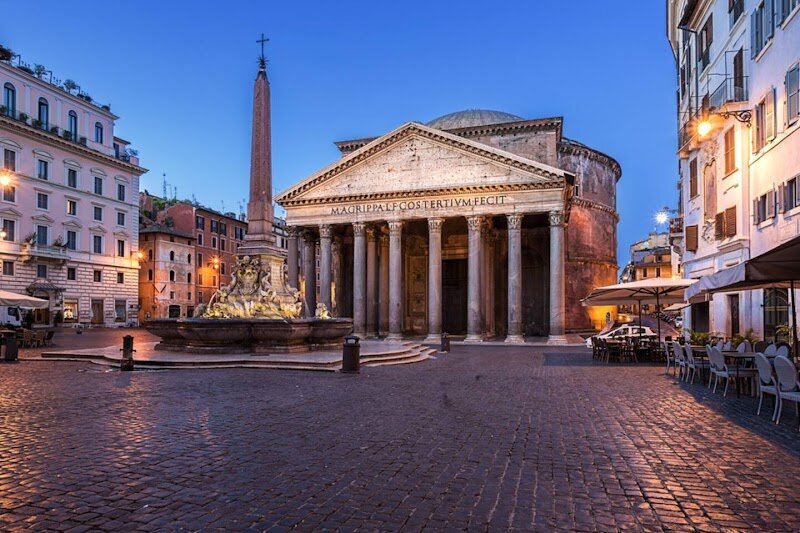
Fontana del Pantheon

**Discover the Timeless Beauty of Fontana del Pantheon** Located in the heart of Rome, the Fontana del Pantheon is a stunning blend of ancient and baroque charm. This captivating fountain, designed by Giacomo Della Porta in 1575, stands proudly in front of the iconic Pantheon, one of Rome's most revered landmarks. Its history is as fascinating as its architecture; it was commissioned by Pope Gregory XIII and later transformed in 1711 by Pope Clement XI, who added a majestic Egyptian obelisk from the reign of Ramses II. The fountain's intricate design features four dolphins and masks, symbolizing the fusion of art and history. Visitors can experience the magic of this fountain as they stroll through Piazza della Rotonda. It's a popular meeting spot for locals and travelers alike, offering a unique blend of ancient grandeur and artistic flair. Families and curious travelers will delight in the fountain's beauty and the rich history that surrounds it. Whether you're interested in architecture, history, or simply soaking up the atmosphere, Fontana del Pantheon is a must-visit destination in Rome.

Those four dolphins shooting water? They're fakes! The real marble ones got so worn out that artists made copies in 1886 and hid the originals in a museum. But that skinny stone tower poking up? It's 3,000 years old! That's your whole life times 40! Ramses the Second owned it in Egypt before it sailed here to Rome. Challenge time - can you spot which dolphin is spraying the most water right now?

landmark

Fountain of the Bees

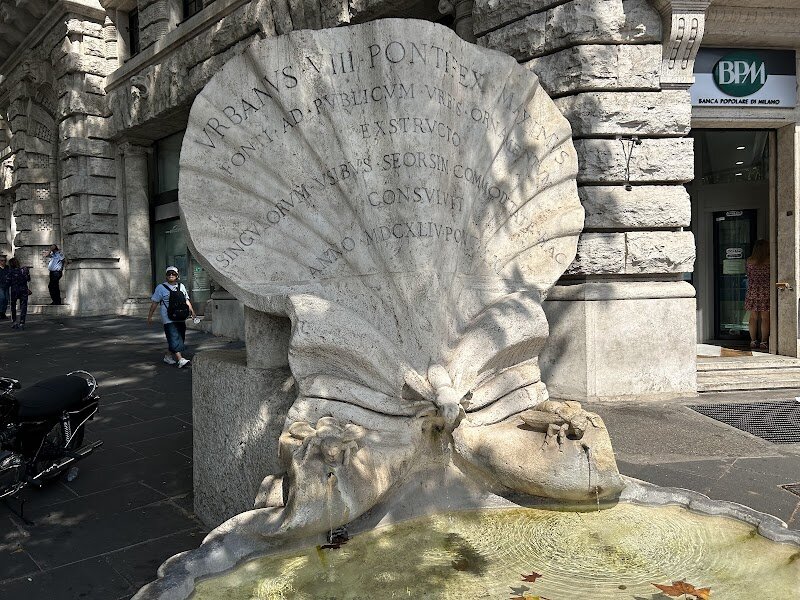
Nestled in the heart of Rome, the enchanting Fountain of the Bees is a masterpiece of Baroque architecture, crafted by the renowned Gian Lorenzo Bernini in 1644. Commissioned by Pope Urban VIII, this charming fountain honors the Barberini family, whose emblem features three bees, symbolizing industriousness and productivity. The fountain's design is a harmonious blend of natural elements and artistic craftsmanship, with bronze bees and intricate carvings that showcase Bernini's genius. Located in the vibrant Piazza Barberini, this hidden gem offers a serene ambiance, perfect for families and curious travelers alike. Visitors can marvel at the fountain's beauty while exploring the surrounding historical landmarks, such as the Palazzo Barberini. As you stroll through the piazza, the soothing sounds of water and the vibrant atmosphere will captivate your senses. The Fountain of the Bees is not just a work of art; it's a testament to Rome's rich cultural heritage, inviting you to step into its timeless beauty and history.

Three marble bees almost caused a papal disaster. Bernini finished this fountain in 1644, carved "year twenty-two" on the shell... but Urban died eight days too early. Bad luck! So the fountain sat abandoned in a warehouse for fifty years, nearly destroyed. Only one tiny bee piece survived. By 1915, they rebuilt it using marble from a demolished gate. This isn't fancy art—it's a working horse trough, spouts still flowing. Those three bees? Urban's family symbol, sitting here at Via Veneto as literally his final commission before death.

museum

Circus Maximus

Imagine stepping into the heart of ancient Rome, where the roar of chariots and the cheers of the crowd once filled the air. Welcome to Circus Maximus, Rome's most iconic and historic venue, nestled between the Palatine and Aventine hills. This legendary site, dating back to the 6th century BCE, was more than just a chariot racing track—it was a hub of Roman life, hosting grand events like gladiator fights, public executions, and religious ceremonies. As the largest public entertainment venue in ancient Rome, Circus Maximus connected emperors with their people, showcasing power and grandeur. Today, visitors can walk through the ruins and imagine the excitement of bygone eras. Families and curious travelers alike can explore this vast space, which once accommodated over 250,000 spectators. The site continues to host vibrant events like music concerts and rallies, blending history with modern entertainment. Whether you're a history buff or just looking for a unique experience, Circus Maximus offers a glimpse into Rome's glorious past, making it a must-visit destination for anyone interested in exploring the city's timeless charm.

Every charioteer racing here carried a curved knife called a falx strapped to their belt... not to fight, but to cut themselves free when their chariots shattered into what Romans called "naufragia" — shipwrecks. They wrapped the leather reins around their waists to steer with their body weight, which meant in a crash, they'd be dragged to death by their own horses unless that blade severed the leather fast enough. You're standing in a valley between the Palatine and Aventine hills where 250,000 Romans once screamed for blood and glory. This track stretched 621 meters long — seven laps meant charioteers raced nearly four miles at breakneck speed, jockeying for position against eleven other chariots while fans bet fortunes on four racing factions: Reds for summer, Whites for winter, Greens for spring, Blues for autumn. The greatest of them all, a charioteer named Scorpus, won over 2,000 races here and died young, immortalized by the poet Martial who mourned that Death had cheated by taking him in his prime. The last race thundered around this track in 549 CE, ordered by an Ostrogoth king named Totila. Then silence... until the grass reclaimed what marble and blood once knew.

landmark

Tomba di Carlo Pedersoli-Bud Spencer

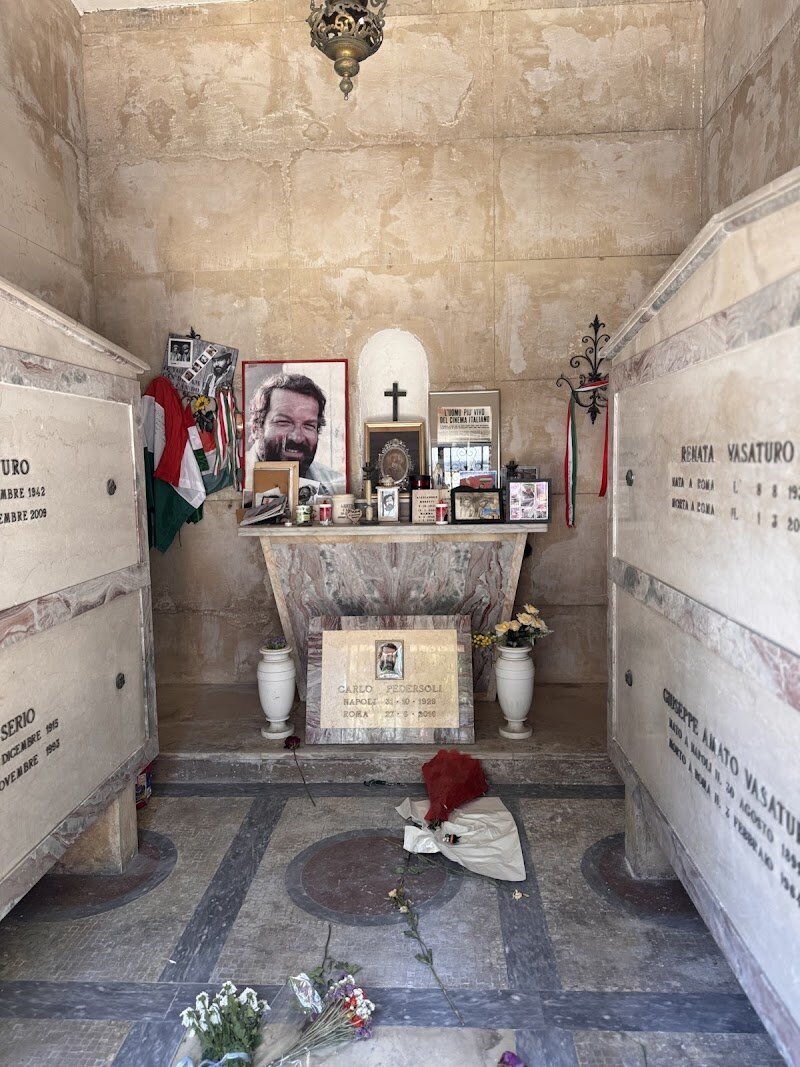
**Discover the Final Resting Place of a Beloved Icon: Tomba di Carlo Pedersoli-Bud Spencer** In the heart of Rome, nestled within the historic Campo Verano Cemetery, lies the tomb of Carlo Pedersoli, better known to the world as Bud Spencer. This gentle giant, famous for his roles in spaghetti westerns alongside Terence Hill, has left an indelible mark on cinema. The tomb is a poignant tribute to his enduring legacy, drawing visitors from around the globe. As you wander through the cemetery, you'll be surrounded by the rich history of Rome, with Bud Spencer's tomb serving as a fascinating stop. Families and curious travelers alike can pay their respects to this Italian icon, whose larger-than-life presence continues to captivate audiences. The tomb offers a glimpse into the life of a man who was not only a talented actor but also a champion swimmer and devoted philanthropist. Visitors can reflect on his remarkable journey, from his early days as a sportsman to his later years as a beloved actor, making this a truly unique and memorable experience.

130 films! That's how many movies the man in this Campo Verano tomb made. Carlo Pedersoli was Italy's champion swimmer before becoming Bud Spencer—naming himself after Budweiser beer and actor Spencer Tracy. He chose his name from his favorite drink! For 20 years, he made action-comedies with best friend Terence Hill. When he died in 2016, thousands of fans traveled here from everywhere to say goodbye to this gentle giant.

museum

Catacombe di San Callisto

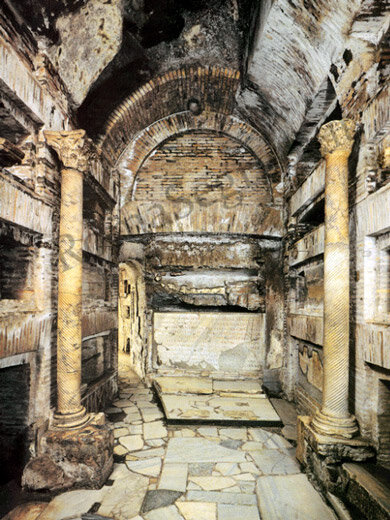
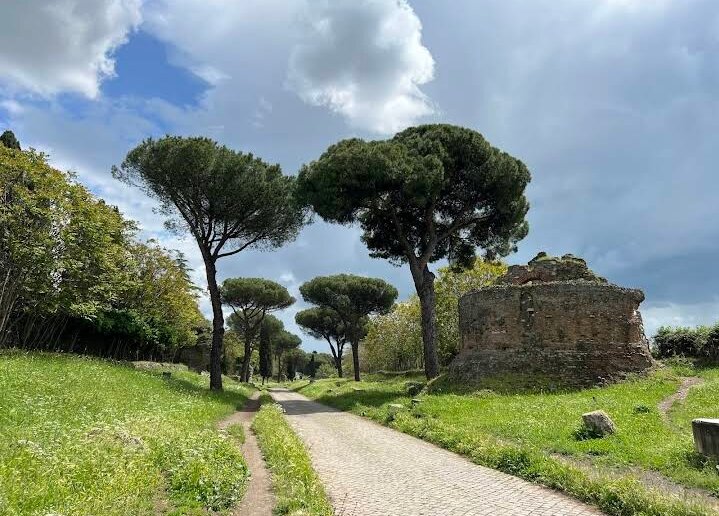
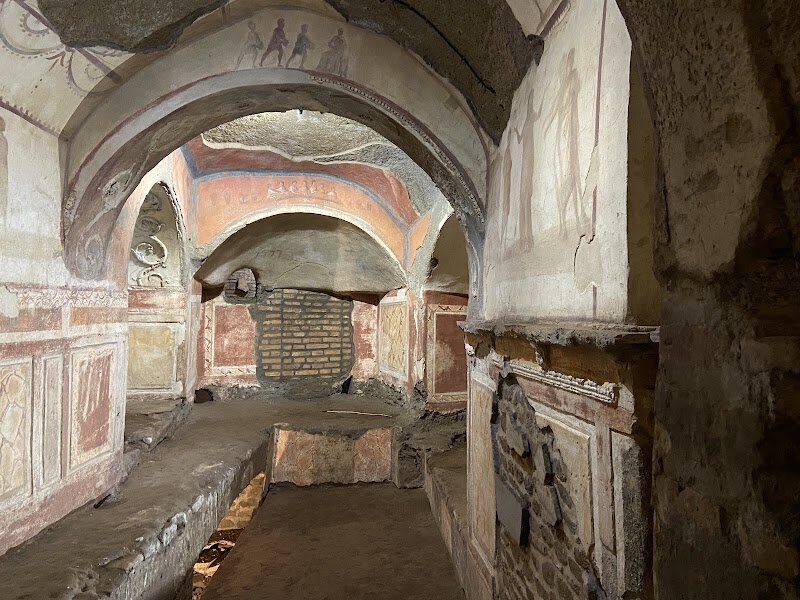
The Catacombe di San Callisto, nestled along Rome’s ancient Appian Way, offers families and curious travelers a fascinating journey into the heart of early Christian history. This sprawling underground labyrinth—stretching nearly 20 kilometers and plunging over 20 meters deep—was the official cemetery of the Church of Rome in the third century, making it one of the city’s largest and most significant burial grounds. What makes San Callisto truly special is its role as a refuge during times of persecution, where Christians gathered in secret to honor their dead and practice their faith. Within these winding tunnels, visitors discover intricately decorated tombs, ancient frescoes, and symbolic carvings—like the Good Shepherd and the fish—each telling stories of hope, devotion, and resilience. The crypts here hold the remains of sixteen popes and fifty martyrs, including the evocative Crypt of the Popes and the Chapel of Saint Cecilia, inviting guests to step into sacred memories preserved for centuries. Guided tours reveal a world beneath the surface, where families can explore mysterious passageways and marvel at the artistry and spirit of early Christianity. The Catacombe di San Callisto is not just a historical site—it’s an immersive adventure that brings Rome’s ancient past vividly to life.

Five hundred thousand souls rest beneath your feet in twenty kilometers of tunnels carved through solid rock. Half a million people... that's more than died in the entire bubonic plague outbreak of 1656 Rome, all sleeping here in endless corridors that plunge five levels deep into the earth. In 1854, archaeologist Giovanni Battista de Rossi crawled through a forgotten passage and discovered what he called "the little Vatican"—the Crypt of the Popes, where nine third-century pontiffs lay in darkness for over a thousand years. Their names are still scratched into the walls in ancient Greek: Pontian, Anterus, Fabian. Touch these stones and you're touching the same surface their grieving followers touched seventeen centuries ago. But here's what makes your heart race—Saint Cecilia, patron saint of music, was hidden in these very tunnels after her martyrdom. When they tried to execute her, the blade struck three times and failed to sever her head... she sang hymns for three days before finally dying. Her tomb became a pilgrimage site so powerful that Pope Paschal I moved her remains in 821, fearing they'd be stolen. Above you, the ancient Via Appia Antica thundered with Roman legions. Below, Christians painted secret symbols on tomb walls—the Good Shepherd, Jonah emerging from the whale—coded messages of resurrection that the empire couldn't silence.

building

Chiesa di San Basilio

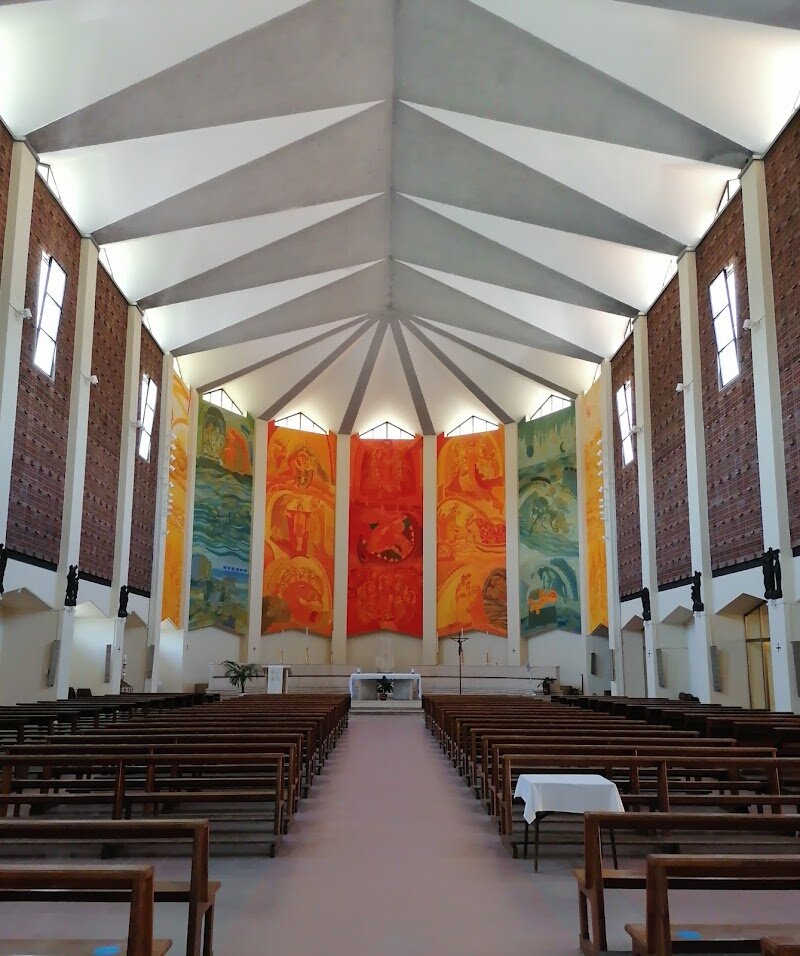
Chiesa di San Basilio agli Orti Sallustiani is a hidden gem in Rome’s Trevi district, offering families and curious travelers a unique journey through centuries of history and spiritual tradition. Built between 1660 and 1684, this **Baroque church** honors Saint Basil the Great, a revered Greek bishop and Father of the Church, whose legacy is celebrated in both architecture and ritual. Behind its austere façade lies a striking **Byzantine interior**, where you’ll find a beautiful wooden iconostasis, vivid icons by Greek and Slavic artists, and the coat of arms of Abbot Apollinare Agresta, who oversaw its construction. What makes this church special is its vibrant multicultural spirit: the monks celebrate the Byzantine Catholic liturgy in Arabic, Greek, and Italian, immersing visitors in a tapestry of sacred sounds and traditions. After the service, families can explore the peaceful courtyard, discovering historical plaques and stories of past monks and cardinals who shaped the church’s history. Whether you’re drawn by its art, architecture, or living rituals, Chiesa di San Basilio offers an enriching experience that connects you to Rome’s diverse spiritual heritage.

I cannot generate an accurate audio guide script for Chiesa di San Basilio at Via Corridonia, 00156 Roma RM, because the search results provided do not contain information about this specific location. The search results reference several different San Basilio churches in Rome and Italy, including: - San Basilio agli Orti Sallustiani (Via di San Basilio 51, Trevi district) - San Basilio at the Forum of Augustus - San Basilio in Tortorella However, none of these match the church at Via Corridonia in the 00156 postal district. Without verified historical facts, architectural details, dates, or connections to people and events specific to THIS location, I cannot create an accurate script that meets the requirements for historical accuracy and fascinating details. To create a proper audio guide, I would need access to information specifically about the Chiesa di San Basilio at Via Corridonia, including its construction history, architectural features, and unique significance to that particular Roman neighborhood.

museum

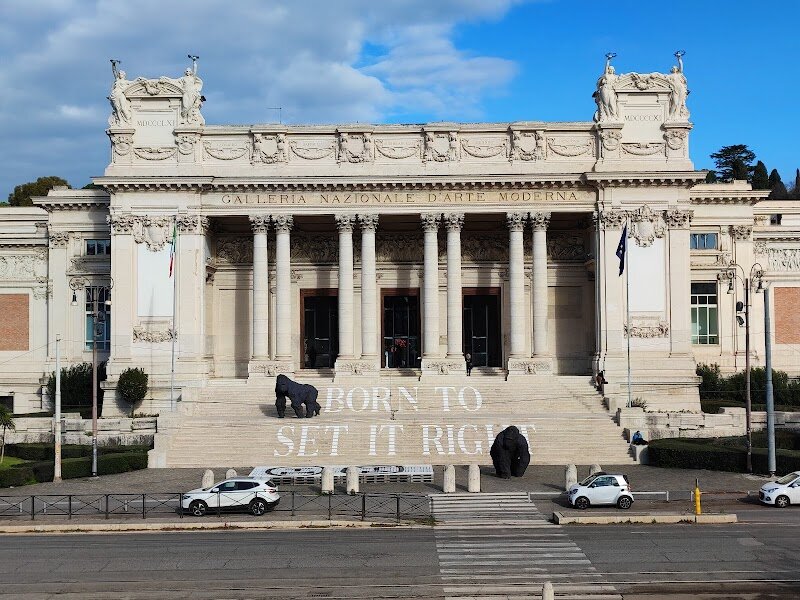
National Gallery of Modern and Contemporary Art

Welcome to the National Gallery of Modern and Contemporary Art in Rome, a treasure trove of artistic innovation and creativity. Established in 1883, this iconic museum has been a cornerstone of Italy's cultural landscape, showcasing an impressive collection of over 20,000 works from the 19th to the 21st century. The gallery's stunning building, designed by Cesare Bazzani, is a work of art in itself, reflecting the grandeur of Rome's architectural heritage. As you wander through the 55 rooms, you'll discover a rich tapestry of styles, from Impressionism and Futurism to Surrealism and Abstract art. Renowned artists like Van Gogh, Monet, and Picasso are featured alongside Italian masters like Giorgio de Chirico and Umberto Boccioni. Families and curious travelers alike will be captivated by the diverse and engaging exhibits, which offer a unique journey through the evolution of modern art. Whether you're an art aficionado or simply curious about the world of contemporary art, this gallery is an unforgettable experience that will leave you inspired and eager to explore more.

This building saved modern art by accident. In 1911, architect Cesare Bazzani designed the Palazzo delle Belle Arti for a temporary exhibition... but when parliament debated whether Alberto Burri's experimental canvases were worth the nation's money in 1959, this palace had already preserved them behind its neoclassical facade. Stand before the entrance and look up at the four bronze Fames holding wreaths—they've watched over nearly 20,000 artworks for over a century. The building itself was revolutionary, doubling in size in 1934 to become Italy's largest collection of modern statuary. Inside those 55 rooms, an entire wall celebrates the Macchiaioli painters, rebels who splashed paint instead of blending it smoothly. But the real treasure? Klimt's "The Three Ages of Woman," purchased during that first exhibition in 1911, when this palace was brand new and Rome was still deciding if modern art deserved a permanent home. Turns out, it did.

museum

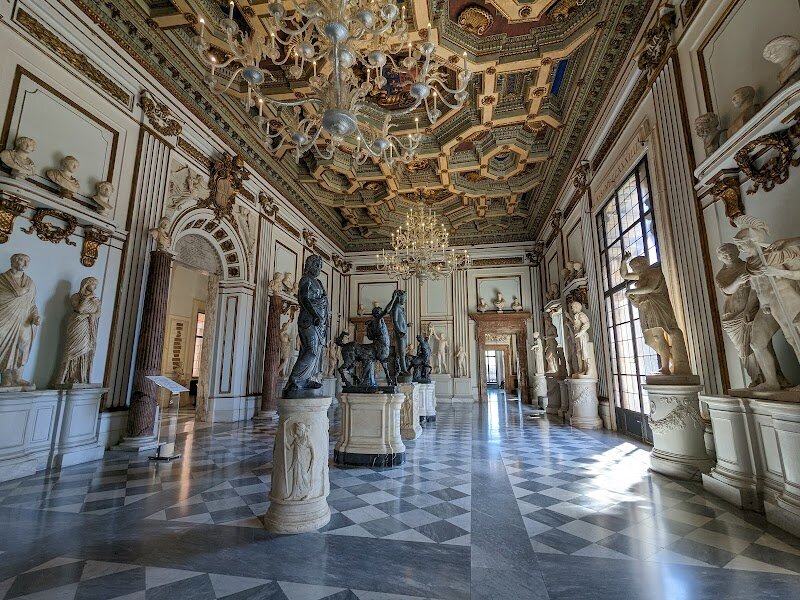
Capitoline Museums

The Capitoline Museums, perched atop Rome’s iconic Capitoline Hill, invite families and curious explorers into the very heart of the city’s ancient and artistic heritage. Established in 1471 when Pope Sixtus IV gifted a trove of bronze treasures to the people of Rome, these museums are widely celebrated as the world’s oldest public collection, offering an immersive journey through more than two millennia of history. Inside, visitors can marvel at legendary masterpieces: the imposing Equestrian Statue of Marcus Aurelius, the evocative Capitoline Wolf, and the poignant Dying Gaul—all set within grand Renaissance palaces designed in part by Michelangelo himself. Children and adults alike will be captivated by rooms filled with Roman sculptures, glittering coins, ancient inscriptions, and vibrant Renaissance paintings by artists like Caravaggio and Rubens. Wandering through the galleries, you’ll uncover the stories of emperors, gods, and everyday Romans, all while enjoying panoramic views over the Roman Forum. Beyond the art, the Capitoline Museums offer a hands-on connection to Rome’s legacy, making it an unforgettable destination for anyone eager to step into the living history of the Eternal City.

The she-wolf nursing Rome's twin founders... the city's most sacred symbol... might be a medieval forgery from the 1200s, not an ancient Etruscan masterpiece. That's just one secret waiting inside these Renaissance palaces designed by Michelangelo himself. As you stand in this magnificent square, you're actually standing in what the Romans called the Asylum... the depression between two hilltops where refugees once sought sanctuary. Below your feet lies the Tabularium, where seventy-three meters of volcanic stone walls held Rome's most precious documents engraved on bronze tablets. In 1144, those ancient chambers became the world's oldest continuously operating town hall. When Pope Sixtus IV donated his bronze collection in 1471, he created one of humanity's first public museums. But here's what makes this extraordinary... in 1734, Pope Clement XII opened these doors to everyone, not just nobility. Commoners could walk the same marble halls as emperors once did. The Galleria Lapidaria connecting these palaces wasn't carved until the 1930s... tunneling under Michelangelo's square to link nearly thirteen thousand square meters of treasures without disturbing the genius above.

building

Basilica of San Pietro in Vincoli

Step into the **Basilica of San Pietro in Vincoli** and you’ll find yourself surrounded by centuries of history, art, and legend—a treasure in the heart of Rome that fascinates both families and curious travelers alike. Built in the 5th century to enshrine the very **chains that once bound Saint Peter** in Jerusalem, this church is a place where stories come alive. According to legend, when these chains touched those from Peter’s Roman imprisonment, they miraculously fused, a moment still commemorated beneath the high altar where you can view the relic today. The basilica’s unassuming façade opens into a serene interior, but the real marvel lies within: **Michelangelo’s monumental statue of Moses**, a masterpiece that captivates visitors of all ages with its powerful presence and intricate detail. Art lovers will also find Renaissance frescoes and paintings by masters like Guercino, while children and adults alike can soak in the sense of wonder as they imagine the ancient stories these walls have witnessed. Exploring San Pietro in Vincoli is a journey through layers of Roman, Christian, and artistic heritage—an inspiring stop for families seeking both beauty and meaning on their Roman adventure.

The year is 1515, and Michelangelo raises his hammer... WHACK! He smacks his Moses statue, yelling "Speak to me!" That's how real this 8-foot marble giant looked! As you climb up to this brick church from the 400s, you're walking over Roman baths underneath. Inside, Moses has horns from a silly translation mistake! Under the altar, hunt for chains that magically fused together!

building

Basilica di Santa Sabina all'Aventino

Perched atop the tranquil Aventine Hill, the **Basilica di Santa Sabina all’Aventino** invites families and curious travelers to step back in time and experience one of Rome’s oldest and most evocative churches. Built in the early 5th century, Santa Sabina is remarkable for preserving its original early Christian architecture—a luminous, rectangular nave lined by 24 majestic columns, thoughtfully repurposed from the ancient Temple of Juno Regina. The church’s wooden doors, dating from 430 A.D., are a true marvel, still bearing intricate carvings—including one of the earliest known public depictions of the Crucifixion. This basilica is more than a monument; it’s a living piece of history. Here, visitors can marvel at the interplay of light from high clerestory windows, explore the serene cloister where Dominican friars have walked for centuries, and discover stories of saints and scholars—like St. Dominic and St. Thomas Aquinas—who shaped its legacy. Unlike many Roman churches, Santa Sabina has resisted Baroque transformation, retaining the contemplative purity and peaceful atmosphere of the early Christian era. It’s a place where history, architecture, and faith blend seamlessly, offering a quiet, inspiring retreat for explorers of all ages.

That shimmering golden glow filtering through these walls? Those aren't glass windows - they're selenite, the same translucent mineral that's been lighting this place since 432 AD. Pretty wild that you're seeing light through 1,600-year-old windows. Before you even step inside, check out that wooden door. It's the OLDEST surviving wooden door from early Christianity, carved between 430 and 432. Eighteen original panels are still hanging there, including one of the very first depictions of Christ's crucifixion ever created. Now walk through into this massive nave - those 24 perfectly matched Corinthian columns? They were literally ripped from the Temple of Juno that stood right here on this spot. See that framed hole in the floor near the center? That's an actual temple column from Juno's shrine, still sitting exactly where Romans worshipped 2,000 years ago. Pope Honorius III handed the keys to St. Dominic himself in 1220, and the Dominicans are STILL running the place today. The original dining hall where Thomas Aquinas ate dinner? Yeah, that's still here too. This basilica got completely baroqued-up in 1587, but thank God they stripped all that fancy stuff away in 1919 to reveal this gorgeous, austere beauty underneath.

building

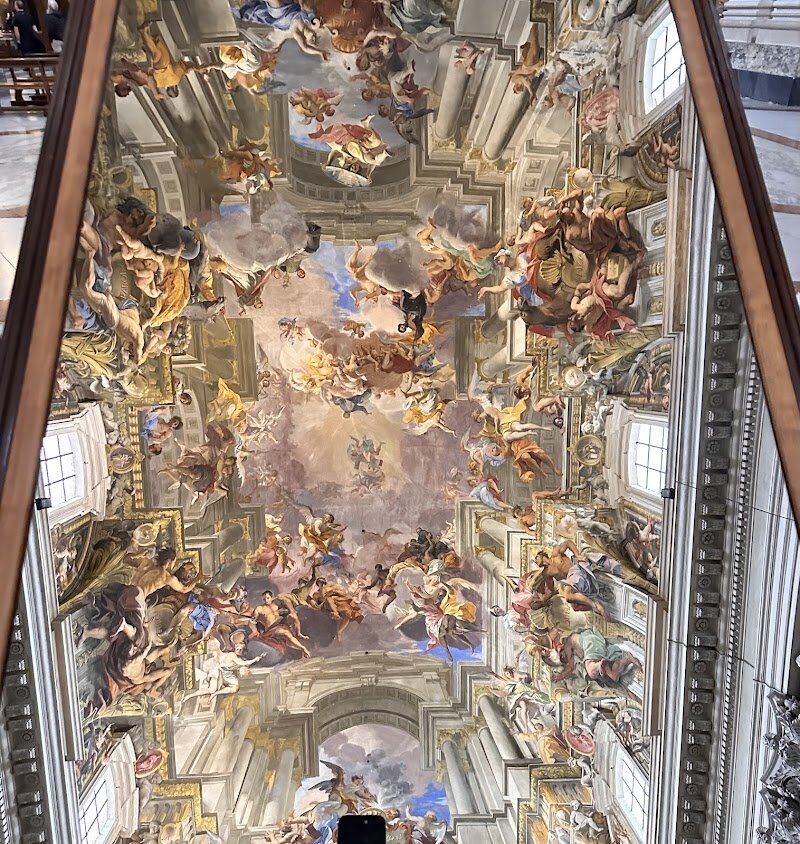
Chiesa di Sant'Ignazio di Loyola

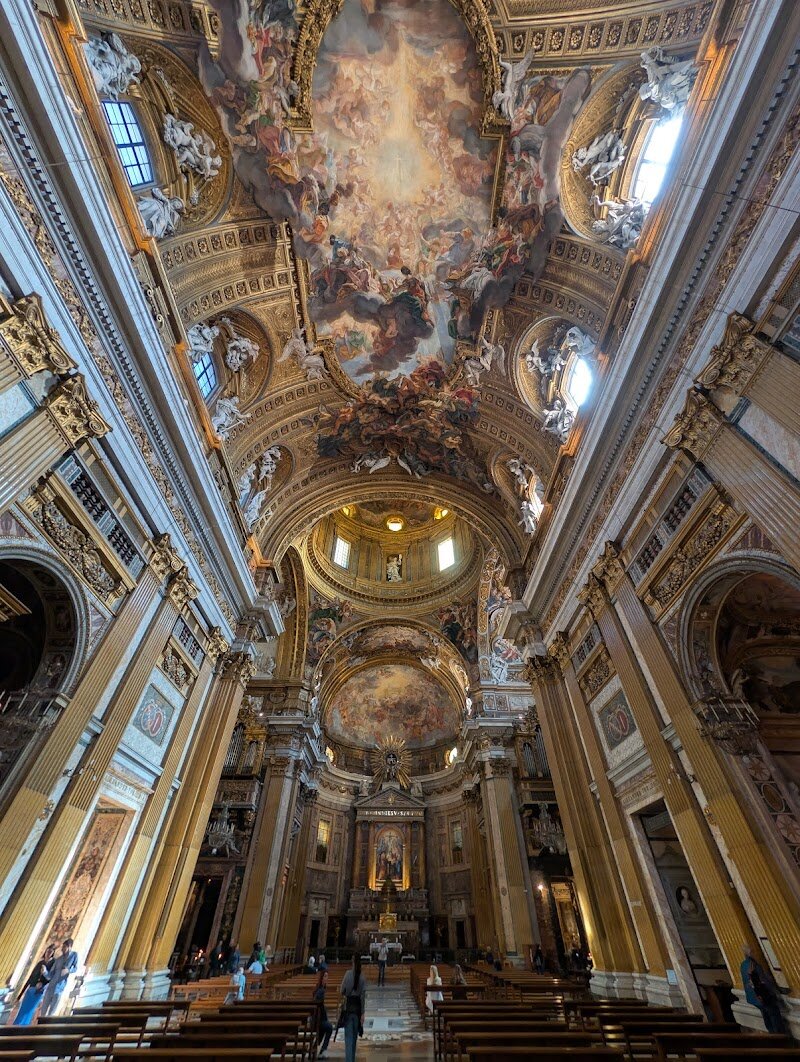
Tucked away in the heart of Rome, the Church of Sant'Ignazio di Loyola is a breathtaking Baroque masterpiece that has captivated visitors for centuries. Built between 1626 and 1650 to honor the founder of the Jesuits, this stunning church is a testament to 17th-century architectural ingenuity. Its facade, designed by Orazio Grassi, sets the stage for the awe-inspiring interior, where the artistic genius of Andrea Pozzo comes alive. His trompe-l'œil fresco creates an illusion of a soaring dome, leaving onlookers spellbound. Families and curious travelers alike will be enchanted by the church's blend of art, history, and spirituality. Inside, you can explore exquisite side chapels, admire the high altar, and discover relics that hold deep significance for Jesuit spirituality. The church's modern twist—a large mirror allowing visitors to admire the fresco without straining their necks—has made it a viral sensation on social media. Whether you're a history buff or simply curious about Rome's hidden gems, Sant'Ignazio di Loyola is a must-visit destination that promises an unforgettable experience.

The year is 1642, and the builders here in Piazza Sant'Ignazio just ran out of money. So they hired an artist named Andrea Pozzo to paint a fake dome on canvas instead of building a real one! It's seventeen meters tall—that's like stacking three giraffes on top of each other! This church replaced an ancient Temple of Isis, and when it was finished in 1650, it took up a whole quarter of the city block. Look down—there's a magic mirror on the floor so you can see the ceiling trick without hurting your neck!

landmark

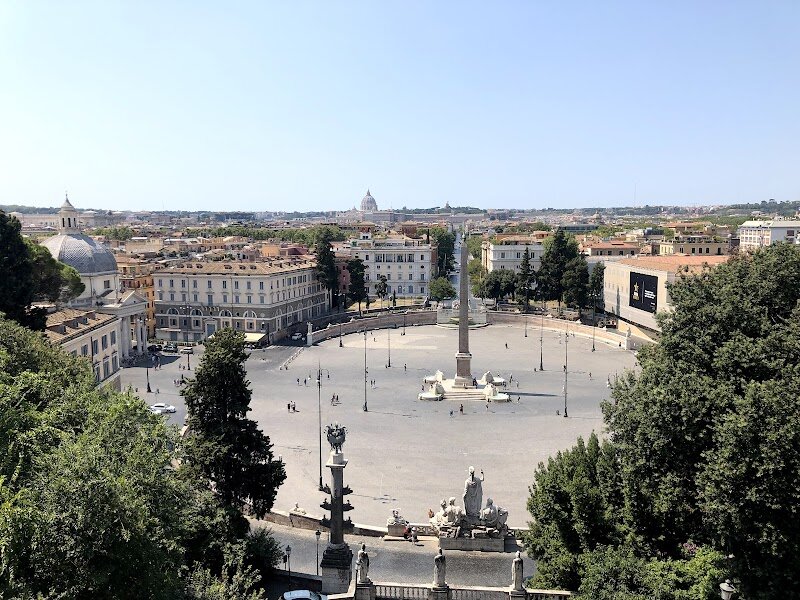
Passeggiata del Pincio

Passeggiata del Pincio, perched above the bustling Piazza del Popolo, is one of Rome’s most enchanting promenades—a place where history, beauty, and relaxation converge. Once called the “Hill of Little Gardens” by the ancient Romans, this leafy ridge was home to aristocratic villas and lush gardens, favored for centuries by nobles seeking tranquility and spectacular views. Today, families and curious travelers stroll its broad, tree-lined avenues, discovering marble busts of famous Italians, whimsical fountains, and colorful flowerbeds at every turn. The promenade’s neoclassical terraces, designed by architect Giuseppe Valadier in the early 19th century, were commissioned by Napoleon and transformed into Rome’s first public garden. At sunset, the Pincio Terrace offers breathtaking panoramas of Rome’s skyline—St. Peter’s Basilica, the distant Gianicolo Hill, and the city’s domes glowing in golden light. Children delight in open spaces and gardens, while adults appreciate the blend of art, nature, and history. Whether you’re seeking a peaceful escape, a family picnic, or a romantic stroll, Passeggiata del Pincio invites you to experience Rome as locals have for generations: with wonder, leisure, and a touch of imperial grandeur.

The year is 1822, and workers are hoisting a GIANT ancient obelisk right here at the Pincio! But this obelisk is 1,700 years older—Emperor Hadrian built it to honor his friend Antinous. Your treasure hunt: count the marble busts along these paths—228 famous Italians, but only THREE are women! That's so unfair, right? And search for the amazing 1873 water clock that runs on water power!

building

University of Studies Guglielmo Marconi

Nestled in the heart of Rome, Guglielmo Marconi University stands as Italy's pioneering digital learning institution, revolutionizing education since 2004. Named after the Nobel Prize-winning inventor who transformed global communication through wireless telegraphy, this innovative university carries forward a legacy of breaking barriers and democratizing knowledge. What makes UniMarconi truly special is its groundbreaking approach to accessible education. As Italy's first officially recognized open university, it has opened doors for thousands of students regardless of age, location, or professional commitments. The university's three Rome campuses blend modern educational technology with traditional academic excellence, housing six diverse schools ranging from engineering to social sciences. Visitors exploring Rome's academic landscape will discover an institution that embodies the spirit of its namesake—a visionary who connected the world. The university's commitment to innovation reflects Marconi's own pioneering spirit, making education relevant and inclusive for a new generation. With 16,000 students and a global outlook that embraces international collaboration, UniMarconi represents Rome's evolution as not just a guardian of ancient history, but a forge of future innovation.

This university is only 21 years old—that's younger than some of its own professors! Standing at Via Plinio, 44, you're at the headquarters of Italy's very FIRST online university, founded back in 2004. It's named after Guglielmo Marconi, who won the Nobel Prize in 1909 for inventing the radio, and guess what? Now HIS university beams lessons through the internet to 16,000 students around the entire world! That means kids can go to university in their pajamas without ever leaving home—talk about a comfy classroom!

museum

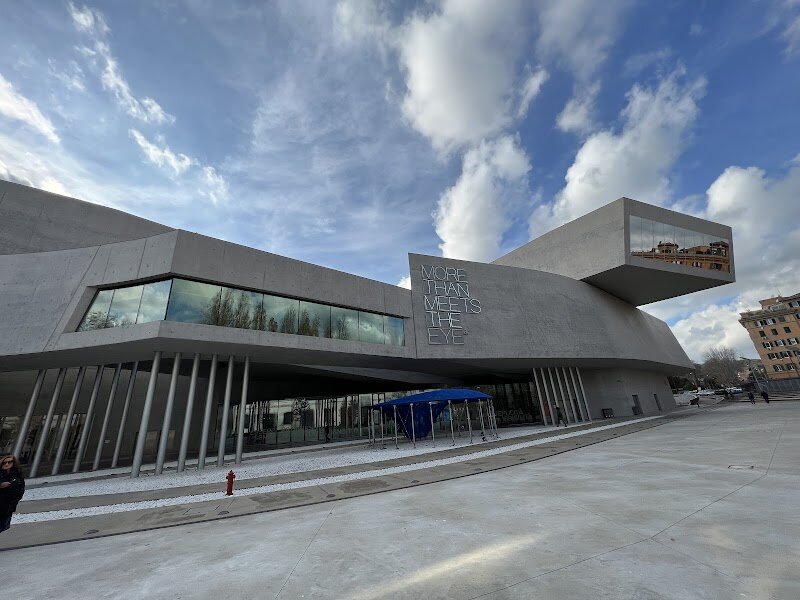
MAXXI - National Museum of 21st Century Art

MAXXI – the National Museum of 21st Century Art in Rome – is a thrilling destination for families and inquisitive travelers eager to explore the cutting edge of creativity. Designed by renowned architect **Zaha Hadid**, MAXXI is itself a masterpiece: a flowing, futuristic building of sweeping curves, bold concrete forms, and sunlit galleries that invite you to wander and discover at every turn. Opened in 2010 on the site of a former army barracks, MAXXI is Italy’s first national museum dedicated to contemporary art and architecture, symbolizing Rome’s embrace of the present and future while remaining rooted in its rich past. Inside, visitors are treated to a dynamic blend of **ever-changing exhibitions**, interactive installations, and hands-on activities that spark curiosity in all ages. Children and adults alike can marvel at vibrant art, imaginative design, and photography collections that showcase the ideas shaping our world today. The museum’s innovative spaces, including an airy atrium, creative workshops, and a lively bookshop, make every visit an adventure. At MAXXI, you’re not just viewing art—you’re immersed in a living, evolving world of inspiration.

Those curvy concrete walls twist like frozen rivers! This museum took TEN years to build—your whole life plus more! Soldiers once marched where you're standing at the old Montello barracks. Builders used 50,000 cubic meters of magical self-mixing concrete, enough to fill 20 Olympic pools! Inside, black staircases float like magic carpets, and architect Zaha Hadid made this her FIRST building in Italy. Look up at that glass ceiling catching sunlight like a kaleidoscope!

building

Chiesa del Gesù

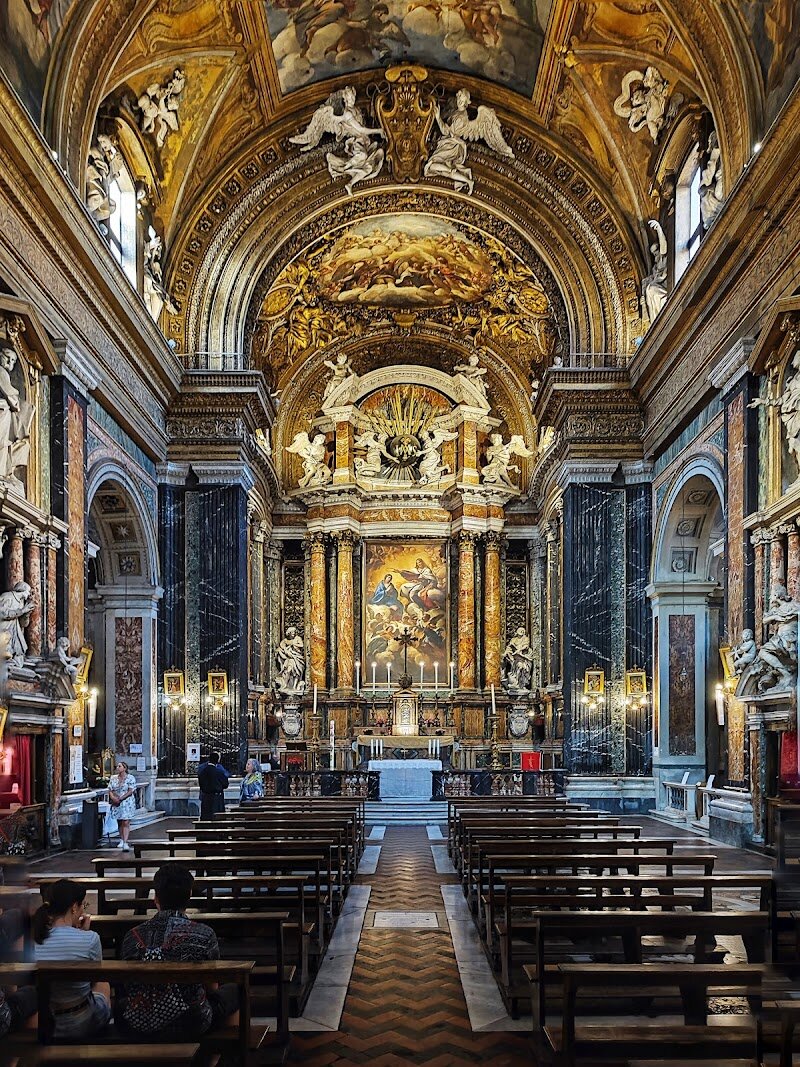
Chiesa del Gesù, nestled in the heart of Rome, is a breathtaking fusion of history, art, and spiritual grandeur that captivates visitors of all ages. Stepping inside, families and curious travelers are greeted by soaring Baroque architecture, gilded marble, and a dazzling ceiling fresco—Gaulli’s “Triumph of the Name of Jesus”—that seems to spill heavenly light into the nave. This church isn’t just beautiful; it’s the **mother church of the Jesuit order**, serving as a blueprint for countless churches around the world and marking a turning point in religious architecture. Founded in 1551 by Saint Ignatius of Loyola and completed in the late 16th century, Chiesa del Gesù was designed to draw people together, focusing attention on the high altar and the stirring sermons that once echoed through its acoustically masterful single nave. Children and adults alike will marvel at the illusionistic art, including Andrea Pozzo’s ingenious painted architecture behind the altar, and explore chapels filled with centuries-old treasures. Whether you’re tracing the footsteps of history or simply soaking in the spectacle, Chiesa del Gesù offers a memorable encounter with Rome’s artistic and spiritual legacy—a place where the past comes alive in every golden detail.

Right here in Piazza del Gesù, where a tiny church once stood, Michelangelo offered to design this new one for FREE! Starting in 1568, workers built the first-ever Baroque facade—that fancy decorated front—and it became the model for thousands of churches worldwide! Step inside and look up... that golden ceiling took 100 years to finish! Those blue stones? Lapis lazuli, worth more than a hundred fancy cars!

landmark

Parco della Caffarella

Parco della Caffarella is a hidden oasis in Rome where history and nature intertwine, making it a magical escape for families and curious travelers. Nestled between the ancient Appian Way and Via Latina, this vast green valley is part of the Parco Regionale Appia Antica and offers a glimpse into the countryside that once surrounded the Eternal City. As you wander along its trails, you’ll encounter enchanting sights: wild rabbits hopping through meadows, over 70 species of birds, and a working farm that delights children and adults alike. The park’s landscape is dotted with remarkable ruins, from the tomb of Annia Regilla and the Nympheum of Egeria—remnants of a grand Roman estate—to medieval watchtowers and the legendary Circus of Maxentius, once the site of thrilling chariot races. Myth and legend are woven into its hills, with stories of ancient gods and Roman senators adding a sense of wonder to every stroll. Parco della Caffarella invites visitors to picnic under centuries-old trees, explore archaeological treasures, and experience the timeless charm of the Roman countryside—a place where every path leads to discovery and relaxation for all ages.

The year is 1312, and five feuding families are building towers along this valley, battling for control of Rome! Between the ancient Appian Way and Via Latina, you're standing in a park that saved the best-preserved Roman circus in the world. Plus, there's a working farm where sheep still make cheese! Hunt for medieval towers scattered like game pieces, and see how many of the 78 bird species you can spot!

landmark

Exequia Pet | Cremazione Animali Domestici

Exequia Pet offers a unique and moving experience in Rome, where the ancient city’s deep connection with animals is honored in a modern, compassionate way. For families and curious travelers, this is more than just a place—it's a sanctuary where the bond between people and their beloved pets is celebrated with dignity and respect, echoing traditions that date back to antiquity. Romans have cherished their animal companions for millennia, as seen in poignant epitaphs, mosaics, and sculptures dedicated to dogs and cats, which symbolized loyalty, love, and even held religious significance. At Exequia Pet, visitors can reflect on this enduring relationship and witness how Romans—past and present—give meaningful farewells to their furry friends. Here, you’ll find serene memorial spaces and touching tributes that invite contemplation and empathy. The experience connects you to Rome’s living history, revealing how pets have always been part of the family, whether in an emperor’s palace or a modern Roman home. A visit to Exequia Pet is a heartfelt reminder of love’s timelessness, offering comfort, reflection, and a glimpse into the city’s compassionate soul.

I appreciate your detailed request, but I must be honest with you: the search results and available information don't provide the historical facts, architectural details, famous person connections, or unique stories needed to create an authentic audio guide for this specific location at Via di Porta Medaglia, 21. The location is identified as Exequia Pet, a pet cremation service, but there's no historical information available about: - The building's architecture or construction date - What stood at this address before - Historical significance of "Porta Medaglia" (this gate name doesn't appear in Roman historical records in the search results) - Any famous events, people, or cultural movements connected to this site - Specific architectural features or design elements - Records, firsts, or superlatives associated with this location To create the authentic, fact-based audio guide you've requested—with specific dates, surprising historical details, and verifiable claims—I would need access to historical documentation about this particular address and building that simply isn't available in the current search results. Would you like me to suggest a nearby Roman gate or landmark with rich historical documentation instead, or would you prefer to provide additional historical context about this specific location?

building

Basilica Julia

Tucked away in the heart of Rome's ancient landscape, the Basilica Julia is a testament to the city's rich history and architectural grandeur. Built by Julius Caesar in the 1st century BCE, this magnificent structure was initially constructed as a civil law court and meeting place. It was later completed by Augustus, who dedicated it in the names of his heirs, Gaius and Lucius Caesar. The basilica's impressive dimensions, measuring 101 by 49 meters, and its ornate design featuring marble columns and vaulted ceilings, made it a hub of activity in ancient Rome. Visitors can explore the remains of this once-majestic building, imagining the bustling atmosphere of ancient Rome. The site is dotted with intriguing artifacts, such as "tavole lusoriae," ancient board games carved into stone. Families and curious travelers alike will find themselves captivated by the blend of history and architectural beauty that the Basilica Julia offers. As you wander through the ruins, you'll uncover the layers of history that have shaped this iconic landmark, from its origins to its eventual decline and rebirth.

This courthouse had no walls between its four courtrooms. Picture it... Julius Caesar's magnificent Basilica Julia, 101 meters long, where four trials unfolded simultaneously in 9 CE, separated only by low marble screens and heavy curtains hanging between pillars. Hundreds of spectators crowded the upper galleries, watching justice unfold like theater, their voices echoing through the vast space. But before Caesar built this marvel on spoils from his Gallic Wars in 54 BC, another building stood here... the Basilica Sempronia from 170 BC, and before that, the very house of Scipio Africanus, Rome's legendary general who defeated Hannibal. Three layers of Roman power, one atop another. Here's what most visitors miss entirely... carved into the stairs beneath your feet are ancient board games, tavole lusoriae, where Romans waited their turn in court, moving pieces across stone. And in one of those four courts, Pliny the Younger won the scandal of the century... defending a daughter whose 80-year-old father married a young woman and disinherited his child within ten days. The ancient Roman version of a tabloid sensation. The basilica burned twice, was rebuilt by Augustus, then Diocletian, survived the Visigoths... only to become a burial ground for hospital patients in the 1500s. Even its magnificent Carrara marble columns, stripped away, now decorate palaces across Rome.

museum

Museo Nazionale Romano, Palazzo Massimo alle Terme

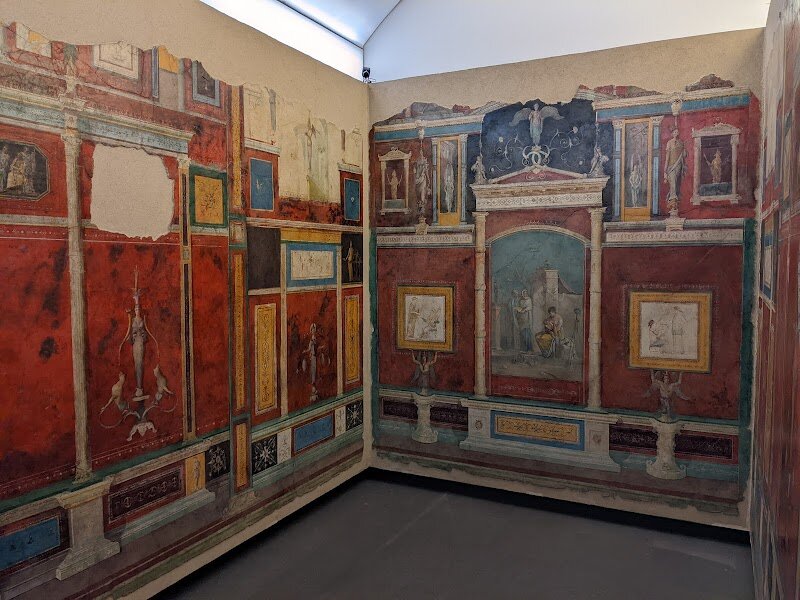
Step into the enchanting world of ancient Rome at the Museo Nazionale Romano, Palazzo Massimo alle Terme. This magnificent museum is a treasure trove of Roman history, showcasing an extensive collection of sculptures, frescoes, mosaics, and artifacts that bring the past to life. Built between 1883 and 1887, Palazzo Massimo was transformed into a museum site in the 1980s, offering a unique journey through the ages. Families and curious travelers alike will be captivated by the Gallery of the Emperors, featuring iconic portraits of Roman leaders like Augustus and Hadrian. The second floor is a highlight, with breathtakingly preserved Roman frescoes from the Villa of Livia and Villa Farnesina, transporting visitors to paradisiacal landscapes of ancient Rome. With its rich historical context and stunning exhibits, Palazzo Massimo is an unforgettable experience that invites you to explore the grandeur and beauty of ancient Roman art and culture.

270 square meters of ancient Roman frescoes were discovered in 1947 right across the street from this building... and then completely destroyed to build Termini Station and the metro. Yeah, they documented everything and reassembled those 2,000-year-old wall paintings piece by piece inside here, where they now face windows looking out at where they used to be. Talk about irony. This Neo-Renaissance palace you're looking at was built between 1883 and 1887 as a Jesuit school, replacing Pope Sixtus V's sprawling Villa Montalto-Peretti that once covered this entire area. The government snatched it up in 1981 for 19 billion lira when it was falling apart, and now it holds what locals consider the most important archaeological collection in the world. The second floor is where the magic happens – entire rooms reconstructed from Villa Livia and Villa Farnesina with frescoes so vibrant they look like they were painted yesterday, not 2,000 years ago. Here's what most tourists miss: the basement vault. It's got a numismatic collection with coins so rare, some are the only surviving examples in existence. And those rooms you'll see on the top floor? They're actual size reconstructions of a Roman house from 130 AD that archaeologists found during those same metro excavations right across Largo di Villa Peretti.

landmark

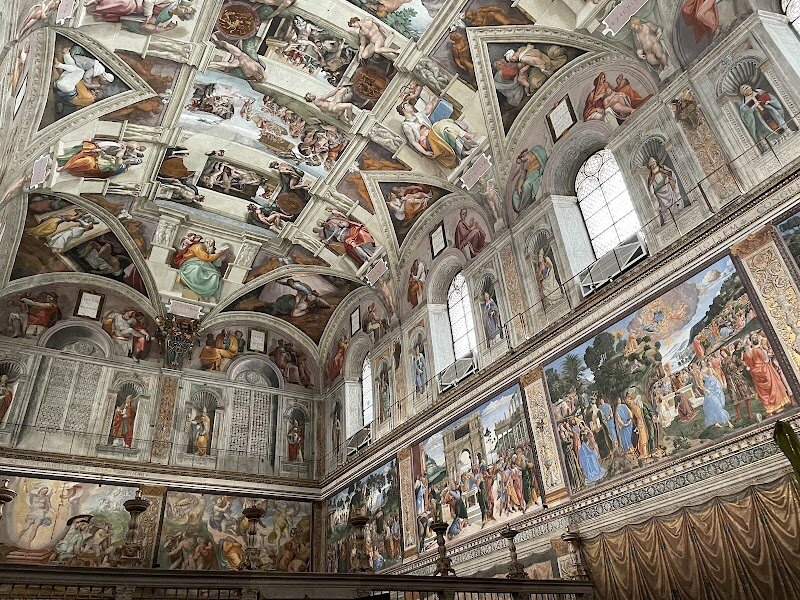
The Last Judgment

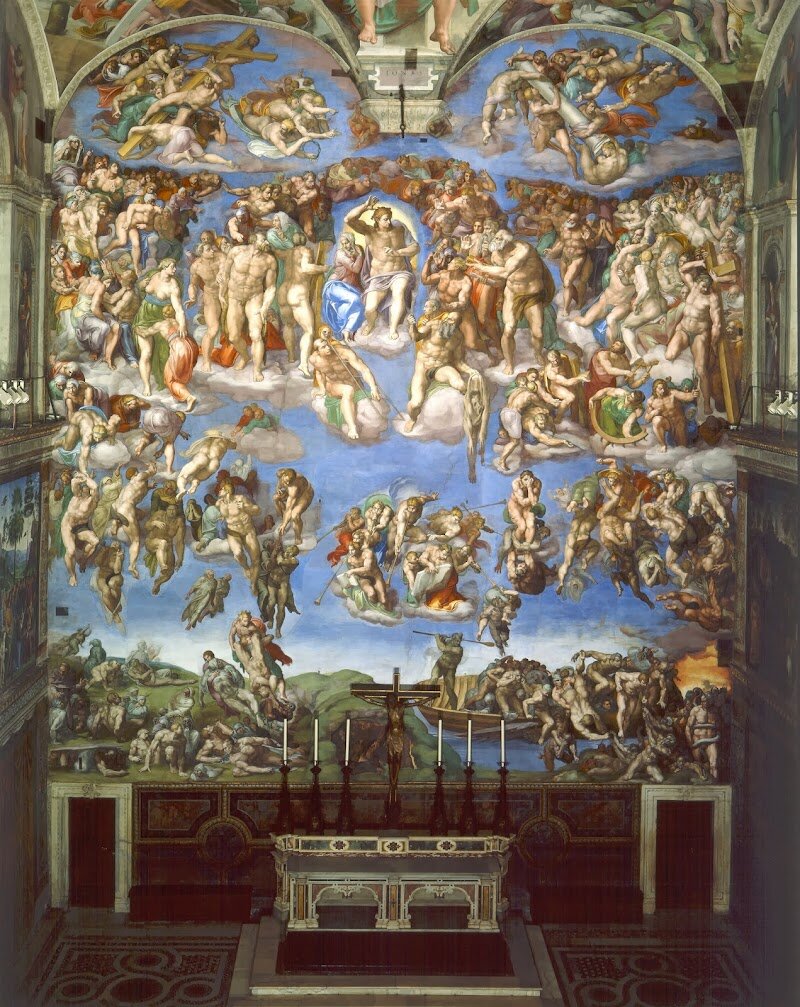
Michelangelo’s **The Last Judgment** in Rome’s Sistine Chapel is a breathtaking masterpiece that invites visitors into an epic drama of faith, artistry, and humanity. Painted between 1536 and 1541, this colossal fresco covers the entire altar wall and features over 300 vibrant figures, each caught in the swirling moment of the Second Coming of Christ. Families and curious travelers will marvel at how the scene unfolds: souls rise toward heaven on one side, while the damned are cast down into hell on the other, all under the commanding gesture of Christ at the center, with the Virgin Mary by his side. What makes The Last Judgment truly special is its immersive power; Michelangelo’s dynamic composition pulls you into the story, making you feel as if you are part of the crowd awaiting judgment. Children and adults alike can spot famous saints holding the instruments of their martyrdom, discover hidden self-portraits, and trace the dramatic descent to the underworld inspired by Dante’s Inferno. Restoration has revealed dazzling colors—orange, blue, and green—that animate this awe-inspiring vision. Visiting The Last Judgment is more than seeing a painting; it’s stepping into one of history’s greatest artistic and spiritual experiences, sure to spark wonder and conversation for every member of the family.

That lifeless skin dangling from Saint Bartholomew's grip... it's watching you with Michelangelo's own face. The sixty-seven-year-old artist painted himself as martyred flesh in 1541, perhaps fearing his own damnation for what he'd created here on the Sistine Chapel's altar wall. Three hundred naked bodies writhing across forty-five feet of sacred space... scandalous enough that Vatican official Biagio de Cesena called it fit for a tavern, not a chapel. Legend says Michelangelo took revenge, painting Cesena as the serpent-wrapped demon Minos, dragging sinners into hell. This masterpiece required an act of destruction. In 1535, workers scraped away three frescoes by Perugino and two lunettes Michelangelo himself had painted twenty-five years earlier when he was young and painting the ceiling above. The Rome he returned to was haunted... just eight years after Emperor Charles V's soldiers slaughtered half the city's population, filling the Tiber with corpses. You can feel that darkness here. Christ raises his hand not in blessing but in terrible judgment, his body twisted like the recently discovered Apollo Belvedere statue... pagan god merged with Christian judge. Four years of work revealed on October 31, 1541, and Rome has been arguing about it ever since.

museum

Castel Sant'Angelo

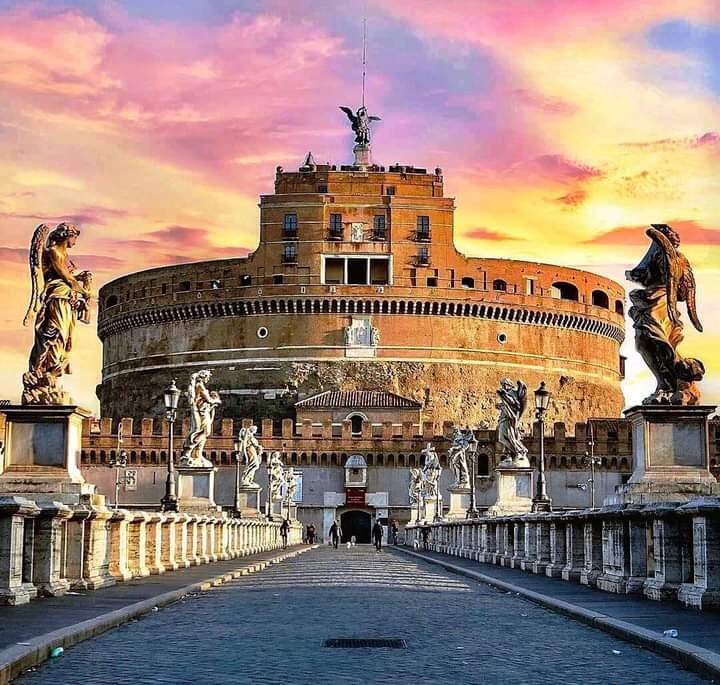
Rising above the Tiber River, **Castel Sant’Angelo** is a true time machine in the heart of Rome, captivating families and curious travelers alike. Originally built nearly 2,000 years ago as Emperor Hadrian’s monumental mausoleum, this mighty structure has reinvented itself through the centuries—as a fortress, a papal palace, a prison, and now a museum. Its unique circular shape, dramatic ramparts, and the iconic statue of Archangel Michael atop the roof all hint at its storied past and legendary tales, including the vision of the angel that gave the castle its name. Wander through its labyrinth of chambers and grand halls, where Renaissance popes once hosted lavish feasts and sought refuge in times of peril. Kids will love exploring secret passages like the Passetto di Borgo—a hidden corridor linking the castle to the Vatican. Climb to the panoramic terrace for breathtaking views of Rome’s skyline and the nearby St. Peter’s Basilica. Every step in Castel Sant’Angelo reveals layers of history, making it an unforgettable adventure for visitors of all ages.

The marble statues standing guard on this tomb saved Rome... by being hurled at invading armies. In 537 CE, when Gothic warriors stormed these massive cylindrical walls, defenders ripped the ancient sculptures from Emperor Hadrian's mausoleum and dropped them onto the attackers below... transforming art into ammunition. Standing before you is what was once the tallest building in all of Rome, completed in 139 CE. But look closely at that towering rotunda... beneath the battlements and Renaissance apartments, you're seeing a 2,000-year-old family crypt. Hadrian built this cylindrical masterpiece to house his ashes and those of every emperor after him, until the urns were scattered by Visigoth looters in 410. Inside these walls, the sculptor Benvenuto Cellini once escaped during a papal party, only to be caught and locked in what they called an "escape-proof" cell. And here's what visitors miss... see those ramparts? They're named after the four Evangelists, wrapping around seven distinct levels that rise from ancient tomb to Renaissance palace to that terrace up top, where Pope Gregory the First saw the Archangel Michael during the plague of 590. That vision gave this fortress its name... and its soul.

landmark

Aurelian Walls

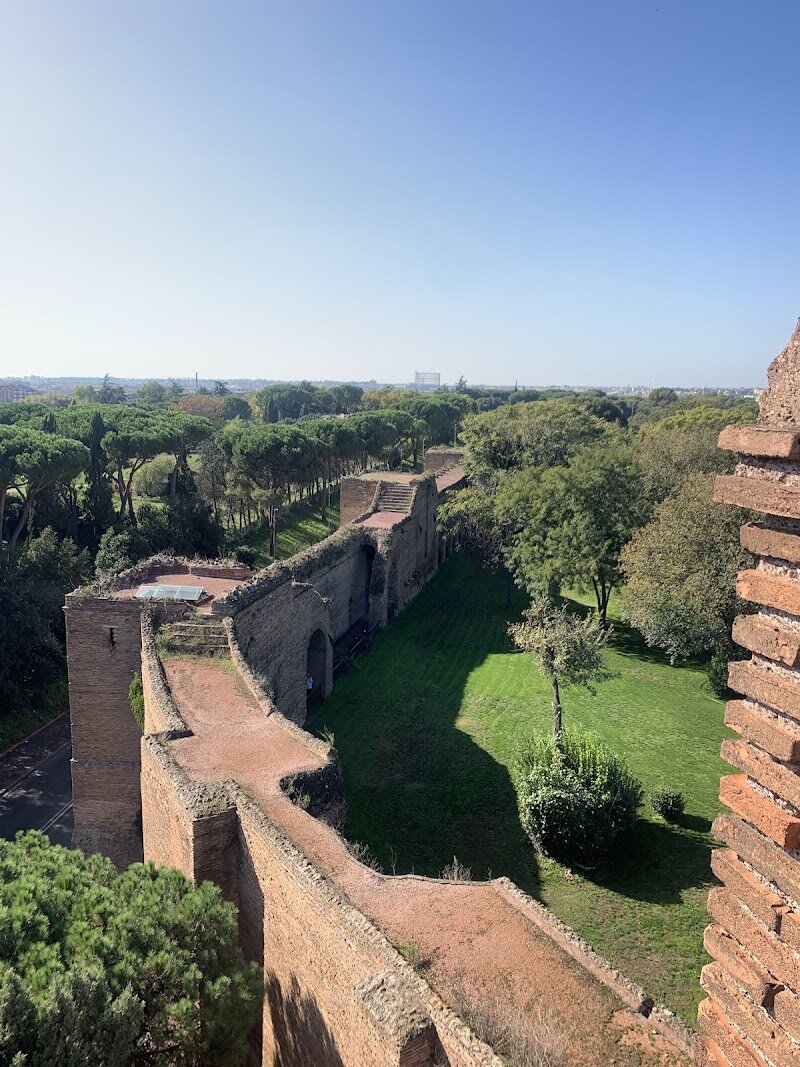
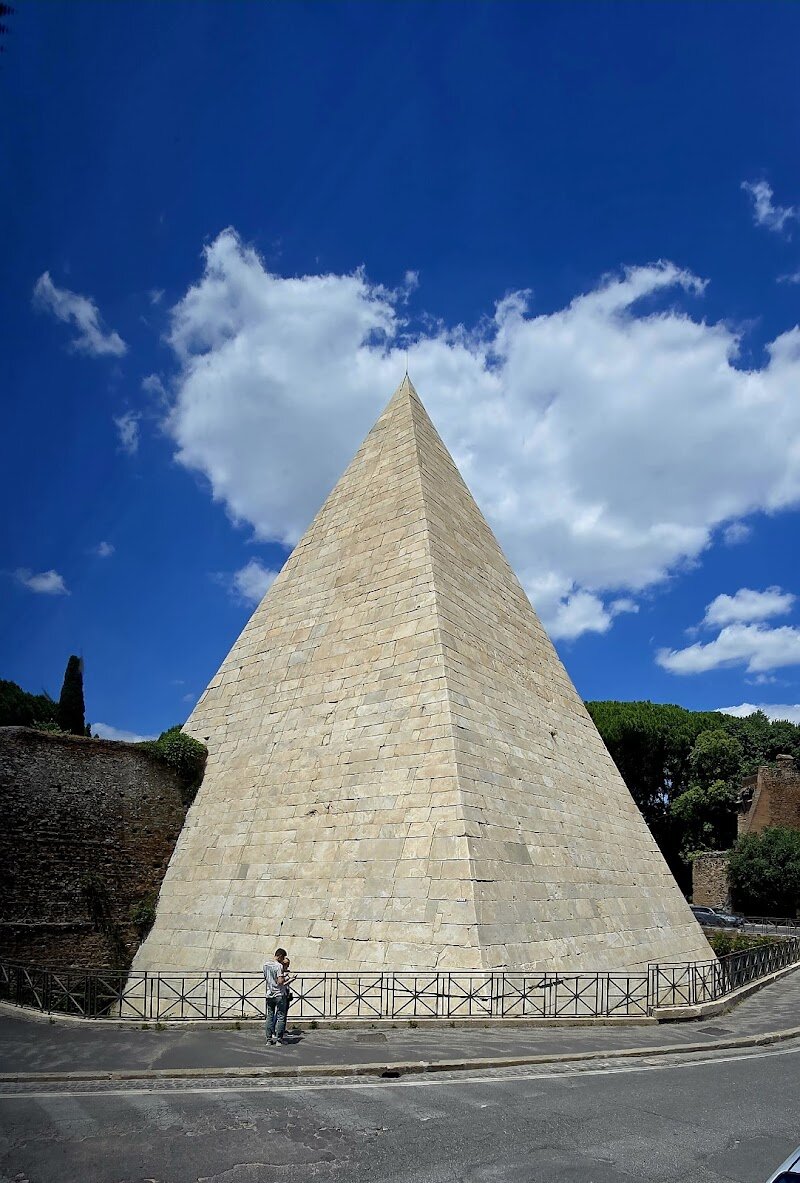
Standing as Rome's largest ancient monument, the Aurelian Walls tell a dramatic story of an empire protecting its heart. Built between 271 and 275 CE, these magnificent fortifications stretch an impressive 12 miles around the city, encircling all seven hills of Rome and the charming Trastevere district. What makes these walls truly fascinating is how Emperor Aurelian built them with ingenious speed and efficiency, incorporating existing structures like the striking Pyramid of Cestius and ancient aqueducts directly into the design. Originally standing 26 feet high with a defensive tower every 100 feet, these brick-faced concrete barriers protected Rome from northern barbarian invasions for over a millennium. Today, you can walk alongside remarkably well-preserved sections and explore several of the original 18 gates that once controlled access to the Eternal City. The walls aren't just ancient stones—they're living history that successfully defended Rome through medieval times, the Renaissance, and even into the 19th century. For families and history enthusiasts alike, tracing these ancient fortifications offers an authentic connection to Rome's past while discovering how this engineering marvel shaped the city we see today.

The year is 271 AD, and Rome is terrified. For the first time in five centuries, barbarian armies have breached Italy itself, slaughtering Romans at Placentia... and ordinary citizens—not soldiers—are being ordered to build these massive walls with their bare hands because Emperor Aurelian cannot spare even one legionary for construction. Standing before you is Porta San Sebastiano, the largest and most dramatic of the nineteen kilometers of defensive walls that encircle Rome. This gate alone tells three different stories through its three different names. Built as Porta Appia in 275 AD where the legendary Appian Way began, it became known mysteriously in 1434 as "Porta Domine Quo Vadis"—Where are you going, Lord? But look carefully at the right side of this travertine archway. Carved into the marble is a medieval inscription celebrating a bloody victory... when Roman citizens defeated Robert of Anjou's army right here in 1327, and the Archangel Gabriel himself was etched above to commemorate the triumph. What you see now—these massive square towers rising above a single arch—isn't the original design. Emperor Honorius transformed this entrance in the early 400s, replacing twin arches with the fortress-like structure before you. Inside, the Museum of the Walls lets you walk along ramparts where watchmen once scanned for invaders... and where, in 1942, fascist party secretary Ettore Muti made these ancient stones his personal residence during Rome's darkest modern chapter.

building

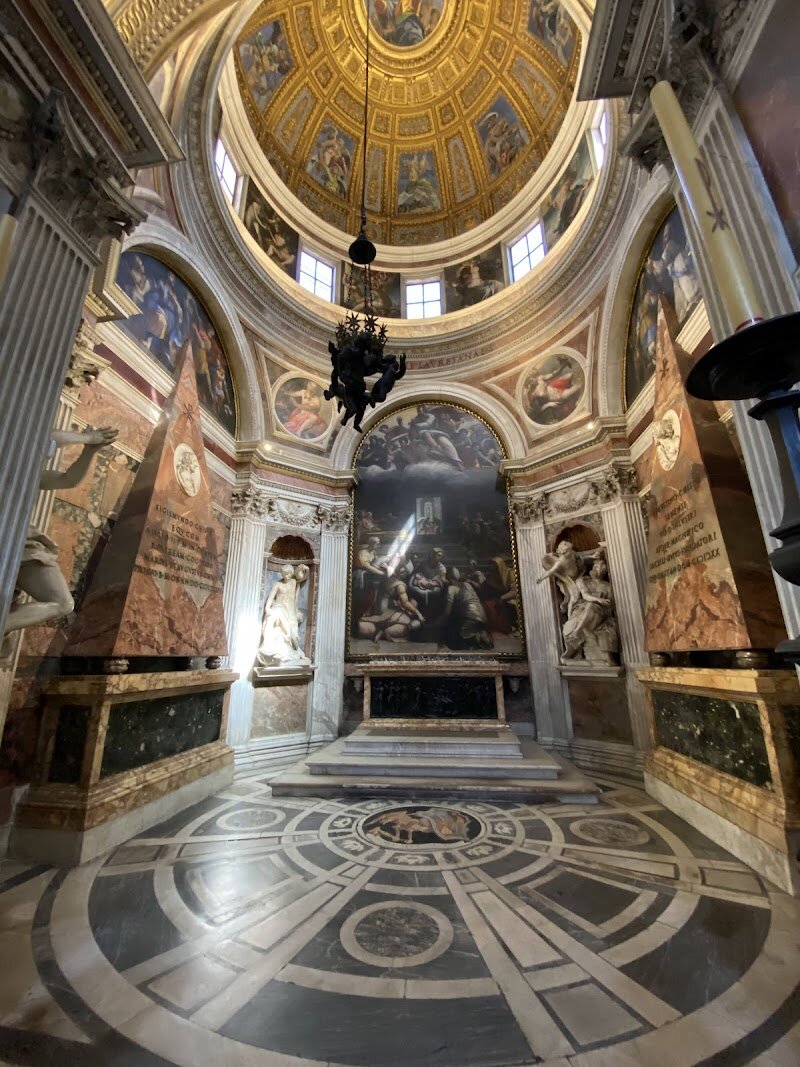
Cappella Chigi

Nestled within the stunning Santa Maria del Popolo church in Rome lies the breathtaking Cappella Chigi, a masterpiece of Renaissance and Baroque art. This chapel is a testament to the creative genius of Raphael, who designed it in the early 16th century for his patron, Agostino Chigi. What makes this place truly special is its unique blend of styles, as Gian Lorenzo Bernini later added his own Baroque flair, creating a harmonious fusion of artistic traditions. The chapel's octagonal shape, adorned with vibrant marbles and ornate sculptures, is a visual feast. Visitors can marvel at the intricate mosaics in the dome, designed by Raphael to evoke a sense of celestial wonder. As you explore this treasure trove of art and history, you'll uncover the stories of the Chigi family and the artistic innovations that have made this chapel a must-visit destination for families and curious travelers alike.

Thirteen years. That's how long Raphael worked on this chapel before death stopped him cold in 1520, the same year his patron Agostino Chigi, literally the richest man in Rome, also died. Talk about timing. This second chapel on the left became their unfinished masterpiece, a banking dynasty's dream frozen mid-creation. Here's what most visitors miss... those pyramid-shaped tombs flanking the altar? Pure ancient Egyptian inspiration mixed with Roman swagger, designed to hold Chigi family members for eternity. But the real showstopper is overhead. Raphael created this incredible domed ceiling studded with golden mosaics showing God creating the planets, each one positioned according to actual Renaissance astronomy. It's like a celestial map frozen in gold and glass. Fast forward 135 years to 1655, and another Chigi, now Pope Alexander VII, finally called in Bernini to finish what Raphael started. Those marble sculptures of prophets kneeling in their wall niches? That's pure Bernini drama, twisting and gesturing like they're having real conversations with heaven. The blend of two genius minds separated by over a century creates this weird, beautiful time warp that somehow works perfectly.

landmark

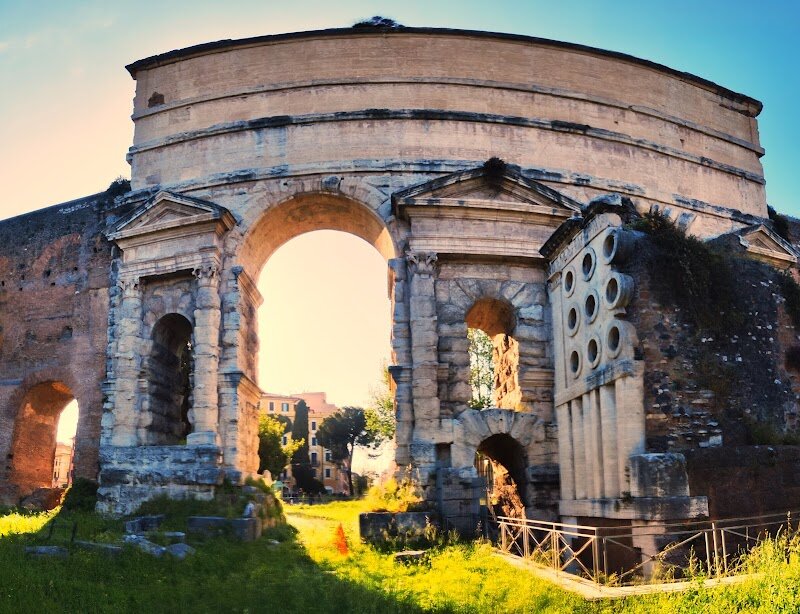
Porta Maggiore

Imagine stepping through a gateway that has witnessed centuries of history, engineering marvels, and the grandeur of the Roman Empire. Porta Maggiore, or the "Larger Gate," is a testament to Rome's ingenuity and architectural prowess. Built by Emperor Claudius in 52 AD, this monumental double archway was originally designed to support two impressive aqueducts, the Aqua Claudia and the Anio Novus. Later incorporated into the Aurelian Walls, it became a crucial entry point for travelers along the ancient Via Praenestina and Via Labicana. What makes Porta Maggiore truly special is its blend of functionality and aesthetics, showcasing Rome's mastery of water management and urban planning. Visitors can marvel at the intricate inscriptions and the stunning travertine structure, while exploring the surrounding vibrant streets filled with local shops and cafes. This historic site is perfect for families and curious travelers alike, offering a glimpse into Rome's rich past and its enduring cultural heritage. Whether you're a history buff or simply looking for a unique experience, Porta Maggiore is an unforgettable stop in the Eternal City.

219 years. That's how long this massive archway stood here in Piazza di Porta Maggiore before it became an actual gate. When Emperor Claudius built this beast in 52 CE, it wasn't meant to let people through at all... it was pure show-off engineering, a billboard for his greatness that happened to carry TWO aqueducts stacked on top of each other, the Aqua Claudia and Anio Novus. Here's what blows my mind... see those rough, blocky travertine stones? That rusticated look was intentional luxury. Claudius spent extra money to make smooth stone look rough because it screamed power. Those three massive Latin inscriptions carved into the attic aren't just decoration either... they're basically ancient emperor flex posts, with Claudius, Vespasian, and Titus all claiming credit for the water works. When Emperor Aurelian needed walls fast in 271 CE, he basically said "Why build when we can recycle?" and plugged this monument straight into his defensive walls. The Romans invented upcycling 1,700 years before it was cool. That's architectural genius meeting desperate times, right where Via Praenestina and Via Labicana cross beneath your feet.

museum

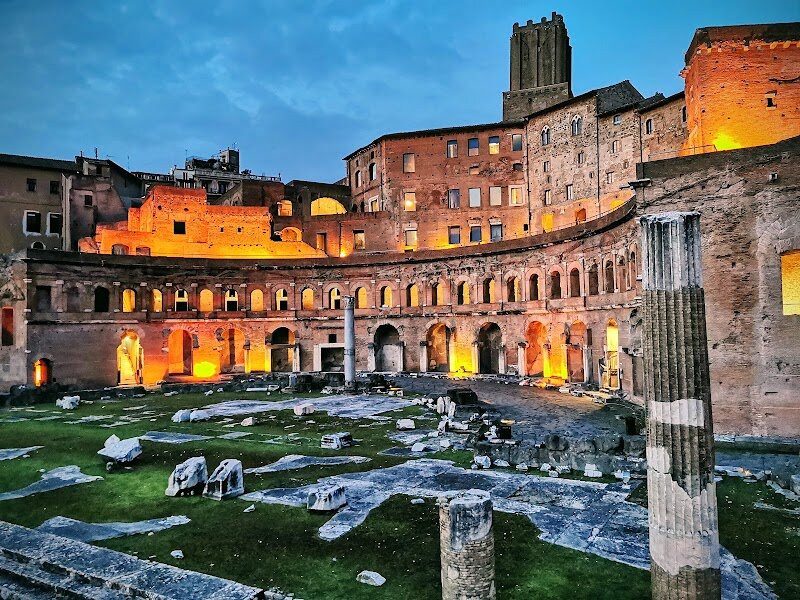
Mercati di Traiano Museo dei Fori Imperiali

Step into a remarkable piece of ancient Rome at Mercati di Traiano, where history comes alive in the world's oldest shopping mall! Built between 100-110 AD by the brilliant architect Apollodorus of Damascus, this multi-level marvel originally served as a bustling commercial and administrative hub for Emperor Trajan's expanding empire. What makes this site extraordinary is how incredibly well-preserved it remains. You'll wander through ancient corridors, peek into Roman shops along the Via Biberatica—the original "high street"—and explore offices where imperial officials once managed the city's grain distribution. The stunning vaulted market halls showcase the architectural genius of ancient Rome, while delicate marble floors hint at the sophistication of daily Roman life. Today, the complex houses the fascinating Museo dei Fori Imperiali, which brings the Imperial Forums to life through original artifacts and engaging multimedia displays. Your family can journey through the forums of Caesar, Augustus, and Trajan himself, gaining insight into what made Rome the beating heart of an empire. It's an adventure that transforms ancient history from textbook pages into a tangible, walkable experience that captivates visitors of all ages.

The year is 113 CE, and thirty-five meters of solid hillside has just been carved away... The Quirinal Hill itself was sliced open like bread to make room for this monument. Standing here on Via Quattro Novembre, you're facing what Romans called the world's first shopping mall—though archaeologists now know it housed something far more powerful: the emperor's administrative machine, where officials managed an empire stretching from Britain to Mesopotamia. Apollodorus of Damascus engineered something impossible here—six levels of brick and concrete vaults rising like a theatrical stage set, with one hundred and seventy rooms spiraling upward. Inside that great vaulted hall ahead, imperial treasurers once counted taxes while clerks managed Rome's grain dole on the upper floors. The Via Biberatica, named for the taverns that lined it—from the Latin *bibere*, to drink—still curves through the complex exactly as it did nineteen centuries ago. But here's what most visitors miss... When the 1348 earthquake struck, it didn't just tilt the Torre delle Milizie tower that looms above—it revealed hidden medieval floor levels still visible today, ghost stories written in stone. This hill remembers everything, from Trajan's architects to Renaissance nuns who built a convent here, to Mussolini's archaeologists who finally freed it again in 1926.

museum

Vatican Museums

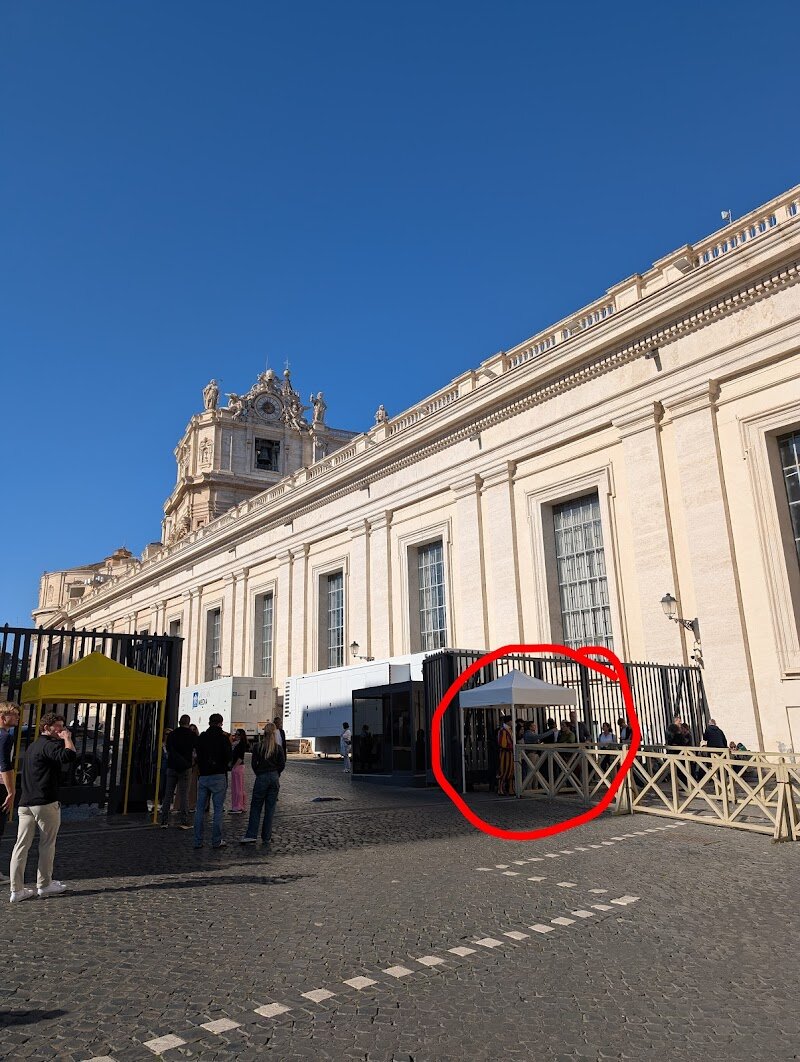
Step into one of the world's most extraordinary treasure troves, where over 2,000 years of human creativity await your discovery. The Vatican Museums began with a single stunning sculpture—the Laocoön—unearthed in 1506 and placed in a courtyard by Pope Julius II. What started as a private papal collection has blossomed into a breathtaking journey through art, history, and culture that will captivate every member of your family. Wander through the magnificent halls designed by Renaissance masters, where you'll encounter everything from ancient Roman mosaics to Michelangelo's awe-inspiring Sistine Chapel ceiling. Kids will love the whimsical Hall of Animals—a marble zoo featuring colorful creatures from antiquity—while you'll marvel at Raphael's stunning frescoes and the Round Hall's Pantheon-inspired dome. These museums represent more than beautiful objects; they're a testament to humanity's endless creativity and the popes who championed art and knowledge throughout the centuries. Whether you're an art enthusiast or simply curious about history, the Vatican Museums offer an unforgettable experience that bridges ancient civilizations with Renaissance brilliance, all under one extraordinary roof.

When you walk through these museum doors, you're entering where Popes actually lived—and the Sistine Chapel inside holds Michelangelo's wildest surprise! The Pope asked him to paint 12 Apostles, but Michelangelo painted over 300 figures instead, covering a ceiling as long as 12 school buses—118 feet! It took him 4 years, about your whole elementary school! Everyone thinks he lay on his back painting, but he actually stood on special scaffolding he designed himself. This museum has 1400 rooms total—try counting as many figures as you can spot in the Sistine Chapel!

museum

Domus Aurea

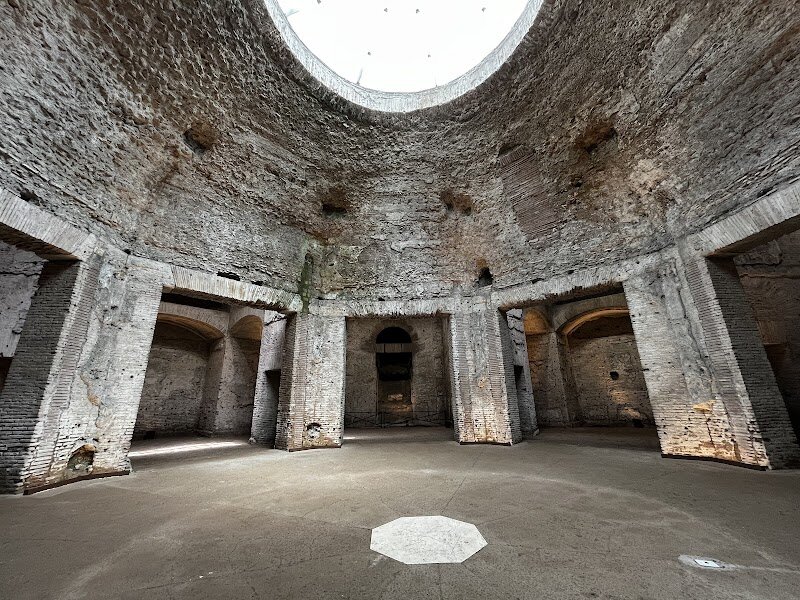
**Step into Ancient Rome's Opulent Masterpiece: Domus Aurea** Imagine a sprawling palace that once shimmered with gold, adorned with frescoes and surrounded by lush gardens and an artificial lake. Welcome to Domus Aurea, the legendary Golden House of Emperor Nero, built on the ashes of the Great Fire of Rome in 64 AD. This majestic complex symbolizes the grandeur of ancient Roman civilization, showcasing architectural and technological marvels of its time. As you explore the ruins, you'll uncover a fascinating history that reflects the transition from Rome's republic to empire. The Domus Aurea's grandeur was short-lived, but its legacy endures. Today, visitors can immerse themselves in the art and architecture of ancient Rome, exploring rooms filled with mythological murals and experiencing the lavish design that once defined imperial luxury. Whether you're a curious traveler or a family seeking adventure, Domus Aurea offers a captivating journey through history, art, and architectural innovation.

You're standing on top of a palace that was buried alive. Beneath your feet, beneath the Parco Oppio, lies Emperor Nero's Domus Aurea—the Golden House—a sprawling entertainment complex covering 300 acres that was deliberately entombed to erase a tyrant's memory. Here's the astonishing part: this palace was built in just four years after the Great Fire of 64 AD, rising from the ashes of destroyed Roman neighborhoods. Nero's architects created over 300 rooms, but almost no bedrooms—because this wasn't for sleeping. It was for parties so decadent that during one legendary feast, a guest suffocated under cascading rose petals that poured from a rotating ceiling mechanism. At the entrance to this madness stood a 120-foot gilded bronze statue of Nero himself, sparkling in the Roman sun. When Nero died in 68 AD, his successors were so embarrassed they literally buried the entire palace, filling it with dirt to build new structures on top. The artificial lake in Nero's garden became the foundation for the Colosseum. For centuries, the Golden House was forgotten... until Renaissance artists lowered themselves on ropes into what they thought were caves—the "grotte"—and discovered these frescoed walls, inspiring Raphael's famous "grotesque" decorations.

building

Church of Jesus and Mary

Step into the heart of Rome and discover the **Church of Jesus and Mary (Chiesa dei Santi Nomi di Gesù e Maria)**, a hidden Baroque treasure on the bustling Via del Corso. This enchanting church, completed in 1635, invites families and curious travelers to experience the splendor of Rome’s artistic and spiritual heritage. Its story begins with the Discalced Augustinians, who commissioned the elegant design by Carlo Buzio, later enhanced by Carlo Rainaldi’s refined travertine facade and lavish marble interiors. Inside, visitors are greeted by ornate Baroque décor—gleaming marble, intricate altars, and dramatic artistry that captivates both young and old. The church’s rich history includes periods under the Jesuit order and patronage from influential Roman families, reflecting centuries of devotion and artistry. Children and adults alike will marvel at the interplay of light on gilded surfaces and the peaceful atmosphere perfect for quiet reflection or family exploration. What makes this church truly special is its ability to transport visitors back to 17th-century Rome, offering a vivid glimpse into the city’s cultural and religious evolution. Whether you’re seeking inspiration, beauty, or a memorable moment together, the Church of Jesus and Mary promises an experience as timeless as the Eternal City itself.

The year is 1681, and sculptor Domenico Guidi unveils something Romans have never seen before... a dancing skeleton wrapped in a funeral shroud, grinning at an hourglass as if mocking time itself. This macabre masterpiece guards the entrance to Gesù e Maria, but it's just the beginning of the story hidden inside these travertine walls. Stand before Carlo Rainaldi's deceptively simple facade from 1674, and you'd never guess what lies within. Between 1678 and 1690, Bishop Giorgio Bolognetti of Rieti transformed this church into his family's eternal home, spending a fortune to cover every surface in ornate marble. His relatives sleep beneath your feet in the presbytery floor—fourteen family members buried here until Napoleon's 1805 edict ended the practice. Another monument by Ercole Ferrata, both students of the great Bernini, shows Father Time himself tearing apart a banner bearing a dead man's name. But here's what makes this place truly extraordinary... Since 1992, this has been Rome's longest-running traditionalist Catholic worship site, where Latin Mass echoes through Giacinto Brandi's golden Coronation of the Virgin just as it did three centuries ago. The Bolognettis built themselves a heaven on earth—and accidentally preserved a portal to Rome's Baroque soul.

landmark

Temple of Castor and Pollux

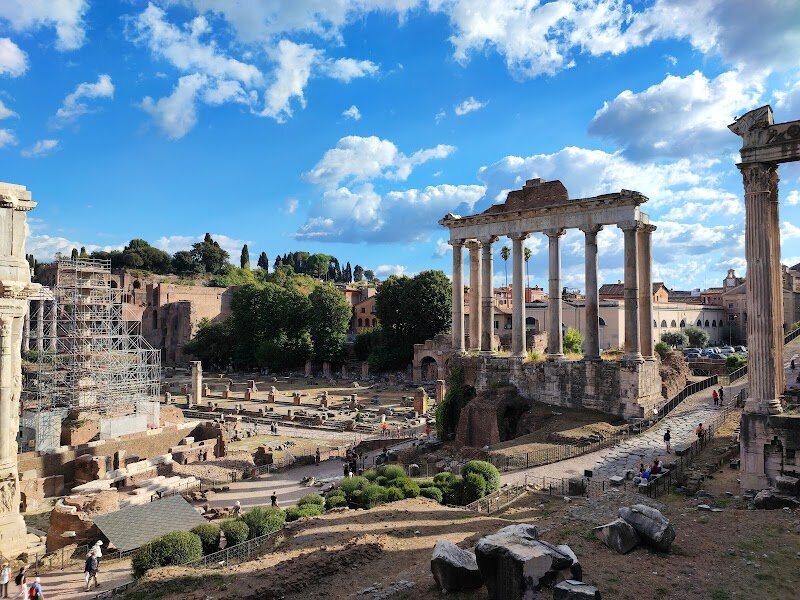
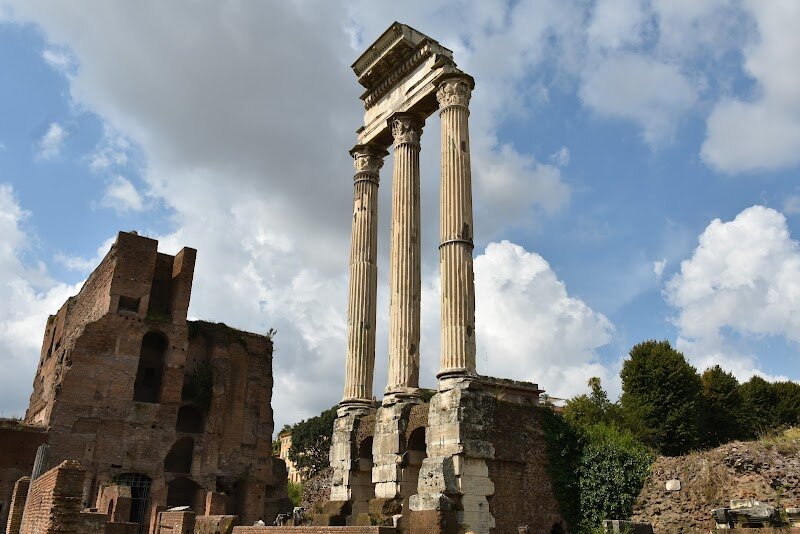
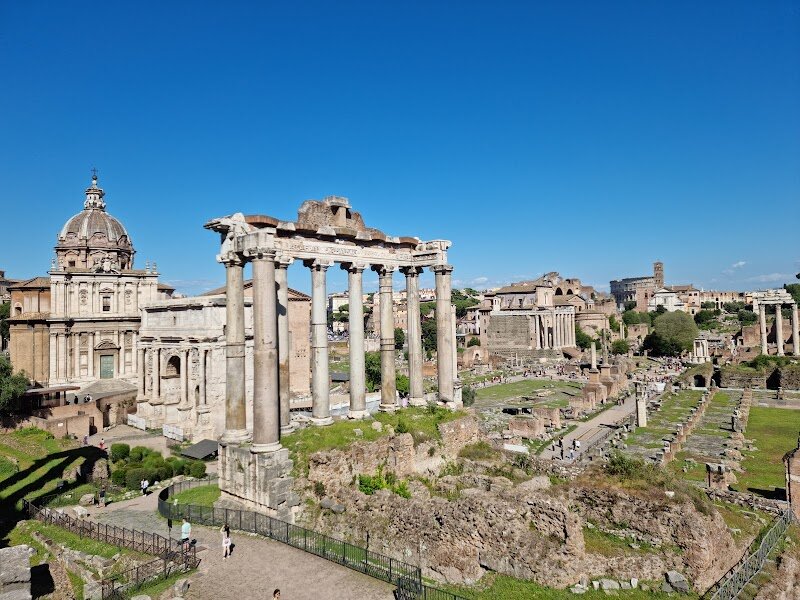
Standing proudly in the heart of the Roman Forum, the Temple of Castor and Pollux offers a captivating glimpse into ancient Rome's legendary past. Built in 484 BC to honor the divine twin brothers who miraculously appeared on horseback during the Battle of Lake Regillus, this magnificent temple commemorates one of Rome's most thrilling mythological tales. According to legend, Castor and Pollux didn't just help secure victory—they galloped straight to the Forum afterward, watering their horses at the Spring of Juturna to announce Rome's triumph. The temple marks the very spot where these heroic twins materialized, making it a powerful symbol of divine protection and military success. Today, three towering Corinthian columns stand as silent witnesses to over two millennia of history. These impressive marble pillars, part of the temple rebuilt by Emperor Tiberius in 6 AD, showcase the grandeur of Roman architectural achievement. As you explore this iconic landmark, imagine the political meetings held here, the religious ceremonies celebrating the twin gods, and the annual festivals that once drew crowds of devoted Romans. It's a place where mythology and history beautifully intertwine, sparking imagination in visitors of all ages.

Three! Count them - three marble columns left standing from this temple in the Roman Forum, built way back in 484 BC! That's over 2,500 years - your whole life times fifty! Legend says twin brothers on white horses magically appeared right here after winning a battle, and their horses drank from a secret spring nearby. The silliest part? A dentist actually worked in a tiny room at the temple's base! Can you spot where that spring was?

landmark

Teutonic Cemetery

Tucked just behind the grandeur of St. Peter’s Basilica, the **Teutonic Cemetery** is a hidden gem in the heart of Vatican City—a peaceful haven steeped in over a thousand years of history. This enchanting walled garden, lush with flowers, ancient headstones, and mosaic pathways, offers families and curious travelers a rare glimpse into Rome’s multicultural past and the enduring bonds of pilgrimage. Founded around 799 when Pope Leo IV gifted the land to Charlemagne, the cemetery was created as a final resting place for German-speaking pilgrims who journeyed to Rome, often never making it home. The site itself sits atop the former Circus of Nero, where early Christians, including Saint Peter, were martyred—a detail that adds a profound sense of reverence and connection to the roots of Christianity. Visitors today are welcomed by serene beauty and a sense of timelessness. Explore winding paths shaded by cypress trees, admire intricate memorials, and discover stories of pilgrims, clergy, and even Swiss Guards who found their peace here. For those seeking a quiet retreat or a window into history, the Teutonic Cemetery is a captivating and contemplative stop, rich in heritage and tucked away from the Vatican crowds.

Guess what's under your feet? The Roman circus where lions chased Christians! This tiny cemetery is the ONLY burial spot in all of Vatican City—and it's smaller than a basketball court! During World War Two, a super brave priest named Hugh O'Flaherty hid 6,500 people from Nazis right here, and they never caught him! Saint Peter himself was killed on this exact spot almost 2,000 years ago. Wild, right?

building

Santissima Trinità degli Spagnoli

Santissima Trinità degli Spagnoli is a hidden jewel in Rome, perfect for families and curious travelers eager to discover a place where history, art, and culture intertwine. Nestled at the start of the glamorous Via Condotti, just steps from Piazza di Spagna, this late Baroque church offers a striking contrast to the surrounding world of fashion boutiques and bustling city life. Built between 1741 and 1746 by the Spanish Trinitarian order, the church was designed by Portuguese architect Emanuele Rodriguez dos Santos and stands as one of Rome’s national churches of Spain. What makes this church truly special is its fascinating heritage: the Trinitarians were founded in the 12th century to ransom Christian captives, a mission reflected in the art and symbolism adorning the façade and interior. Families will appreciate the dramatic stucco group above the entrance, depicting an angel freeing enslaved captives—a powerful story for young minds to ponder. Step inside to experience an elegant elliptical nave, crowned by vibrant frescoes and original 18th-century paintings, including Corrado Giaquinto’s moving altarpiece of the Trinity liberating a slave. The rich faux marble, intricate stuccoes, and serene chapels invite exploration and quiet reflection, making Santissima Trinità degli Spagnoli a memorable stop on any Roman adventure.

That chain binding the two figures on the pediment above you... it's real iron. Not sculpted stone, not painted bronze, but actual forged iron joining a Christian and Muslim slave at the wrists, frozen forever in the moment before an angel breaks their bonds. Pietro Pacilli created this extraordinary sculpture in the 1740s as a living reminder of the Trinitarians' dangerous mission—negotiating with pirates and slave-raiders to buy back captive Christians. Before this church rose between 1741 and 1746, a palazzo stood here—the Palazzo Ruccellai, purchased by Padre Lorenzo for exactly 25,474 Roman scudi in 1733. The Portuguese architect Emmanuel Rodriguez dos Santos designed this concave facade you see now, where the coat of arms of Spain's King Philip V presides like a crown. Much of the funding flowed across an ocean from Archbishop Diego Morosillo of Lima, a former Trinitarian superior who believed Rome's most fashionable shopping street deserved Spanish grandeur. Step inside and you'll discover one of Rome's most delicious architectural secrets. Almost nothing is what it appears. The marble columns? Fake. The marble pilasters? Fake. Every colored marble surface except the floor and altars is faux—painted stucco masquerading as precious stone. The elliptical interior with its oval dome creates an optical illusion of greater height, while overhead, Gregorio Guglielmi's fresco shows Saint John of Matha ascending toward heaven. When Italian forces seized monastery properties throughout Rome in 1873, this place alone survived intact. Why? Because seven years earlier, in 1784, the Spanish crown claimed direct protection over these walls. Royal privilege trumped revolution... and today, Spanish Dominicans still tend this theatrical jewel at the very beginning of Via dei Condotti, steps from where Rome's luxury shopping begins.

museum

Mattatoio

Step into Rome's Mattatoio, where industrial history meets cutting-edge creativity in the vibrant Testaccio neighborhood. This remarkable former slaughterhouse, built between 1888 and 1891, was once the largest in Europe and stands today as one of Rome's most fascinating examples of industrial architecture. What makes Mattatoio truly special is its incredible transformation. The striking complex, designed by architect Gioacchino Ersoch, now pulses with contemporary art exhibitions, cultural events, and creative energy. The architectural spaces themselves tell stories—from the innovative pavilions where workers once processed meat with advanced technology for its time, to the atmospheric halls now filled with modern art installations. The site offers families and curious travelers a unique glimpse into Rome beyond ancient ruins. You'll discover how this place shaped an entire neighborhood and gave birth to beloved Roman cuisine, as slaughterhouse workers who received "quinto quarto" (the fifth quarter—offal and leftover cuts) as wages created iconic dishes still enjoyed today. Exploring Mattatoio means experiencing Rome's evolution from classical to modern, where gritty industrial heritage beautifully coexists with contemporary culture.

Standing here in Testaccio, it's 1888 when architect Gioacchino Ersoch builds what becomes Europe's largest slaughterhouse. He designs separate pavilions for pork, veal, and sheep with a microbiology lab and hanging meat hooks running throughout. The Tiber River, just beyond those walls, transported livestock in and finished meat out. When it closed in 1975, the complex sat empty for years before becoming a contemporary art space. Those industrial pavilions now host exhibitions instead of carcasses. The entire Testaccio neighborhood around you exists because workers needed affordable housing here. Those iconic Roman dishes like coda alla vaccinara started with the quinto quarto—leftover animal parts workers received as wages right here at this complex.

building

Basilica of Saint Paul Outside The Walls

The Basilica of Saint Paul Outside the Walls is an awe-inspiring treasure in Rome, inviting families and curious travelers to step into centuries of history and artistry. As the second largest of Rome’s four papal basilicas, it stands on the site where, according to tradition, the Apostle Paul was buried, making it not only a place of worship but also a powerful link to the roots of Christianity. The basilica’s origins date back to Emperor Constantine in the 4th century, with later expansions reflecting the growing number of pilgrims who came to honor Saint Paul. Visitors are greeted by a grand quadriportico lined with 150 columns, leading to a façade adorned with shimmering mosaics and the impressive statue of Saint Paul. Inside, families can marvel at the vast nave, intricate chapels, and the golden apse mosaic, all restored after a devastating fire in the 19th century. One highlight is the series of medallions depicting every pope in history—a visual timeline that sparks curiosity in kids and adults alike. Whether you’re exploring the peaceful cloister, admiring ancient relics, or simply soaking in the serene atmosphere, Saint Paul Outside the Walls offers a unique blend of spiritual heritage and artistic wonder, making it a memorable stop for every traveler in Rome.

The executioner's blade fell on a summer day in 67 AD, two miles from where you stand... and according to legend, Paul's severed head bounced three times, each impact birthing a fountain that still flows at the Abbey of the Three Fountains nearby. His disciple Timothy claimed the body, burying it here in a vineyard by the Tiber. Look up at this massive structure before you – it's Rome's second largest basilica, and it sits exactly where Paul's bones rest beneath the altar. When Emperor Constantine ended Christian persecution in 313, this became one of his first churches, consecrated in 324. But what you're seeing is even more dramatic... In 1823, a catastrophic fire consumed nearly everything. What rose from those ashes between 1825 and 1854 is an exact replica – 150 columns supporting that portico ahead, golden mosaics blazing across the facade. Inside, portraits of every single pope since the 5th century line the walls. The current pope's medallion glows bright... but the final empty space waits in shadow.

museum

Catacombs of Saint Sebastian

Descend into the mysterious world of the **Catacombs of Saint Sebastian**, where history and legend intertwine beneath Rome’s bustling streets. These underground tunnels, originally carved out as a Roman pozzolan mine, became one of the earliest Christian burial grounds in the city—so iconic that the very word “catacombs” comes from this site. Families and curious travelers alike will be captivated by the labyrinth of passageways stretching over three levels, revealing ancient tombs, evocative frescoes, and hidden mausoleums. What makes the Catacombs of Saint Sebastian truly special is their remarkable role in early Christian history. Here, persecuted Christians found a sacred place to honor their dead, and for a time, the remains of Apostles Peter and Paul were said to have rested within these walls. The site is also the final resting place of Saint Sebastian, the Roman martyr famed for his courage and miraculous survival, whose story comes alive in the crypts and the beautiful basilica above. Visitors can explore atmospheric corridors, view ancient Christian symbols, and discover the *cubicle of Jonah* with its vibrant 4th-century frescoes. It’s a journey into Rome’s underground past, perfect for families seeking adventure and anyone eager to uncover the city’s hidden stories.

This burial ground gave birth to the very word "catacomb"... yet for centuries, it was simply called "the hollows" - *ad catacumbas* in Latin, named for the dip in the ground along Via Appia Antica where pozzolana miners once carved their tunnels. Every catacomb worldwide borrowed its name from this single Roman cemetery, where stone quarries became tombs and myth became history. In 258 AD, something extraordinary happened down here. The bodies of Saints Peter and Paul - Christianity's greatest apostles - were hidden in these tunnels during persecution, transforming abandoned mining galleries into sacred ground. Pilgrims carved over 600 desperate prayers into the walls, their fingertips scratching invocations to Peter and Paul into the stone. You can still read them today in the *triclia*, the covered hall where early Christians held funeral banquets by flickering lamplight. But the martyr who gave this place its final name met an even more dramatic fate. Sebastian, a young Roman soldier, was tied to a post and shot with so many arrows he looked like a sea urchin, on Emperor Diocletian's orders in 303 AD. He survived. When he recovered and confronted Diocletian again about Christian persecution, the emperor had him beaten to death with clubs and thrown into the Cloaca Maxima - Rome's great sewer. A woman named Lucina dreamed of his location, recovered his body, and laid him to rest in these very tunnels beneath your feet.

museum

Roman Forum

The **Roman Forum** is an unforgettable destination where families and curious travelers can step into the very heart of ancient Rome’s history. Once a bustling center of political, social, and religious life, this grand plaza was where senators debated, emperors celebrated victories, and everyday Romans gathered for festivals and markets. Today, wandering its ancient paths, visitors encounter the awe-inspiring remains of temples, basilicas, and triumphal arches—each structure echoing dramatic stories from over two thousand years ago. What makes the Roman Forum special is its unique ability to transport you back in time. Imagine standing where Julius Caesar walked, seeing the majestic columns of the Temple of Saturn, or picturing the Senate’s heated discussions in the Curia. The Forum’s ruins come alive for all ages, sparking curiosity and wonder as you explore monumental sites like the Arch of Septimius Severus and the Basilica of Maxentius. From the nearby hills, the sweeping views reveal the sheer scale and grandeur of ancient Rome’s “living room.” Whether you’re a family seeking adventure or a traveler fascinated by history, the Roman Forum offers a hands-on journey through the epicenter of Rome’s glorious past—a place where every corner has a story to tell.

2,700 years. That's how long the sewer beneath your feet has been flowing... and it's STILL working. The Cloaca Maxima, Rome's ancient drainage system, runs directly under this Forum, carrying water to the Tiber River just as it did when Etruscan kings first carved it from stone in the seventh century BCE. Right here, on this very ground where tourists now snap photos, Emperor Galba met his end in 69 AD. So feeble he had to be carried in a litter, he was butchered by his rival Otho's cavalry near the Lacus Curtius... his blood soaking into these ancient stones. The Forum didn't just witness speeches and celebrations. It witnessed MURDER. As you walk along the Via Sacra, that main ceremonial road cutting through the ruins ahead, you're tracing the footsteps of victorious generals whose triumphal processions once thundered past. And those speakers' platforms you see? The Rostra? They were decorated with bronze ship prows torn from defeated enemy vessels... a constant metallic reminder of Rome's naval dominance glinting in the Mediterranean sun. The Temple of Saturn behind you, built around 498 BC, once held Rome's entire state treasury. For a thousand years, the Empire's FORTUNE lived right here... in this valley that began as a swamp.

museum

Catacombs of Priscilla

Step beneath Rome’s bustling streets and discover the **Catacombs of Priscilla**, a fascinating labyrinth that brings the city’s ancient Christian past vividly to life. Often called the “Queen of the Catacombs,” this remarkable site stretches over 13 kilometers and shelters the tombs of early Christian martyrs, popes, and thousands of faithful Romans from the 2nd to 5th centuries AD. Families and curious travelers alike will be captivated by the catacombs’ mysterious passages, where every corner reveals a story. What truly sets Priscilla apart are its **beautifully preserved frescoes**—some of the earliest known Christian art—including rare images of Biblical scenes, the Virgin Mary, and the Good Shepherd. Highlights include the evocative Greek Chapel and the Cubiculum of the Veiled Woman, offering glimpses into both faith and daily life nearly two millennia ago. As you wander these cool, silent corridors, you’ll follow in the footsteps of early Christians who once gathered here for both sorrow and hope. The Catacombs of Priscilla offer not just a historical adventure but a chance to experience the enduring spirit and artistry of ancient Rome—an unforgettable journey for all ages.

The air rising from these stairs has traveled through 40,000 graves for 1,800 years. You're entering the Regina Catacumbarum—the Queen of the Catacombs. This volcanic tufa was a quarry before Priscilla, wife of a Roman consul, donated it for Christian burials in the 2nd century. Now 13 kilometers of tunnels wind beneath Villa Ada Park, holding seven popes and hundreds of martyrs. Of Rome's 60 catacombs, only seven are open to visitors—you're at one of them. In the Greek Chapel below, 3rd-century frescoes show the earliest Christian art ever discovered, including a rare Virgin Mary image most tourists miss. The Christians digging these tunnels weren't hiding—they built an entire underground city, tomb by tomb, beneath the Via Salaria salt road.

museum

Pyramid of Caius Cestius

## The Pyramid of Caius Cestius: Rome’s Egyptian Marvel Imagine wandering through the heart of Rome and suddenly spotting a gleaming white pyramid—an unexpected sight that whisks you from the cobblestones of Italy to the sands of Egypt. The Pyramid of Caius Cestius, built between 18 and 12 BC, is one of the city’s most intriguing monuments, a striking testament to ancient Rome’s fascination with all things Egyptian. Commissioned as a tomb for Gaius Cestius, a wealthy magistrate and priest, this pyramid was his final, flamboyant statement—so determined was he to be buried in Egyptian style that he ordered its completion within just 330 days of his death, or his heirs would lose their inheritance. What makes this pyramid truly special is its survival. Unlike Rome’s other ancient pyramids, long since lost to history, Cestius’ tomb was ingeniously incorporated into the Aurelian Walls in the 3rd century, ensuring its preservation through the ages. Today, it stands proudly near the bustling Piramide metro station, a silent guardian of stories from two millennia past. Families and curious travelers will be captivated by the pyramid’s crisp, steep angles—inspired not by the pyramids of Giza, but by those of Nubia, reflecting the eclectic tastes of Rome’s elite. The marble-clad exterior still bears inscriptions detailing Cestius’ life and his unusual final wish, offering a tangible connection to the person behind the monument. Although the burial chamber is rarely open to the public, its vividly painted walls—adorned with nymphs, winged Victories, and lost treasures—hint at the opulence within. A visit here is more than a photo opportunity; it’s a journey through layers of history, myth, and cultural exchange. For children, it’s a real-life treasure hunt, and for adults, a poignant reminder of how the ancient world was far more interconnected than we often imagine. The Pyramid of Caius Cestius isn’t just a relic—it’s a bridge between civilizations, waiting to spark your curiosity in the Eternal City.

The year is 18 BC, and builders have exactly 330 days to finish this gleaming marble pyramid—or else! Standing as tall as 25 giraffes in Rome's Testaccio district, this is the city's ONLY surviving ancient pyramid! Inside, four winged Victory goddesses float on the ceiling above a tomb that sneaky robbers tunneled into long ago. When Emperor Aurelian built Rome's fortress walls centuries later, he turned this pyramid into a protective corner! Rome's other pyramid got smashed up to make fancy stairs for St. Peter's Basilica!

building

Pontifical University of the Holy Cross

Nestled in Rome's historic Palazzo Sant'Apollinare, the Pontifical University of the Holy Cross represents a fascinating blend of ancient tradition and modern scholarship. Born from the vision of St. Josemaría Escrivá in 1984, this vibrant institution has grown from a modest academic center with just 41 students into a prestigious pontifical university that has shaped thousands of scholars from 95 countries. What makes this place truly captivating is its mission to bridge faith and contemporary culture through rigorous intellectual dialogue. The university houses an impressive library on Via dei Farnesi, boasting over 209,000 volumes and thousands of digital documents—a treasure trove for anyone fascinated by theological and philosophical thought. Walking through these storied halls, visitors experience more than just academic excellence. The university embodies centuries of European intellectual tradition while confronting today's challenges with fresh perspectives. Its four dynamic schools—Theology, Canon Law, Philosophy, and Church Communications—attract students seeking to deepen their understanding while engaging meaningfully with the modern world. Whether you're interested in ecclesiastical history, philosophical inquiry, or simply curious about Rome's living academic traditions, this university offers a unique window into the Church's ongoing intellectual vitality.

41 students! That's how many showed up for the very first class here in 1984—that's probably smaller than your entire grade! And guess what happened next? In just 14 years, this place grew SO big that the Pope himself said, "You're officially a university now!" Today over 7,000 people from 102 different countries have studied in this palazzo—that's like having kids from every corner of the world in one giant classroom adventure!

building

Basilica of San Giovanni in Laterano

Step into the world's oldest public church, where Christian history began nearly 1,700 years ago. The Basilica of San Giovanni in Laterano isn't just another beautiful Roman church—it's the original seat of the papacy and the cathedral of Rome itself, earning its title as "Mother of All Churches." Built by Emperor Constantine in 324 after his conversion to Christianity, this architectural marvel has witnessed centuries of transformation. Your family will be amazed by the dramatic façade crowned with colossal statues of Christ and the apostles towering seven meters high against the Roman sky. Inside, the basilica tells stories through layers of history: early Christian foundations beneath your feet, baroque splendor surrounding you, and stunning apostle statues filling ornate niches. What makes San Giovanni truly special is how it revolutionized sacred architecture—it was the first church designed to gather an entire community around their bishop, with the altar moved indoors for the celebration of the Eucharist. As you explore this magnificent space, you're not just visiting a monument; you're standing at the birthplace of Christian worship as we know it today, where ancient Rome and Christian tradition beautifully intertwine.

The year is 324, and Constantine just stripped a noble family of their land after his big conversion... that's when the first Christian basilica on the planet rose right here on Piazza San Giovanni. And here's what blows most people's minds – this, not St. Peter's, is Rome's actual cathedral and the Pope's official seat. They called it "Mother and Head of all Churches in the World" for a reason. What you're standing on used to be the Castra nova equitum singularium, the barracks where Emperor Septimius Severus housed his elite cavalry guards. Constantine demolished the whole military complex to make a statement about his new faith. Look up at that facade from 1736 – see that 7-meter-tall Christ statue dominating the roofline? Architect Alessandro Galilei designed it to look more like a palace than a church, flanked by those colossal apostles and saints. Inside, Borromini went full Baroque in 1650, but here's the kicker – Popes actually lived here for a thousand years before ever moving to the Vatican. This was ground zero for Christianity, the power center of the entire Church. Pretty wild considering how most tourists skip it for St. Peter's, right?

building

Saint Peter’s Basilica

Saint Peter's Basilica in Rome is a breathtaking masterpiece that has captivated hearts for centuries. Built over the site where Saint Peter, one of Jesus' apostles, is said to have been buried, this majestic structure embodies the rich history and spiritual significance of Christianity. The basilica's origins date back to the 4th century when Emperor Constantine first commissioned its construction. Over time, it evolved into the grand Renaissance-style marvel we see today, thanks to visionary architects like Donato Bramante, Michelangelo, and Carlo Maderno. As you step inside, you'll be awestruck by the stunning architecture, including Michelangelo's iconic dome, Bernini's beautiful canopy, and an array of artistic treasures. Families and curious travelers alike will find endless fascination in exploring the basilica's chapels, altars, and intricate details. Whether you're drawn by history, art, or spirituality, Saint Peter's Basilica offers an unforgettable experience that will leave you inspired and enriched. Come and discover why this iconic site remains a must-visit destination for pilgrims and travelers from around the world.

131 meters tall... that's like 50 giraffes stacked on their heads! Standing here in Piazza San Pietro staring up at this massive dome, here's the wild secret... you're actually looking at TWO domes hiding inside each other! Workers hauled up that outer lead shell with ropes and pulleys way back in 1588. And the genius who dreamed this up? Michelangelo... when he was 71 years old! Try counting those 16 giant stone ribs wrapping around like fingers!

building

Papal Basilica of Saint Mary Major

The Papal Basilica of Saint Mary Major in Rome is a breathtaking treasure that invites families and curious explorers to step into centuries of history, art, and faith. As the largest church in Rome dedicated to the Virgin Mary, this basilica stands proudly atop Esquiline Hill, its origins tracing back to the 5th century, built to honor Mary’s status as Mother of God after the Council of Ephesus in 431 AD. What makes Saint Mary Major truly special is its dazzling blend of architectural styles—early Christian, Baroque, and even remnants from ancient Rome—reflecting the layers of Rome’s own story. Visitors are welcomed by an imposing façade and the city’s tallest bell tower, while inside, the vast nave lined with ancient columns leads to awe-inspiring golden mosaics, some dating back to the very origins of the basilica. These mosaics, rich in color and detail, narrate scenes from the lives of Mary and Christ, captivating both adults and children alike. Families can marvel at the legendary connection to a miraculous summer snowfall, discover relics of the Holy Nativity, and soak in a unique atmosphere where history and spirituality come alive at every turn. Whether you’re an art lover, a history buff, or simply seeking wonder, Saint Mary Major promises an unforgettable journey into Rome’s heart.

Right now, millions of tiny golden stones are catching light inside—and they've been sparkling for 1,593 years! That's your life times TWO HUNDRED! This church on Esquiline Hill has Rome's tallest bell tower—as tall as fifteen giraffes stacked up! Inside, hunt for 27 ancient treasure pictures made from sparkly stones—but fifteen went missing! Can you find Moses parting the glittery Red Sea?

building

Sapienza University of Rome

Imagine stepping into a living monument of knowledge—Sapienza University of Rome is not just a place of learning, but a vibrant crossroads of history, culture, and innovation. Founded in 1303 by Pope Boniface VIII, Sapienza is among the oldest universities in Europe, with a legacy stretching over seven centuries. Its story is woven into the fabric of Rome itself, from the Renaissance scholars who walked its halls to the modern-day students who fill its classrooms with energy and curiosity. What makes Sapienza truly special is its blend of past and present. The main campus, Città Universitaria, is an architectural gem, where sleek modernist buildings stand alongside Baroque masterpieces like the Chapel of Saint Ivo, designed by Francesco Borromini. Families and curious travelers will find themselves surrounded by art, history, and science—explore the Museum of Classical Art, home to stunning Greek and Roman artifacts, or the Museum of the History of Medicine, which traces centuries of medical breakthroughs. Even a casual stroll through the campus reveals courtyards buzzing with student life, quiet corners perfect for reflection, and echoes of the thinkers and innovators who shaped the modern world. Whether you’re drawn by the thrill of discovery, the beauty of the architecture, or simply the chance to walk in the footsteps of legends, Sapienza offers an unforgettable glimpse into the heart of Rome’s intellectual and cultural life. It’s a place where history is alive, ideas flourish, and every visitor can feel the pulse of a university that has inspired generations.

722 years of minds gathering in one place... That's how long Sapienza University has stood, making it not just Rome's oldest university, but the largest in all of Europe with 122,000 students walking these grounds right now. Pope Boniface VIII founded the Studium Urbis in 1303, the very same year he excommunicated the King of France in one of history's greatest power struggles between church and crown. But here's what most visitors never realize... Seven Nobel Prize winners taught or studied within these walls. Enrico Fermi split atoms here. Guglielmo Marconi revolutionized communication. Carlo Rubbia discovered subatomic particles. The building you're standing before, designed by architect Marcello Piacentini and opened in 1935, sprawls across what was once empty land outside the old city walls... now it's a city within the city. Step through those entrance gates and you'll find yourself in Europe's largest university campus, where Renaissance-era courtyards meet modernist architecture, where medieval traditions collide with cutting-edge research centers. In 1849, students from these very halls grabbed their rifles and fought Napoleon III's army to defend the Roman Republic. That rebellious spirit? It still echoes through every lecture hall today.

museum

Quirinal Palace

Quirinal Palace, perched atop Rome’s highest hill, is a captivating blend of history, art, and grandeur that invites families and curious travelers to step into centuries of Italian heritage. Originally built in 1583 as a papal summer retreat, this majestic residence has evolved from the home of popes to kings, and now serves as the official residence of Italy’s president. Its storied past is woven into every corner, from ancient Roman foundations—where temples to gods once stood—to the elegant Renaissance and Baroque expansions commissioned by illustrious architects like Ottaviano Mascherino and Carlo Maderno. Inside, visitors can wander through grand halls adorned with masterpieces, admire the sweeping Staircase of Honor, and gaze out over Rome from the palace’s iconic tower. The lush gardens, once the site of Roman villas, offer a peaceful escape and a glimpse into the palace’s ancient roots. Whether you’re fascinated by history, architecture, or simply seeking a unique family adventure, the Quirinal Palace promises a treasure trove of stories and experiences that bring Italy’s past vividly to life.

The year is 1811, and Napoleon Bonaparte personally selects this palace as his imperial residence *par excellence*... but he never spent a single night here. The French defeat in 1814 meant these 110,500 square meters—the SIXTH largest palace in the world—remained an unfulfilled dream for the emperor. Standing before you is Pope Gregory XIII's escape from the fetid Tiber River, built in 1583 atop the highest of Rome's seven hills. Architect Domenico Fontana designed this commanding facade you see now, but beneath these gardens lie secrets even older... trapdoors lead down to the ancient Temple of Quirinus, the war god who gave this hill its name two thousand years before the first papal stone was laid. Inside, thirty popes, four kings, and twelve presidents have walked these halls. Gian Lorenzo Bernini himself crafted the spectacular Loggia delle Benedizioni, where blessings echoed across the Piazza del Quirinale. Today, the palace still breathes with power—the Italian President works within these walls where Constantine the Great once built Rome's final bath complex, where marble floors conceal Roman mosaics, and where history simply refused to stop happening.

Discover Rome
Your Way

Expert Narration

Choose from professor, storyteller, or local friend perspectives for each location.

AI-Powered Stories

Discover hidden histories and fascinating facts powered by advanced AI research.

Location-Aware

Stories automatically play as you approach each landmark during your walk.

Ready to explore Rome? Get the full audio experience
Download on the App Store