

Waytale
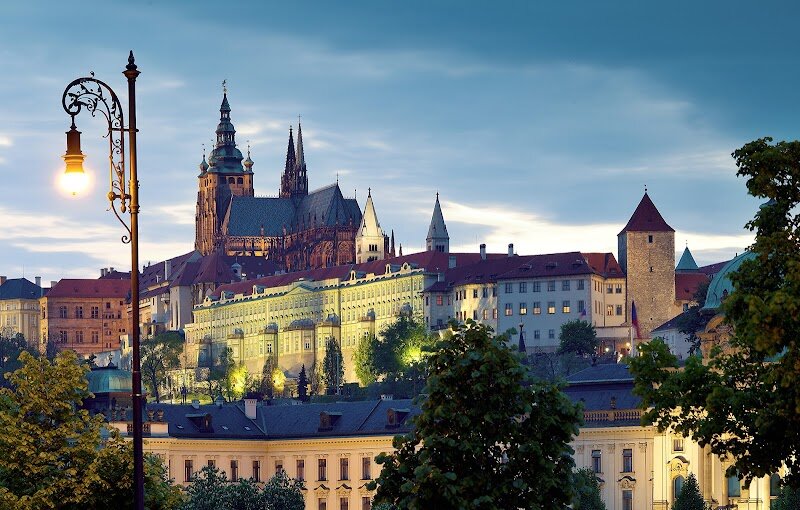
Prague cityscape

Prague

Where Medieval Magic Meets Modern Life

Discover Prague through AI-powered audio stories for kids and families. Experience historic landmarks, museums, and hidden gems with expert narration and local insights that bring the city to life.

49 Stories
AI Narrated
7 Voices

Free to download · No account required

building

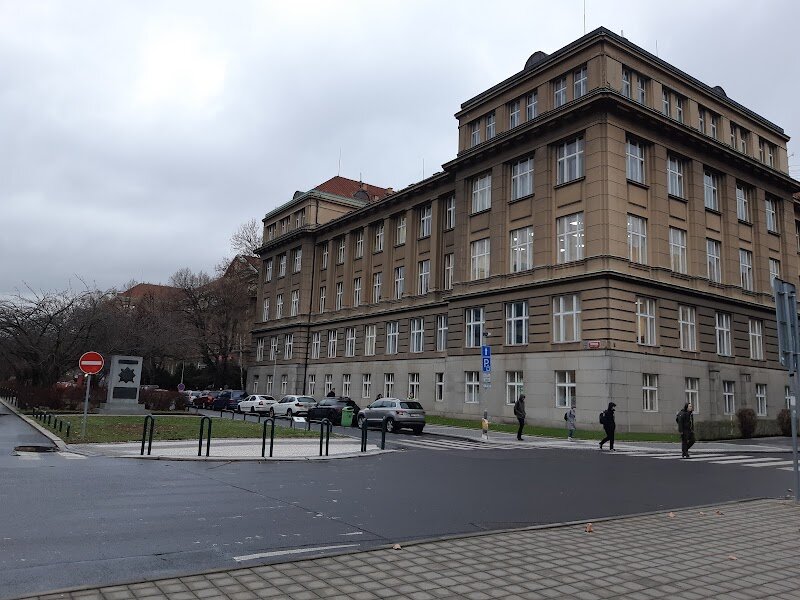
Czech Technical University in Prague

Czech Technical University in Prague (CTU), established in 1806, stands as a beacon of innovation and creativity in the heart of one of Europe’s most enchanting cities. Families and curious travelers will find CTU’s Faculty of Architecture especially captivating—it’s the largest school of architecture in the Czech Republic and a hub for cutting-edge research in architecture and urban design. The faculty’s striking building in Prague-Dejvice, designed by renowned architect Alena Šrámková, invites visitors to explore contemporary Czech architectural style and enjoy a vibrant campus atmosphere. Steeped in history, CTU has shaped generations of architects and engineers, blending tradition with modernity. Its vertical studio teaching model fosters collaboration across different years, offering a glimpse into how young minds work together on real-world projects. International exchanges and dynamic workshops bring a global perspective to the university, while exhibitions, open lectures, and thematic libraries offer rich experiences for visitors interested in design, history, and technology. Whether you’re wandering the leafy campus or attending a public event, CTU reveals the spirit of Prague—where heritage meets innovation and creativity flourishes. It’s a must-visit for anyone eager to discover how the city’s future is being designed today.

Did you know that students here once built a working nuclear reactor in their BASEMENT? That's right, explorers - in 1990, Czech Technical University students created their very own tiny nuclear reactor, smaller than your bedroom but powerful enough to light up 100 light bulbs! Look up at those old stone walls - they're hiding 317 years of crazy inventions! Before this university grew here in 1707, medieval blacksmiths hammered horseshoes on this exact spot. Can you count all the windows on just ONE floor? There are 42... multiply that by six floors and WOW, that's more windows than days in summer vacation! Inside these halls, Professor Jaroslav Heyrovský mixed bubbling potions that won him the Nobel Prize in 1959 - he invented a machine that could taste electricity! And here's the silliest secret: the main lecture hall has exactly 666 seats, so students joke that engineering exams are cursed! Quick challenge - find the hidden stone owl above the entrance door... it's been watching students for 200 years, and legend says rubbing its beak brings good grades!

building

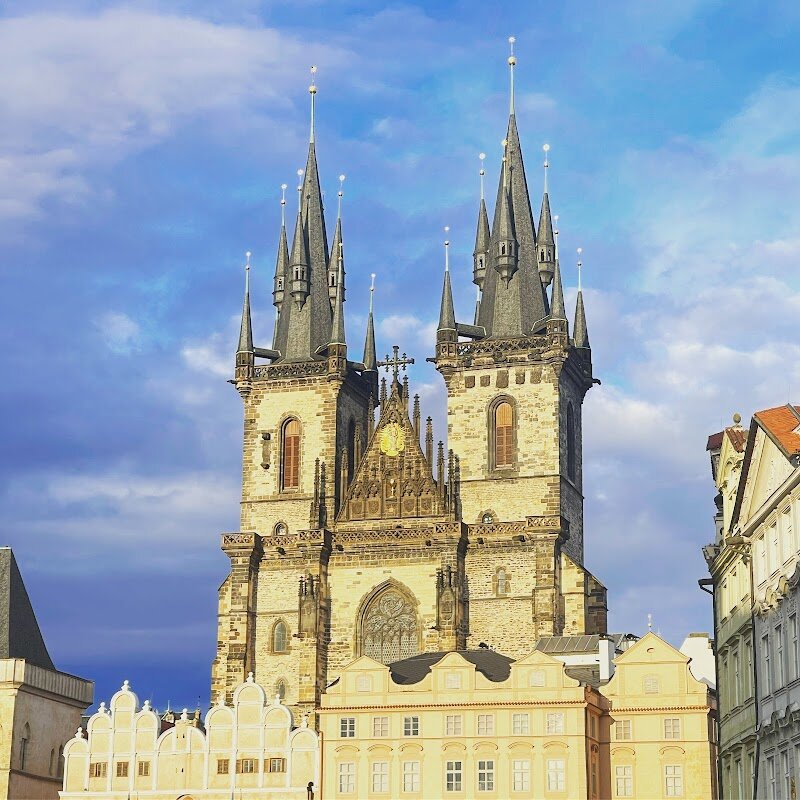
Church of Our Lady before Týn

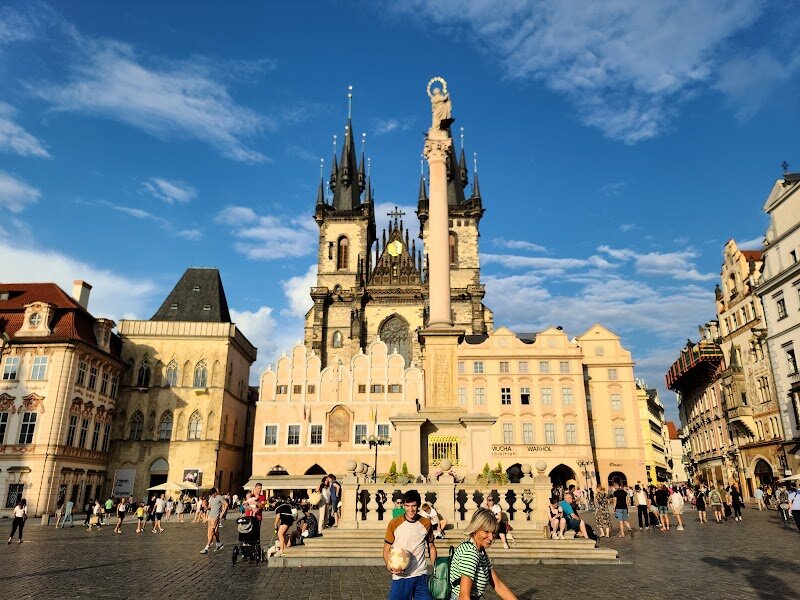
The **Church of Our Lady before Týn** rises dramatically over Prague’s Old Town Square, its twin Gothic spires instantly capturing the imagination of visitors young and old. With towers soaring 80 meters high—one larger than the other, symbolizing Adam and Eve—this church is not only an architectural marvel but also a treasure trove of stories and legends. Some even say the towers inspired Disney’s Sleeping Beauty Castle, adding a touch of fairy-tale magic to the skyline. Built on the site of an earlier Romanesque church, the current structure took shape in the 14th and 15th centuries, guided by the same master builders behind St. Vitus Cathedral. Over the centuries, it witnessed turbulent religious change: it was a Hussite stronghold, then recatholicized, its golden chalice replaced by a radiant statue of the Virgin Mary. Inside, families and curious travelers can marvel at a Baroque interior, evocative altar paintings, and the city’s oldest organ, dating from 1673. The tomb of famed astronomer Tycho Brahe and intricate Gothic details add to its allure. Whether basking in daylight or shimmering at night, the Church of Our Lady before Týn offers a journey through Prague’s layered history, art, and legend—an experience not to be missed.

Those two Gothic spires piercing the sky above you aren't twins at all – the north tower is actually one meter wider than its southern sister, a medieval builder's trick to create perfect visual harmony when viewed from Old Town Square. Before this stone giant rose in 1365, a humble Romanesque merchant church stood here, where foreign traders would pray for safe journeys home. Look closely at that golden chalice gleaming between the towers... it's actually UPSIDE DOWN, placed there in 1623 as a symbol of the defeated Protestant rebellion. The Catholic victors wanted everyone to know who controlled Prague's skyline now. Step through those massive doors and prepare yourself – you're about to stand where astronomer Tycho Brahe took his final breath in 1601, his tomb marked by that red marble slab near the altar. Above you soars the highest church interior in all of Prague, stretching 44 meters into darkness. That baroque altarpiece ahead? It took Karel Škréta twelve years to paint, finishing it completely blind in his final months. Your eyes will find 19 altars hidden in these shadows, but here's what most visitors miss... whisper a word near the north wall, and someone standing by the south wall, 30 meters away, will hear you perfectly. Medieval acoustics or divine design? The builders took that secret to their graves.

building

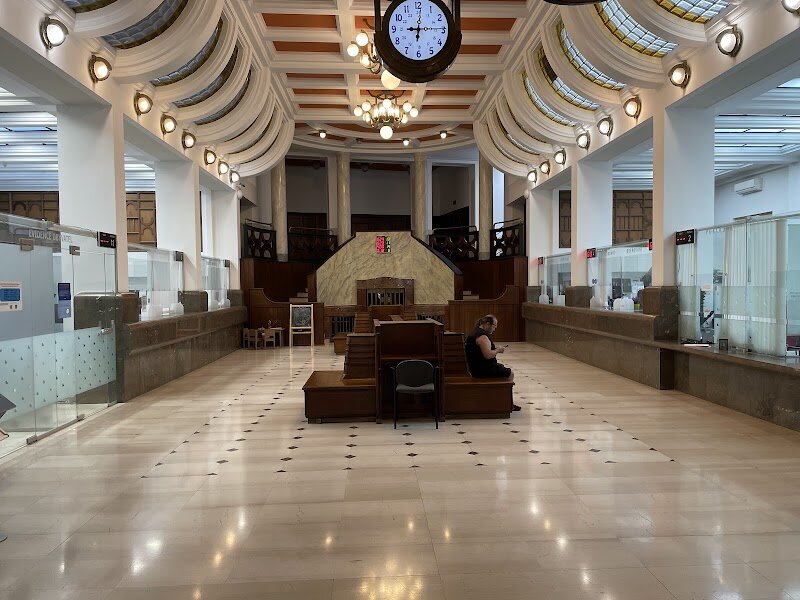
Praha 2 - Úřad městské části - odd. Osobních dokladů a Ověřování

Praha 2’s Úřad městské části – oddělení Osobních dokladů a Ověřování sits at the heart of one of Prague’s most storied and vibrant districts, where history and daily life intertwine. Nestled among the elegant boulevards of Vinohrady and the historic streets of Nové Město, this municipal office is more than a place for official documents—it’s a gateway to the living heritage of Prague 2. Families and travelers who venture here will find themselves surrounded by echoes of the city’s dramatic past, from the medieval foundations of Charles IV’s New Town to the 20th-century transformations that shaped modern Prague. The district itself is a tapestry of architectural gems, leafy parks, and bustling local cafés, inviting visitors to linger and explore. Step inside the office and you’ll experience the city’s renowned efficiency and hospitality, where locals and newcomers alike are welcomed as part of the Prague community. Whether you’re seeking to glimpse the everyday rhythms of Czech life or simply marvel at the centuries of history embedded in every street, a visit to this municipal office offers a unique, authentic slice of Prague—where the city’s past and present meet.

You know what's wild? You're standing in front of a building where, back in 1942, Czech resistance fighters literally forged over THREE THOUSAND fake identity documents right under the Nazis' noses... and today it's where locals come to get their parking permits! This gorgeous neo-Renaissance facade from 1894 actually hides a secret – see those windows on the second floor? During the Communist era, they bricked up HALF of them from the inside to create hidden document storage rooms that weren't discovered until renovations in 1991. The locals still call this place "the paper fortress" because at one point it held 2.8 million personal files... that's more documents than Prague has people! Step inside and you'll notice something bizarre – the main hall's ceiling is exactly 4.2 meters high, deliberately built to match the old Habsburg imperial standards so documents from the Austrian Empire would fit perfectly in the storage systems. My grandmother actually worked here in the '60s and told me they used to slide between the filing cabinets on roller skates after hours because the marble floors were so perfectly smooth. These days it's all digitized, but if you know where to look... third window from the left, second floor... you can still see the outline where they removed the old pneumatic tube system that shot documents between floors at 30 kilometers per hour!

museum

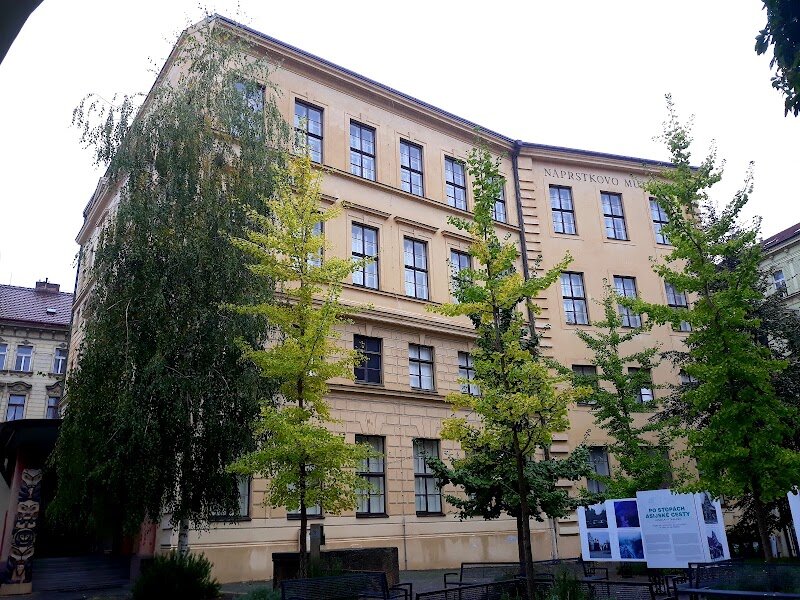
Náprstek Museum of Asian, African and American Cultures

Step into the Náprstek Museum of Asian, African, and American Cultures—a vibrant gateway to the world’s most fascinating civilizations, right in the heart of Prague’s Old Town. Housed in the historic U Halánků building on picturesque Bethlehem Square, this unique museum was founded in 1874 by the visionary traveler and Czech patriot Vojtěch Náprstek, whose passion for global discovery transformed his family’s former brewery into a center of cross-cultural learning. Families and curious travelers alike will find themselves immersed in colorful displays of art, everyday objects, and spiritual artifacts from Asia, Africa, and the Americas. The museum’s engaging, interactive exhibits invite visitors of all ages to explore the daily lives, beliefs, and creative achievements of distant cultures—making it a perfect outing for kids and adults with a thirst for adventure. Beyond its extraordinary collections, the Náprstek Museum stands as a symbol of Prague’s openness to the world, encouraging dialogue and understanding between continents. Take a moment to reflect in the tranquil courtyard, where history and curiosity meet. For those eager to broaden their horizons and spark young imaginations, the Náprstek Museum promises an unforgettable journey across continents—without ever leaving Prague.

Did you know there's a real mummy hiding inside this building that's older than TWENTY of your great-great-great grandmas put together? Right here in Prague, behind these fancy yellow walls that used to be a brewery making stinky beer 200 years ago, sits a treasure chest of adventures from around the world! See those big windows up there? Count them... I bet you'll find exactly fourteen! Mr. Náprstek built this place in 1862 after his mom said "NO MORE STUFF IN MY HOUSE!" because he had collected 95,000 objects - that's like filling up FIFTY classrooms with spears, masks, and shrunken heads... yes, REAL shrunken heads from the Amazon! When you walk through that arched doorway, you're stepping where horses used to deliver barrels of beer, but now you'll find the very first Native American headdress ever brought to Europe in 1841. Look for the secret drawer in the Japanese room where samurai swords are hidden... and don't forget to find the tiniest shoe in the world - it's smaller than your pinky finger!

landmark

Prague Astronomical Clock

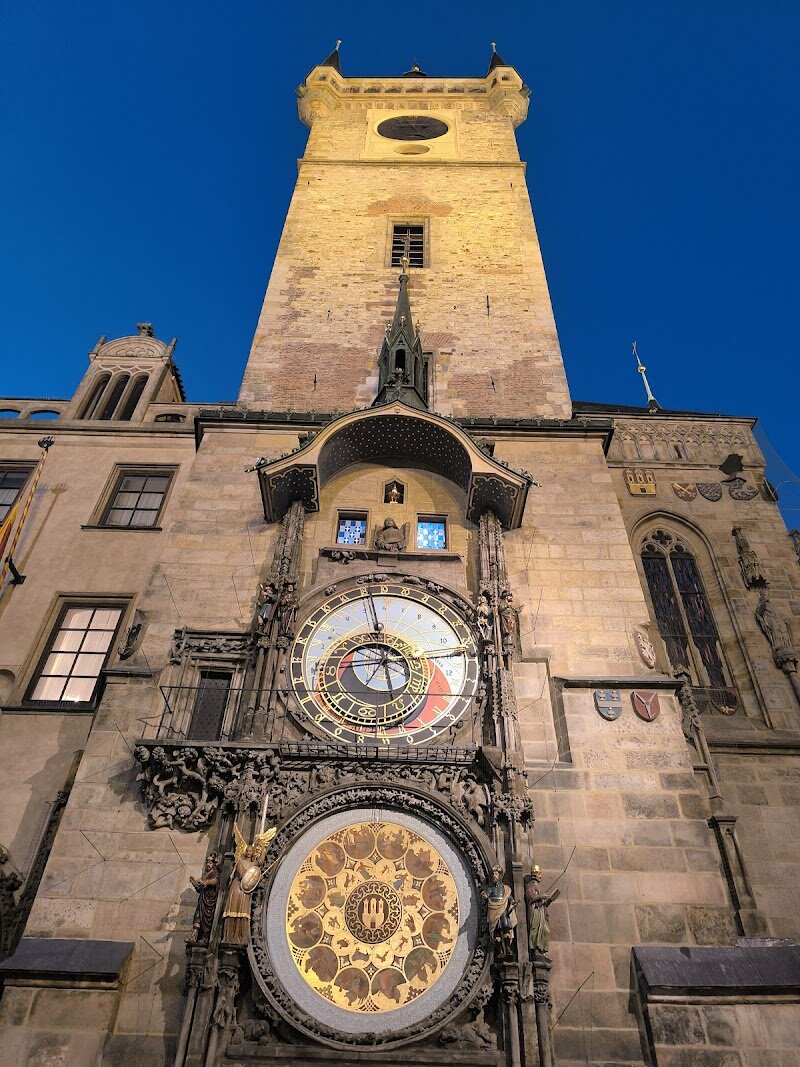
In the heart of Prague’s Old Town Square stands the **Prague Astronomical Clock**, a mesmerizing marvel that has enchanted visitors for over 600 years. Installed in 1410, this ornate masterpiece is the world’s third-oldest astronomical clock—and the oldest still in operation—making it a living symbol of the city’s resilience and ingenuity. Families and curious travelers gather every hour to watch the clock spring to life as the **Twelve Apostles parade past the windows**, while a cast of whimsical figures—including a skeleton and a vain man—add playful drama to the show. But the magic doesn’t stop there: the clock’s intricate dials display not just the time, but also the movement of the sun and moon, the zodiac signs, and even the current month, offering a fascinating glimpse into the medieval understanding of the cosmos. Beyond its technical wonders, the Orloj is steeped in legend and history, having survived wars, fires, and countless repairs. Visiting this iconic clock is like stepping into a time machine—where families can marvel at centuries-old craftsmanship, unravel local myths, and share in the sense of wonder that has captivated generations.

Every hour, Death nods his skeletal head at this very spot, and a golden rooster crows to remind Prague that someone, somewhere, just ran out of time. Look up at those four figures flanking this 600-year-old clock face... that's Vanity admiring himself in a mirror, the Miser clutching his gold, and yes, that skeleton ringing the bell is Death himself, installed in 1490 when the plague was killing one in three Praguers. Master clockmaker Hanuš created this mechanical marvel in 1410, but here's the dark twist - city councilors had him blinded with a hot poker so he could never build another. In revenge, the dying Hanuš felt his way to the clock's heart and jammed the gears... it stayed broken for a century. See that calendar dial below? Josef Mánes painted all 365 days by hand in 1865, each tiny scene depicting medieval peasant life, though what you're seeing is actually a replica - the original sits in the City Museum, too precious for Prague's weather. When the bells chime, watch those two blue windows above open... twelve apostles will parade past, each carrying their instrument of martyrdom. Saint Peter clutches his keys, but look for Judas - he's the only one holding a money bag, forever marked as the betrayer in this medieval morality play that's performed 35,040 times each year.

museum

Jerusalem Synagogue

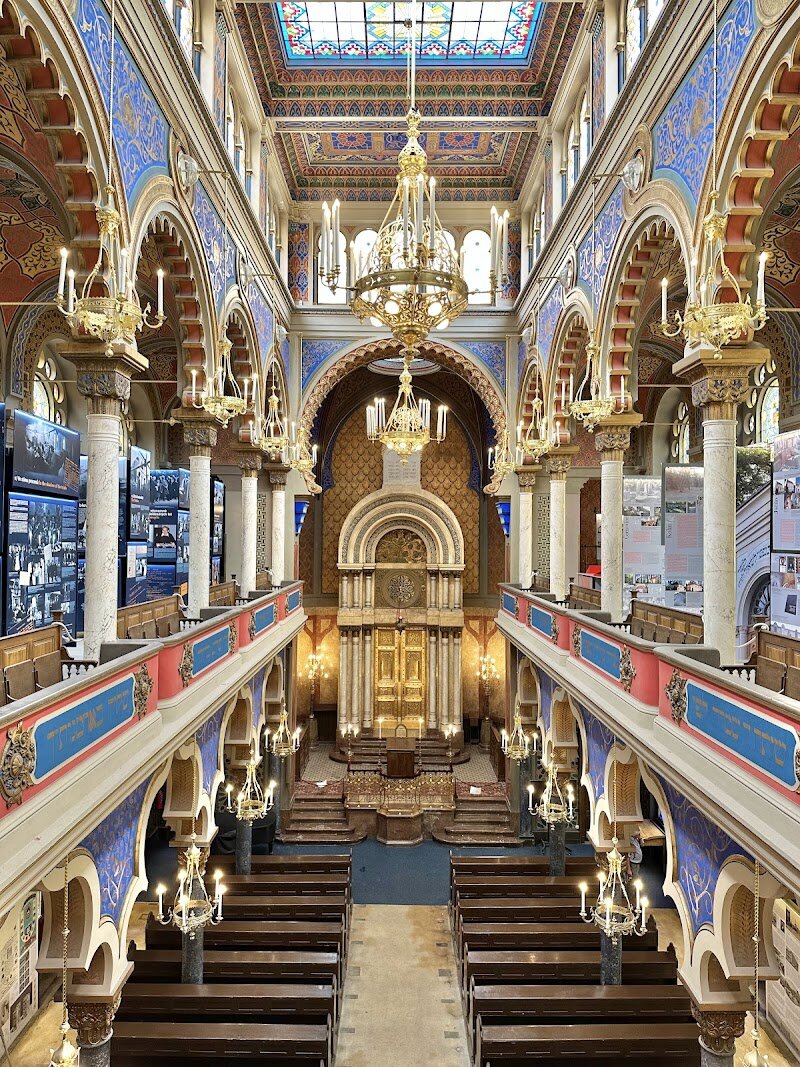
The **Jerusalem Synagogue** in Prague is a dazzling hidden gem that promises to captivate families and curious travelers alike. Step onto Jerusalem Street and you’ll be greeted by a vibrant facade—striped in red and white, adorned with Moorish arches and crowned by a striking rosette window—that stands out as one of the city’s most colorful landmarks. Built in 1906, this synagogue blends **Moorish Revival** and **Art Nouveau** styles, making it a feast for the eyes both inside and out. Inside, you’ll discover a riot of color: intricate geometric patterns, brilliant blues, pinks, and golds, and ornate flourishes that create an atmosphere of wonder. The synagogue was designed by Viennese architect Wilhelm Stiassny as a replacement for three historic synagogues lost during the modernization of Prague’s Jewish Quarter, giving it deep historical significance. Today, the Jerusalem Synagogue is not just a place of worship—it’s a vibrant cultural hub. Visitors can explore exhibitions on Prague’s Jewish history, admire a beautifully preserved organ, and even attend summer concerts. Whether you’re exploring with children or seeking architectural marvels, this synagogue offers a welcoming window into Prague’s rich Jewish heritage and artistic spirit.

In 1906, while Prague's Jewish Quarter was being demolished around them, a defiant group of reformist Jews decided to build the most COLORFUL synagogue in all of Europe... right here, where a medieval mikvah once stood beneath your feet. Look up at this candy-colored facade before you – those swirling red and yellow stripes aren't just decoration. Architect Wilhelm Stiassny embedded a secret code in these Moorish patterns, with exactly 77 geometric stars representing the numerical value of the Hebrew word for "temple." This was Prague's FIRST synagogue to install electric lighting from day one, and those original 1906 fixtures still illuminate the interior today. The builders faced such violent opposition that armed guards protected the construction site for all 893 days of building. Step inside and you'll discover why Franz Kafka called this place "a peacock among sparrows" – the only synagogue in Central Europe where the organ pipes were painted gold and turquoise to match the ceiling. During the Nazi occupation, this building survived because the Germans couldn't decide whether to destroy it or turn it into a museum of their conquered enemies... so they simply sealed it for seven years.

museum

Galerie Rudolfinum

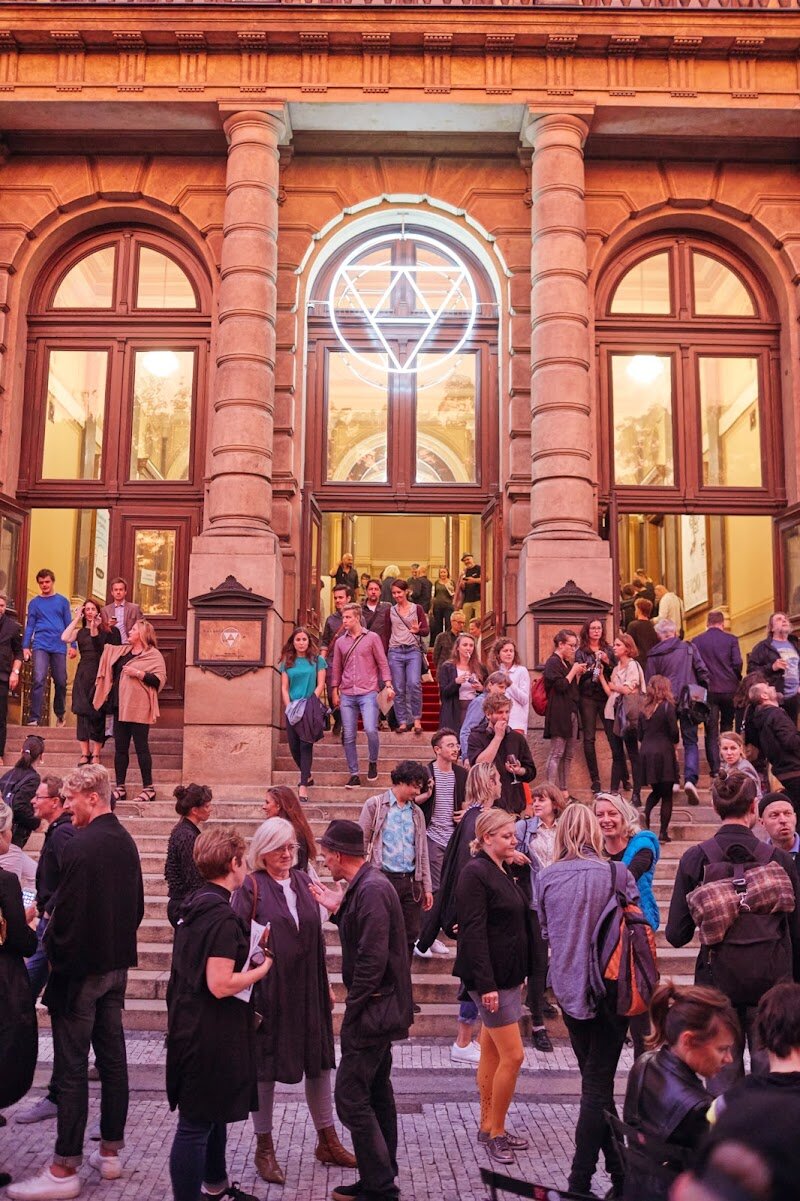
Galerie Rudolfinum, nestled in the heart of Prague’s historic center, is a captivating destination where **art, history, and culture converge**. Housed in a majestic Neo-Renaissance building designed by Josef Zítek and Josef Schulz, the Rudolfinum first opened its doors in 1885 and has since become an emblem of the city’s creative spirit. Its unique blend of concert hall and gallery under one roof makes it a vibrant hub for families and curious travelers alike, inviting visitors to experience both visual and musical wonders in a single visit. Stepping inside, you’ll find yourself immersed in thoughtfully curated exhibitions featuring contemporary and modern art, often with interactive elements that engage audiences of all ages. The gallery’s history is as rich as its displays—over the decades, it has showcased masterpieces by legends like Picasso, Chagall, and Matisse, and played host to the Czech Philharmonic’s earliest performances. With its picturesque location overlooking the Vltava River and its close ties to Prague’s cultural institutions, Galerie Rudolfinum offers not just a glimpse into the world of art, but a memorable journey through the city’s artistic legacy—a perfect outing for families and adventurous travelers eager to discover something extraordinary.

In 1896, the very first Czech Philharmonic concert ever performed rang out from this neo-Renaissance palace before you... conducted by none other than Antonín Dvořák himself, who nearly refused to take the stage because he thought the acoustics were TOO perfect and would expose every flaw in his musicians. Look up at those commanding stone figures crowning the facade – they're not gods or kings, but composers and artists, watching over Alšovo nábřeží like musical sentinels. Before this cultural temple rose in 1885, medieval fish markets sprawled across this riverbank, and the stench was so overwhelming that Habsburg nobles would hold perfumed handkerchiefs to their noses while passing. Step through these bronze doors, and you're entering what was once Adolf Hitler's personal concert hall during the occupation – he ordered the removal of Felix Mendelssohn's statue outside because of the composer's Jewish heritage, but workers accidentally took down Wagner's statue instead... Hitler's favorite composer! The Rudolfinum holds a secret that most visitors never discover: during Communist rule, the parliament met in the main concert hall for FORTY-ONE years, and politicians literally voted where violinists now perform. Today, as you walk these marble corridors where Kafka once attended exhibitions and Einstein played his violin at a charity concert in 1911, you're standing in the only building in Europe that's been a parliament, a Nazi headquarters, AND a temple to contemporary art... all while keeping its original crystal chandeliers intact through two world wars.

landmark

National Theatre

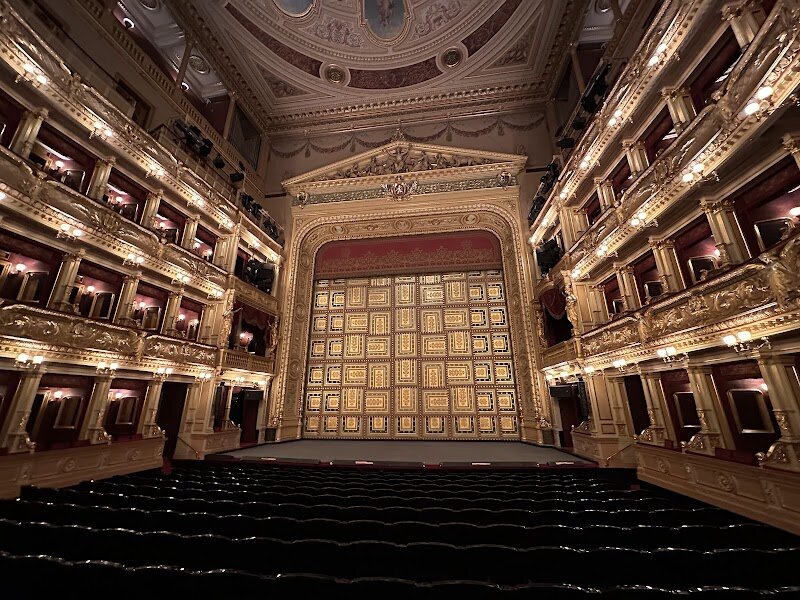
The **National Theatre in Prague** stands as a dazzling symbol of Czech pride and creativity, inviting families and curious travelers to step into a world where history and artistry intertwine. Rising majestically along the Vltava River, this Neo-Renaissance masterpiece was born from a wave of patriotic enthusiasm in the 19th century—funded entirely by the Czech people and designed by architect Josef Zítek. Its dramatic story includes a devastating fire shortly after its 1881 opening, followed by a passionate national campaign to rebuild, making each performance here a tribute to resilience and unity. Inside, visitors are greeted by opulent interiors adorned with allegorical sculptures and vibrant murals inspired by Czech legends. Beyond the main stage, the complex includes the striking modern New Stage, once home to the world’s first multimedia theatre, Laterna Magika, blending tradition with innovation. Families will delight in the theatre’s lively program of ballets, operas, and plays—each offering a window into Czech culture. Whether marveling at the golden-topped façade or exploring its diverse performances, the National Theatre promises an unforgettable journey through the heart of Prague’s artistic spirit.

You know that brutalist concrete beast everyone loves to hate? Well, in 1976, Prince Charles called this place a "nuclear power station" – and honestly, he wasn't totally wrong! But here's what blows my mind... architect Denys Lasdun actually designed these horizontal concrete terraces to mirror the natural geological strata of Somerset House across the river. See those layers? Each one took 18 months to pour, and the concrete contains crushed Derbyshire granite that sparkles pink in the sunset – I kid you not! Before this theatrical fortress rose up, Victorian warehouses and coal wharves dominated this spot for 200 years. Now look at that cantilevered fly tower soaring 35 meters high – it's basically a concrete skyscraper hiding backstage! Step inside through those bronze doors and you'll find THREE separate theaters, including the Olivier with its 1,160 seats arranged in a perfect ancient Greek amphitheater arc. Fun fact: the building's so massive it has its own postal code, and get this – there are 5 kilometers of corridors backstage where technicians literally use bicycles to get around! Next time you're here at dusk, check out the purple lights... that's when this concrete bunker transforms into pure theatrical magic.

landmark

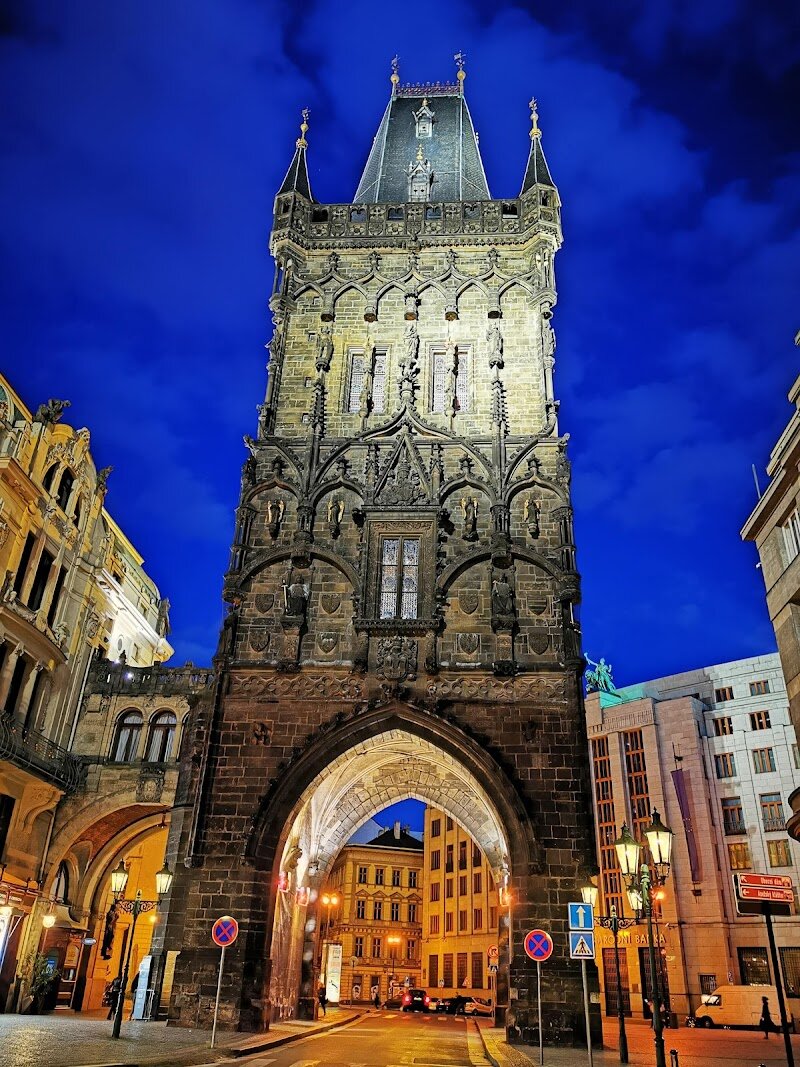
The Powder Tower

Rising proudly at the gateway to Prague’s Old Town, **The Powder Tower** is a medieval marvel that has watched over the city for more than 550 years. Originally built in 1475 as an ornate city entrance for royal coronation processions, this Gothic landmark still dazzles families and curious travelers with its storied past and striking architecture. Once called the “New Tower,” it marked the boundary between Old and New Town, and its design was inspired by the famous Old Town Bridge Tower. Throughout the centuries, the Powder Tower served many purposes—from collecting customs and tolls to its legendary (though debated) role as a gunpowder storage facility, which gave it its evocative name. Today, visitors can climb its winding staircase to enjoy panoramic city views, explore exhibits detailing Prague’s history, and marvel at intricate neo-Gothic sculptures added during its 19th-century restoration. Kids and adults alike are drawn to its dramatic façade and the stories etched in every stone—making it a perfect spot for family photos and historical adventures. Stepping inside, you’re not just entering a tower, but journeying through Prague’s royal, artistic, and architectural legacy.

You know what's wild? You're standing in front of the ONLY medieval gate in Prague where someone literally tried to blow up a king with gunpowder stored inside... and failed spectacularly! This Gothic beauty from 1475 got its name because it was Prague's main gunpowder depot, storing up to 400 barrels at once – basically a 65-foot-tall stone bomb waiting to happen. Look up at that dark, almost black facade – that's not age, that's actual soot from the 1757 Prussian bombardment when cannonballs set the whole tower ablaze! Before this tower stood here, this was where the old Horská Gate connected Prague to the silver mines of Kutná Hora, making it the richest entrance to the city. See those intricate stone carvings above the entrance? King Vladislav II himself walked through here in 1485 to start his coronation parade, and every Bohemian king after him followed the exact same route. Step inside and you'll find something tourists always miss – tiny carved salamanders hidden in the vaulted ceiling, medieval symbols of fire protection that... obviously didn't work! The spiral staircase has exactly 186 steps, and here's the kicker – it turns counterclockwise, the OPPOSITE of most castle towers, because this wasn't built for defense but for moving heavy gunpowder barrels

landmark

Old Jewish Cemetery

Step into the Old Jewish Cemetery in Prague and you’ll find yourself transported into a world where history breathes between ancient, timeworn stones. Tucked in the heart of the Jewish Quarter, this remarkable site dates back to 1439 and is among the oldest surviving Jewish burial grounds in the world. What makes it truly extraordinary is how, for over three centuries, Prague’s Jewish community laid their loved ones to rest here—even as space ran out, resulting in graves layered up to ten deep and over 12,000 gravestones crowding together in evocative disarray. Families and curious travelers alike will be captivated by the stories etched into the intricately decorated headstones, each adorned with symbolic motifs of animals and plants. As you wander the winding paths, you’ll encounter the resting places of legendary figures such as Rabbi Judah Loew—the famed Maharal of Prague, associated with the mystical Golem—and community leaders like Mordecai Maisel. The cemetery is not only a moving monument to resilience and remembrance but also a living classroom, offering a powerful glimpse into centuries of Jewish culture, art, and tradition in Prague. Every visit promises moments of reflection and discovery, making it a must-see for anyone eager to connect with the city’s rich past.

Twelve thousand weathered tombstones crowd this ancient ground, yet beneath your feet lie over ONE HUNDRED THOUSAND souls... stacked twelve layers deep in some places, their bones intertwined like the roots of an underground forest frozen in time. You're standing in Europe's oldest surviving Jewish burial ground, where graves date back to 1439, and where the legendary Rabbi Judah Loew ben Bezalel – creator of the mythical Golem of Prague – rests beneath that towering tomb there with the lion carved upon it. See how visitors have tucked paper wishes into every crevice? That tradition began in 1592 when a desperate woman claimed the Rabbi's spirit saved her dying child... and the papers haven't stopped coming for four centuries. Look closely at those tilting headstones – they're not just crooked from age. The ground itself has risen TWELVE FEET since medieval times, each generation's graves literally lifting the earth higher, which is why the oldest stones seem to sink while the cemetery walls had to be rebuilt three times just to contain this ever-rising city of the dead.

building

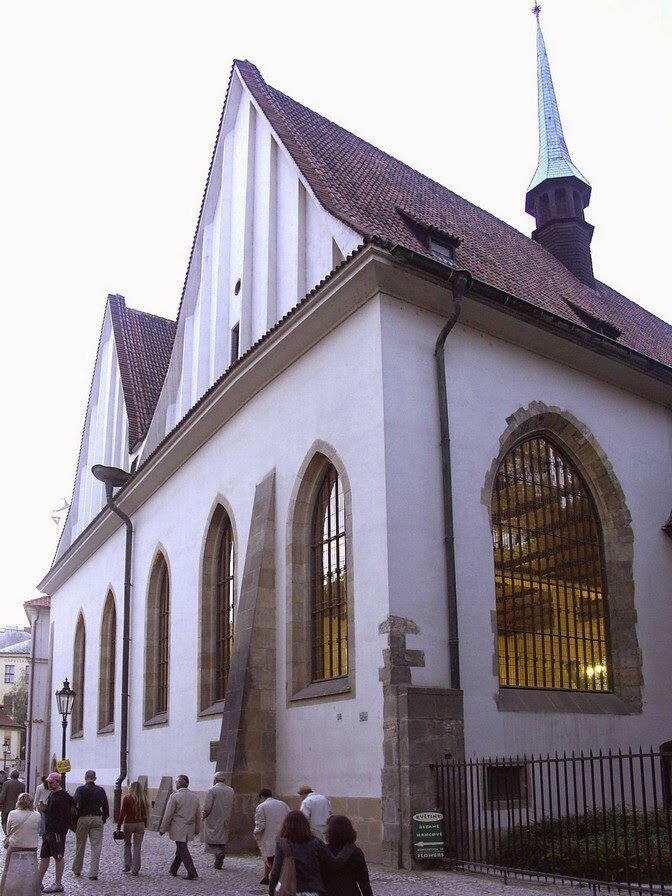
The Bethlehem Chapel

The Bethlehem Chapel in Prague’s Old Town is far more than a beautiful historic building—it’s a living monument to Czech culture and the spirit of reform. Founded in 1391, this Gothic chapel became famous as the pulpit of Jan Hus, a bold preacher whose sermons in Czech inspired crowds from all walks of life and sparked the Hussite movement, forever shaping the nation’s history. Families and curious travelers will be drawn to its impressive scale; with space for thousands, it was once the heart of Prague’s intellectual and spiritual life. Step inside to admire soaring arches, intricate stonework, and vibrant wall paintings inspired by biblical themes, created by art students in the 1950s reconstruction that lovingly preserved original fragments. Young explorers can imagine the drama of medieval Prague, while adults will appreciate the chapel’s role in the Bohemian Reformation. Today, Bethlehem Chapel is a national cultural monument and a lively hub for concerts, exhibitions, and events that celebrate Czech heritage. Whether you’re seeking stories of courage, stunning architecture, or a place to reflect, the chapel offers a unique, enriching experience at the crossroads of history and culture.

You know what's wild? You're standing in front of a chapel that was completely erased from existence for 165 years... like, literally demolished down to the last stone in 1786, and then rebuilt from scratch using only old sketches and archaeological guesswork in the 1950s! This unassuming brick facade you're looking at right now sits exactly where medieval merchants used to sell fish and vegetables in the 1300s, before a wealthy court official named Kříž decided in 1391 to build Prague's very first chapel dedicated entirely to preaching in Czech instead of Latin. Step through that Gothic doorway and you'll enter the exact spot where Jan Hus delivered over 3,000 sermons between 1402 and 1412, basically inventing the Protestant Reformation a full century before Martin Luther was even born. See those exposed medieval foundations through the glass floor panels inside? Those are the ONLY original bits left from Hus's time... everything else is a meticulous 1950s reconstruction that took archaeologists eight years to puzzle together. Most tourists completely miss the tiny wooden pulpit tucked in the corner – that's an exact replica of where Hus stood when he basically signed his own death warrant by criticizing the Pope's sale of indulgences in 1412!

building

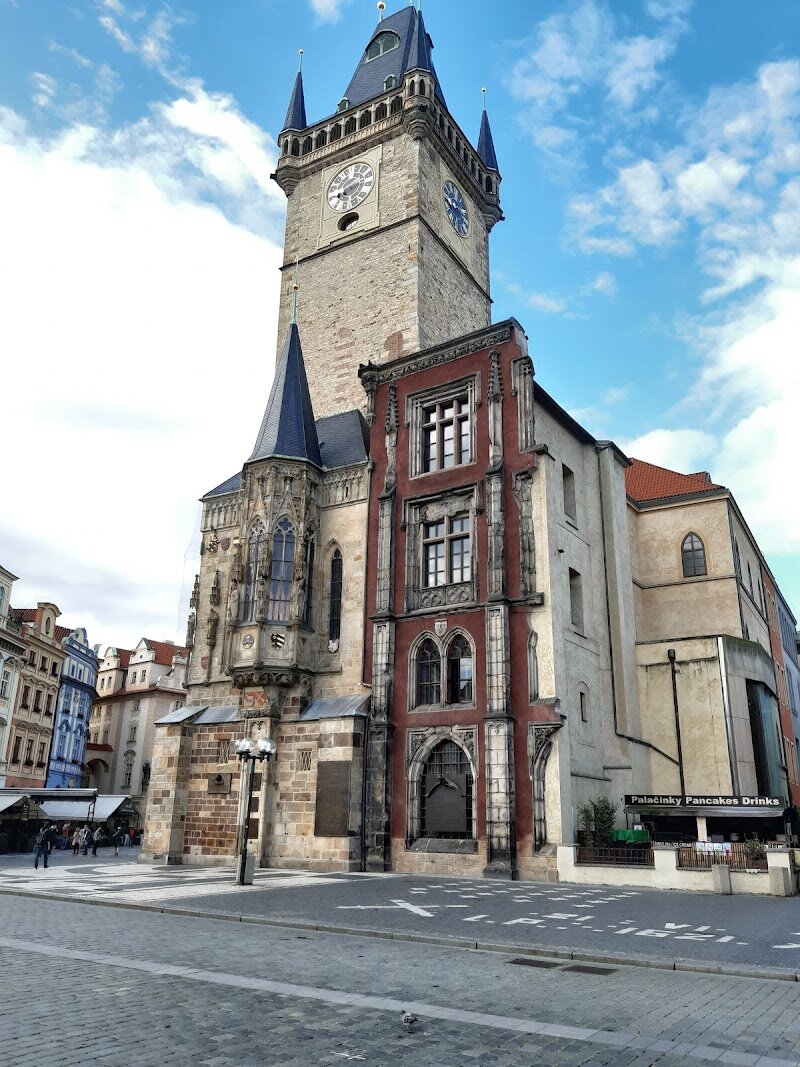
Staroměstská radnice

Staroměstská radnice, Prague’s Old Town Hall, is a place where history and wonder come alive for families and curious travelers. Rising proudly from the heart of Old Town Square, this complex of ancient houses—dating back to 1338—has witnessed centuries of Prague’s most dramatic moments. Its striking Gothic tower, once the tallest in medieval Prague, offers panoramic views over a fairytale cityscape of red rooftops and spires—an experience children and adults alike will treasure. Step inside and you’ll discover labyrinthine cellars, elegant halls, and architectural details that reflect the city’s vibrant past, from Romanesque foundations to Renaissance windows. The real crowd-pleaser is the legendary Astronomical Clock, or Orloj, whose hourly show of mechanical apostles and whimsical figures delights all ages and sparks curiosity about medieval science and artistry. Beyond the clock, visitors can explore engaging exhibitions about Prague’s governance and history, or simply soak up the lively atmosphere of the surrounding square, bustling with street performers and cozy cafés. Staroměstská radnice isn’t just a building—it’s a gateway to Prague’s stories, making every visit a memorable adventure for families and explorers.

Every hour, Death appears in these windows above you... and every hour, he disappoints the crowd by NOT ringing his bell. Look up at those Gothic arches – in 1410, when master clockmaker Mikuláš of Kadaň installed that astronomical clock, he created something so extraordinary that legend says the city councilors blinded him with hot iron to prevent him from building another. The truth? He lived another twenty years with perfect vision, but the story persisted for six centuries. Before this tower rose in 1364, a wealthy merchant's house stood here, complete with underground wine cellars that still snake beneath your feet – twelve medieval chambers where prisoners awaited trial during the Hussite Wars. Step closer to that astronomical dial... see those four figures flanking the clock? Vanity holds his mirror, Greed clutches his money bag, but it's the Turkish figure that hides the real secret – his turban contains actual human hair from 1866, replaced every fifty years by a Prague barber's guild tradition. Twenty-seven white crosses mark the cobblestones where you're standing – each one commemorating a Protestant nobleman beheaded here on June 21st, 1621, after the Battle of White Mountain. At exactly noon, their ghosts supposedly return... though the only spirits you'll find today are in the champagne bar that now occupies the execution chamber inside.

building

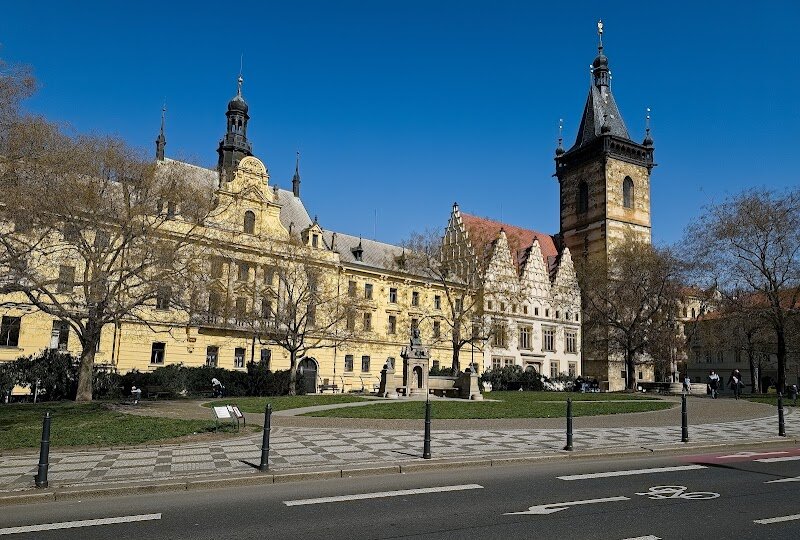
New Town Hall

Step into history at Prague’s **New Town Hall**, a captivating Gothic landmark that has witnessed centuries of dramatic events and transformation. Built in the late 14th century as the heart of the dynamic “New Town,” the hall became the stage for one of Prague’s most infamous episodes: the first defenestration of 1419, where angry Hussite supporters hurled Catholic councillors from the windows, sparking the Hussite Wars. Families and curious travelers will find much to explore here. Wander through atmospheric halls that once echoed with the debates and intrigues of medieval city officials. Marvel at the restored Gothic-Renaissance architecture, shaped by renowned architects like Benedikt Ried and Kamil Hilbert, whose work also graces Prague Castle. Climb the tower for a breathtaking, lesser-known view over Prague’s historic skyline—a treat for both kids and adults. Today, New Town Hall buzzes with life, hosting exhibitions, cultural events, and even a trendy café nestled within its ancient walls. It’s a living monument where Prague’s past and present meet, inviting visitors of all ages to experience stories, secrets, and spectacular city views.

You know what's wild? You're standing in front of a building that's actually YOUNGER than the United States... by about 400 years! This Gothic Revival masterpiece from 1867 might look medieval, but it's basically the new kid on the block compared to the actual 14th-century town hall that used to stand here. See that 70-meter tower looming above us? The locals call it the "Glockenspiel Tower" and at exactly 11am, noon, and 5pm from March to October, those 43 bells up there put on a whole mechanical show with life-sized figures reenacting historical scenes. But here's what the guidebooks won't tell you... climb those 258 spiral steps on a Tuesday morning around 10am and you'll catch the carillonneur practicing – it's like a private concert nobody knows about! The original medieval town hall that stood here survived 500 years until it was demolished in 1874. The architect Georg von Hauberrisser actually hid his own face in one of the gargoyles on the facade – third one from the left, second row up. Inside, the grand ceremonial hall still has bullet holes from World War Two that they deliberately left unrepaired as a reminder. Trust me, skip the main entrance and go through the courtyard... that's where you'll find the secret passage that connects to the old city walls!

building

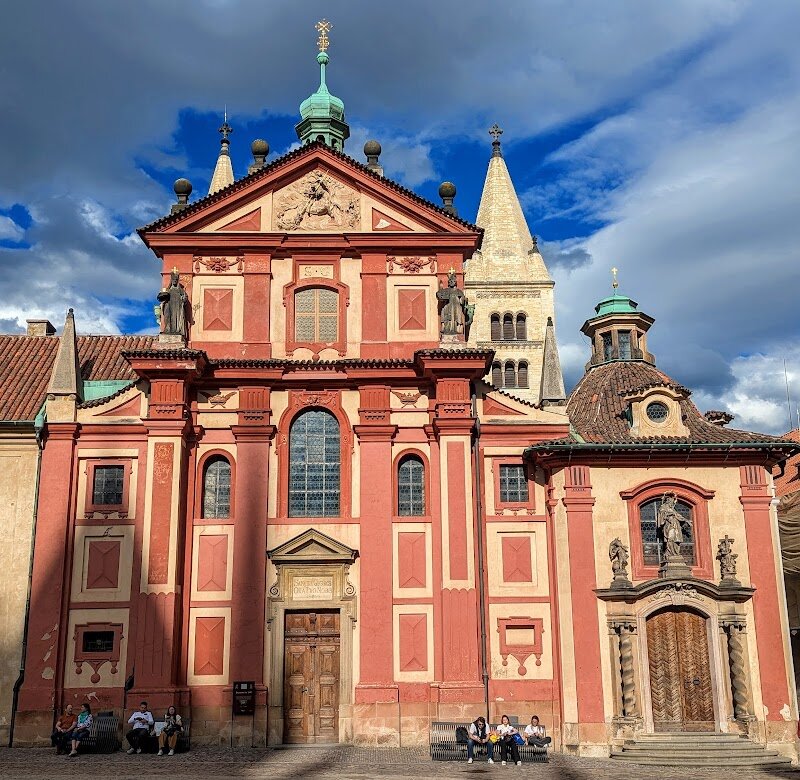
St. George's Basilica

St. George’s Basilica, nestled within the heart of Prague Castle, invites families and curious travelers to step into a living tapestry of Czech history. Founded over a thousand years ago, this awe-inspiring church is the city’s second oldest, blending **Romanesque** simplicity with a striking **Baroque façade**. Its story began in 920, when Duke Vratislav established it as a beacon for the spread of Christianity in Bohemia, later becoming the burial site of St. Ludmila, grandmother of St. Wenceslas—a legendary Czech figure. Inside, visitors will discover a serene, **three-nave interior** with wide arches, ethereal light streaming through ancient windows, and a haunting crypt that whispers tales of centuries past. Children and adults alike will be fascinated by the basilica’s two towers, affectionately named “Eve” and “Adam,” each with its own history and character. Art and architecture enthusiasts will appreciate the blend of Romanesque and Baroque styles, while history lovers can explore the story of the Benedictine convent and the royal dynasties connected to the basilica. Whether you’re seeking a quiet moment or a hands-on lesson in Prague’s spiritual and royal heritage, St. George’s Basilica offers a captivating experience for all ages.

Did you know there's a DRAGON buried right under where you're standing? This basilica is SO old that when they built it in the year 920 - that's over ONE THOUSAND years ago - people actually believed a real dragon lived in this hill! Look up at those red walls... see how they're different from the fancy white baroque front they added 500 years later? The original builders used special red sandstone that changes color in the rain - it goes from pink to deep burgundy! Inside, you'll find something super weird: the tomb of Saint Ludmila, who was strangled with her own veil by assassins... but here's the crazy part - she's STILL in there, and scientists x-rayed her in 1981! Can you count how many stone snakes are carved around the doorway? There are exactly thirteen, and each one has a different expression on its face!

building

saint Wenceslas

In the very heart of Prague, families and curious travelers alike are drawn to the iconic **Statue of Saint Wenceslas**, a commanding presence atop bustling Wenceslas Square. This monumental equestrian statue, crafted by master sculptor Josef Václav Myslbek after 35 years of dedication, immortalizes Saint Wenceslas—the beloved patron saint of Bohemia and the inspiration for the famous “Good King Wenceslas” carol—as a courageous knight on horseback, surrounded by four other Czech saints. More than a stunning work of art, the statue is a powerful symbol of **Czech heritage and resilience**. It has witnessed and anchored pivotal moments in history, from the 1918 declaration of Czechoslovak independence to the peaceful Velvet Revolution of 1989. Today, the square buzzes with life: children marvel at the statue’s grandeur, while visitors soak in the vibrant atmosphere filled with street performers, shops, and cafes. Standing before Saint Wenceslas, you don’t just see a monument—you feel the pulse of Prague’s past and present. It’s a perfect spot for family photos, meaningful conversations about history, or simply enjoying the energetic spirit that makes Prague unforgettable.

You know what's wild? You're standing in front of a church that literally survived being moved... twice! This isn't just any Saint Wenceslas Church – in 1930, they picked up this entire 680-ton baroque beauty and rolled it 52 meters on steel rails because the Nazis wanted to build their massive autobahn right through here. Look at that facade – see those bullet holes near the left tower? Those are from April 1945 when Czech resistance fighters used the bell tower as a sniper position during the Prague Uprising. The Germans couldn't dislodge them for three days! Inside, there's something even crazier... the altar painting actually has a hidden compartment where resistance members stashed weapons and illegal radio transmitters during the occupation. But here's my favorite secret – walk inside and check out the third pew on the right. Franz Kafka sat there every Sunday as a kid, and if you look closely at the wooden armrest, you can still see his initials he carved when he was twelve. The locals know to visit Tuesday mornings when the sun hits those stunning 1742 stained glass windows just right... pure magic!

building

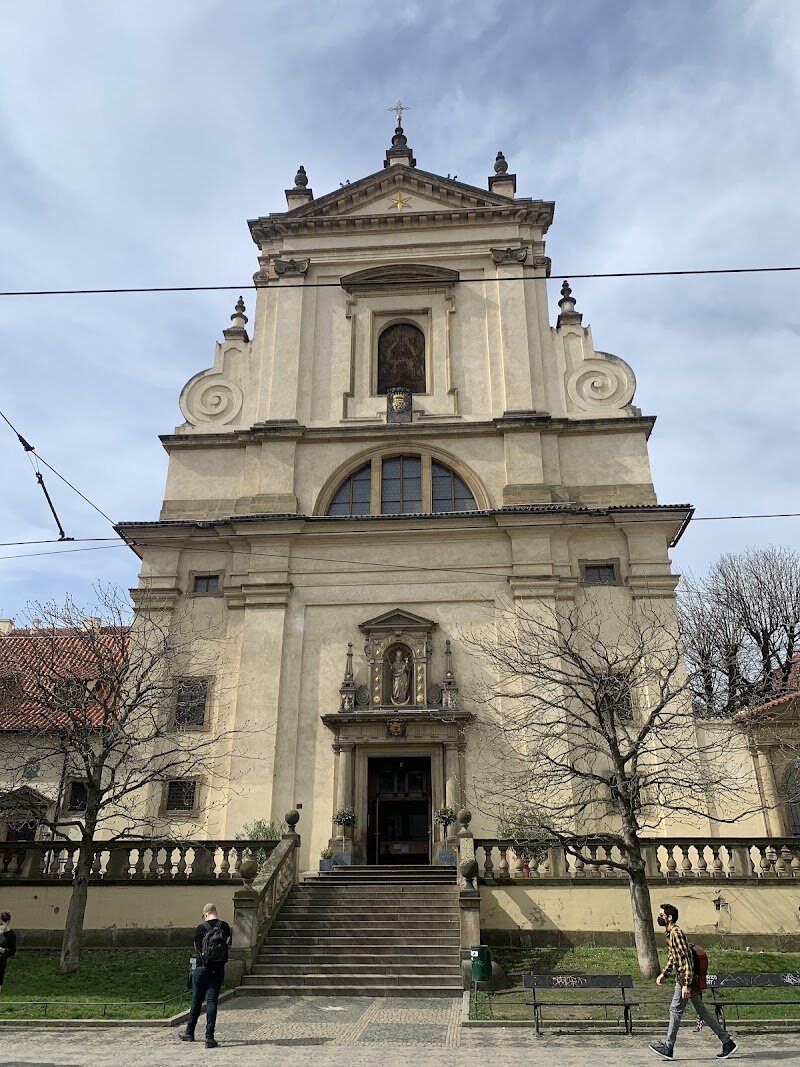
Church of Our Lady Victorious and The Infant Jesus of Prague

Step into the Church of Our Lady Victorious and the Shrine of the Infant Jesus of Prague, a place where centuries of history and heartfelt devotion come alive for visitors of all ages. Nestled in Prague’s charming Lesser Town, this striking church blends Renaissance and Baroque architecture, inviting families and travelers to discover its storied past and spiritual treasures. What truly sets this church apart is the world-famous statue of the **Infant Jesus of Prague**, a 16th-century figure said to bring blessings and miracles to those who pray before it. The statue’s journey—from its Spanish origins to a gift from Princess Polyxena of Lobkowicz in 1628—reflects the resilience and faith of Prague through wars, upheaval, and cultural change. Today, the church stands as a symbol of hope and peace, drawing pilgrims and curious visitors from around the world. Inside, you’ll find beautiful altars, vibrant paintings, and a free museum displaying the ornate robes and crowns of the Infant Jesus—perfect for sparking wonder in children and adults alike. Whether you come seeking inspiration, history, or simply a unique experience, the Church of Our Lady Victorious offers a welcoming space to explore Prague’s spiritual heart.

Did you know there's a tiny statue here that's wearing MORE outfits than you have in your entire closet? This little wooden Jesus is only as tall as your ruler plus a pencil - that's 18 and a half inches - but he owns over THREE HUNDRED fancy robes! Look up at those swirly gold decorations on the ceiling... German Lutherans built the FIRST church here in 1611, but just two years later, Catholic armies kicked them out after winning a huge battle! The statue arrived from Spain in 1628, hidden in a princess's wedding chest. During wars, soldiers used this church as a GYM for exercises - can you imagine doing jumping jacks where we're standing? See that glass case straight ahead? The little statue inside survived having both his hands chopped off by angry soldiers! Today, queens and presidents from around the world still send him new outfits as gifts. Quick - count how many angels you can spot on the walls... I bet you'll find at least twenty before you reach the altar!

building

St. Vitus Cathedral

St. Vitus Cathedral, towering above Prague Castle, is a spellbinding fusion of **Gothic, Renaissance, and Baroque architecture** that has captivated visitors for centuries. Its construction began in 1344 under King Charles IV and spanned nearly 600 years, resulting in a breathtaking blend of styles and stories. Families and curious travelers alike will be awed by the cathedral’s soaring vaulted ceilings, intricate stone carvings, and the vivid stained glass windows—some crafted by renowned Art Nouveau artist Alfons Mucha—that flood the interior with color and light. Inside, you’ll discover the **Chapel of St. Wenceslas**, adorned with thousands of semi-precious stones and the tomb of the Czech patron saint, as well as the final resting places of Bohemian kings and Holy Roman Emperors. Adventurous visitors can climb the Great South Tower for panoramic views of Prague’s red rooftops and the winding Vltava River. Steeped in history as the site of royal coronations, weddings, and funerals, St. Vitus Cathedral isn’t just a church—it’s a living symbol of Czech heritage and resilience. Whether you’re drawn by its architectural wonders, rich legends, or simply seeking unforgettable city views, St. Vitus promises an inspiring journey through the heart of Prague.

Six hundred years... that's how long it took to complete the cathedral towering before you, with its final stone placed in 1929 after construction began in 1344. Look up at those twin spires piercing the sky at exactly 82 meters – but here's what most visitors miss: the southern tower holds the largest bell in Czech Republic, weighing 16.5 tons, forged from melted cannons after a failed siege. Before this Gothic masterpiece rose from the hilltop, a rotunda dedicated to Saint Vitus stood here since 925 AD, where Duke Wenceslas himself prayed... the very same Wenceslas whose skull now rests in a golden reliquary just beyond these doors. Step through the western portal and your eyes will immediately find the rose window above – 10,000 pieces of glass telling the story of creation, designed in 1925 by František Kysela, who hid his own face among the biblical figures. But the REAL treasure lies beneath your feet. Down in the royal crypt, twenty-two Bohemian kings and queens rest in tin coffins, including Emperor Charles IV, whose tomb was opened in 1928 revealing his perfectly preserved 14th-century burial crown. The cathedral's bells have rung for every one of their funerals... and they'll ring again tomorrow at noon, just as they have for centuries.

landmark

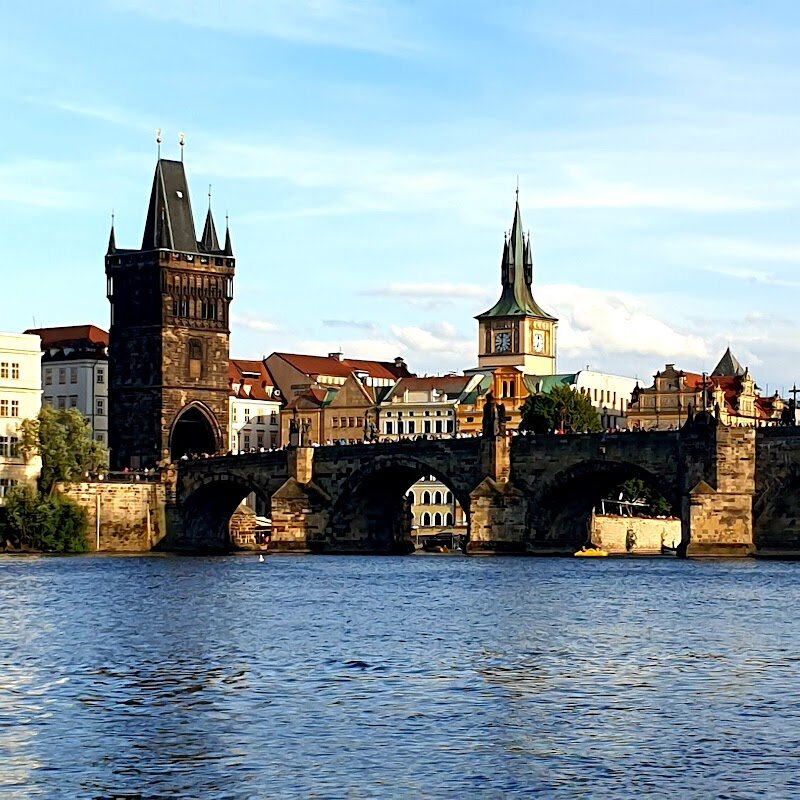
Charles Bridge

Charles Bridge is Prague’s most enchanting landmark—a living monument that whisks visitors into the heart of European history. Stretching gracefully across the Vltava River, this medieval stone bridge was commissioned by Emperor Charles IV in 1357, with its first stone laid at a precise, auspicious moment chosen for its numerological significance. For centuries, it was the city’s sole crossing, making Prague a vital hub for traders, pilgrims, and adventurers journeying between East and West Europe. Families and curious travelers will be captivated by the bridge’s dramatic past, from tales of royal superstition to its role in turbulent wars and revolutions. Lined with thirty striking Baroque statues of saints, Charles Bridge offers a magical stroll where every step reveals breathtaking views of Prague Castle, the Old Town, and the lively riverbanks. Musicians, artists, and vendors add to the bridge’s vibrant atmosphere, inviting everyone to linger, explore, and soak in centuries of stories. Whether at sunrise, when mist curls over the water, or at sunset, when the city glows golden, a walk across Charles Bridge is an unforgettable Prague experience for all ages.

You know what's wild? You're standing on a bridge that took 357 years to finish... yeah, you heard that right! Construction started in 1357 at exactly 5:31 AM on July 9th - King Charles IV was obsessed with numerology and chose that precise moment because the date forms a palindrome: 1-3-5-7-9-7-5-3-1. Look down at those massive sandstone blocks beneath your feet - each one was sealed with eggs! Seriously, the medieval builders mixed egg yolks into the mortar, and locals from all over Bohemia sent wagon-loads of eggs to Prague. The bridge survived the worst flood in 500 years back in 2002 because of that protein-reinforced mortar. See those 30 baroque statues lining both sides? They're all replicas now - the originals are hidden away in museums, but here's what tourists miss... touch the bronze plaque on the statue of St. John of Nepomuk, about halfway across. Locals say it brings good luck and guarantees you'll return to Prague. Oh, and that tower on the Old Town side? It's considered the most beautiful Gothic tower in Europe, but barely anyone knows there's a secret viewing gallery at the top where the bridge guards used to hide during medieval battles. The bridge actually replaced the Judith Bridge that got wiped out in a

museum

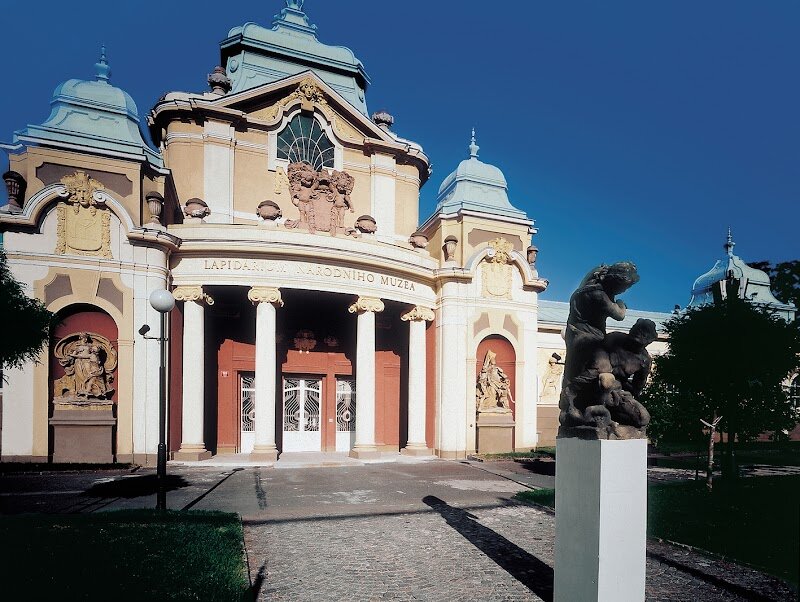
Lapidarium of the National Museum

Step into a world where history is carved in stone at the Lapidarium of the National Museum in Prague. This enchanting museum, set within a striking neo-Baroque building on the city’s exhibition grounds, invites families and curious travelers to explore over 400 awe-inspiring sculptures and architectural fragments—some dating back nearly a thousand years. What makes the Lapidarium truly special is its vibrant storytelling through stone. Here, you’ll encounter original statues from Prague’s iconic Charles Bridge, masterpieces from the legendary Peter Parléř’s workshop, and ornate relics that once adorned cathedrals, palaces, and public squares. Each of the eight spacious halls reveals a new chapter of Czech history, from medieval saints to baroque allegories and even monuments of Habsburg emperors. Children and adults alike will marvel at the artistry and grandeur on display, discovering how these stone treasures survived centuries of change and turmoil. Recognized as one of Europe’s most beautiful museum exhibitions, the Lapidarium is a place where every sculpture has a story, turning a family visit into a captivating journey through time.

You know what's wild? You're standing in front of a building that houses the largest collection of medieval stone heads in Central Europe – 400 of them, just... staring at visitors since 1993. This neo-Renaissance pavilion from 1891 was actually built for Prague's massive Jubilee Exhibition, where they showed off everything from electric trams to X-ray machines – cutting-edge stuff back then! Before this beauty went up, this spot was just empty fairgrounds where locals grazed their cattle. Now look at that facade – see those arched windows? Each one weighs 800 kilograms because they're made from solid Mšeno sandstone, the same stuff Charles Bridge is built from. Step inside and you'll meet the original gargoyles from St. Vitus Cathedral... including one that locals swear looks exactly like Emperor Rudolf II after a rough night. Here's what tourists never realize: every Tuesday at 2pm, the curators rotate different pieces, so you literally never see the same exhibition twice. Oh, and that massive statue of Charles IV in the main hall? It's the only surviving piece from the original Charles Bridge tower – it fell off during the Swedish siege of 1648 and they just... forgot about it in a monastery basement for 200 years!

museum

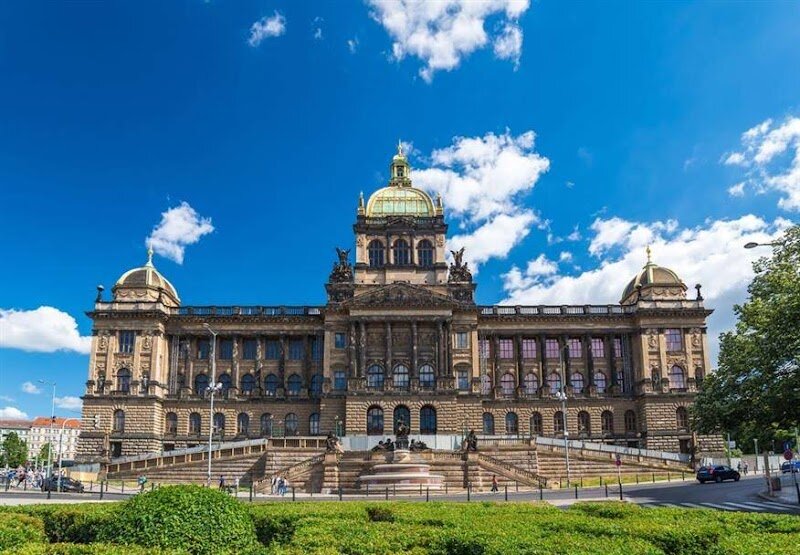
National Museum

The **National Museum in Prague** is a captivating gateway into Czech history, culture, and scientific discovery, making it a must-see for families and curious travelers alike. Founded in 1818, this iconic institution sits atop Wenceslas Square in a stunning Neo-Renaissance building, itself a work of art with grand staircases, lavish interiors, and a glass-ceilinged dome offering panoramic city views. Step inside and embark on a journey through time: two thousand exhibits trace Czech history from the 8th century to World War I, while interactive displays illuminate the wonders of nature, prehistory, and human achievement. Children will love the dedicated Children’s Museum, designed to spark curiosity through hands-on exploration, while adults can marvel at rare coins, artistic masterpieces, and scientific marvels. Beyond its collections, the museum’s role as a symbol of Czech national pride and a beacon of knowledge is ever-present. Its recent restoration has revived the vibrant wall paintings and intricate sculptures, inviting visitors to experience not just the artifacts, but the spirit of Czechia itself. Whether you’re a history buff, an art lover, or a family seeking adventure, the National Museum offers a rich, unforgettable experience in the heart of Prague.

Did you know there's a GIANT sloth skeleton inside that's as tall as TWO giraffes stacked on top of each other? Look up at those massive columns at the entrance - they're made from 127 different types of British stone, like a rocky rainbow that took stonemasons SEVEN years to puzzle together... that's your whole primary school journey! Before this incredible building opened in 1818, cows actually grazed right here in these fields - imagine MOO sounds instead of museum sounds! The architect Richard Owen had such a big dream that Queen Victoria herself laid the foundation stone, but here's the silly part - the builders forgot to put doors in the original plans and had to knock holes in the walls! Can you spot the 78 stone animals carved around the entrance? There's even a dodo bird up there, extinct for 200 years before this museum was built! Inside, you'll find Charles Darwin's actual pet tortoise that lived to be 176 years old - that's like living through your ENTIRE life TWENTY-TWO times! Ready to explore 70 million specimens? That's more treasures than there are people in the whole United Kingdom!

building

Kostel U Salvátora

Kostel U Salvátora, nestled in Prague’s enchanting Old Town, is a treasure for families and curious travelers eager to step into centuries of history and artistry. This majestic church, dating back to the late 16th century, stands as one of Prague’s earliest and most captivating examples of **Baroque architecture**, boasting grand facades, ornate decorations, and exquisite frescoes that dazzle visitors of all ages. Built as part of the historic Clementinum complex by the Jesuits, Kostel U Salvátora has witnessed Prague’s vibrant spiritual and cultural life, from peaceful religious coexistence to stirring classical concerts. Inside, the spacious nave invites you to marvel at intricate stuccoes and a magnificent altarpiece depicting Christ the Saviour, while the church’s renowned organ has filled the air with music for generations. Beyond its architectural splendor, Kostel U Salvátora regularly hosts cultural events, making it a lively hub where history, art, and music meet. Whether you’re seeking quiet reflection, inspiration from sacred art, or an unforgettable family experience, this landmark offers a welcoming glimpse into Prague’s rich past and dynamic present.

Did you know this church is actually YOUNGER than the United States of America? That's right - while America was already 100 years old, this spot was still just a regular street corner until 1863! Look up at those twisty columns by the door - they're called Solomonic columns, and they spin like giant candy canes! This whole church is built in something called Neo-Renaissance style, which means the builders in the 1860s were trying to copy buildings from 400 years EARLIER... kind of like if you built a castle today using only medieval tools! Before this church existed, Protestant students met secretly in houses nearby because they weren't allowed their own church for over 200 years. Step inside and count the arches - there are exactly 14 of them holding up the ceiling, and each one weighs as much as THREE elephants! This was the very FIRST Protestant church allowed inside Prague's Old Town walls since 1620... that's like being banned from your favorite playground for 243 years and finally getting back in!

landmark

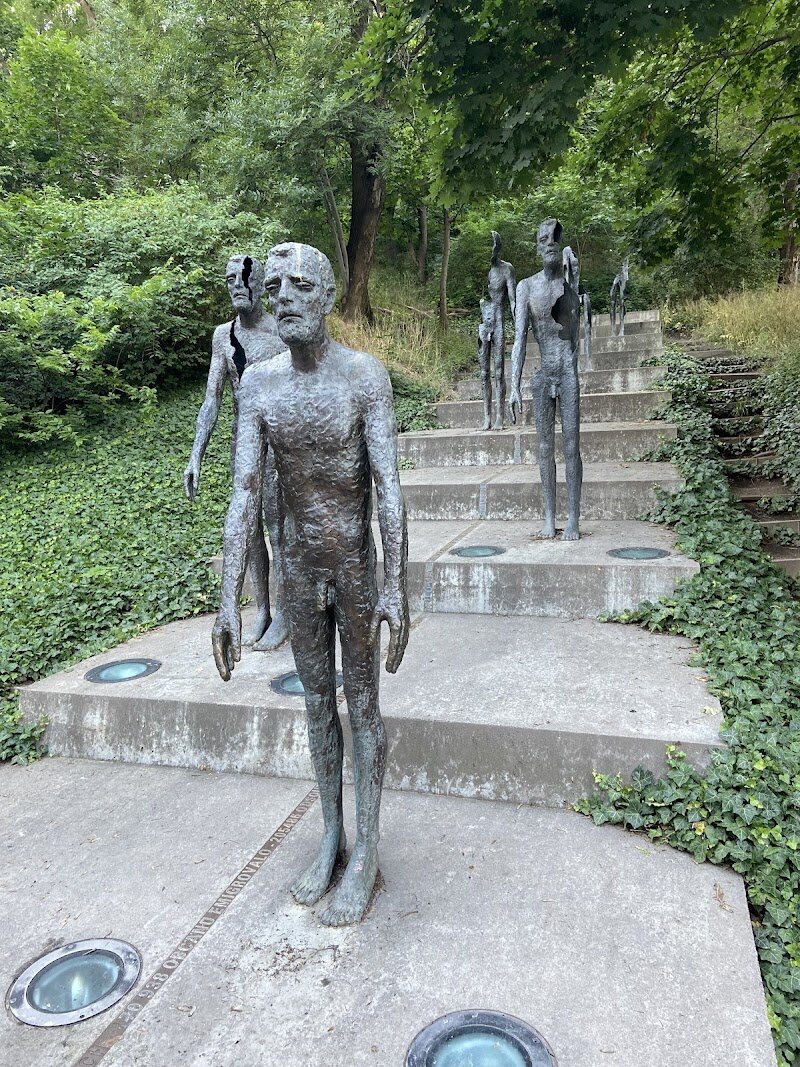
Memorial to the Victims of Communism

The **Memorial to the Victims of Communism** in Prague is an unforgettable monument that invites visitors of all ages to reflect on the city’s turbulent 20th-century history. Located at the foot of Petřín Hill, this striking memorial features seven bronze figures ascending a staircase, each appearing increasingly fragmented and worn. This powerful artistic design—by Olbram Zoubek, Jan Kment, and Zdeněk Hozman—symbolizes the devastating physical and psychological toll of communist rule on ordinary people. Families and curious travelers will find the memorial both thought-provoking and accessible. Children can count the statues and notice how each figure changes, sparking conversations about resilience and hope. The monument’s bronze plaque spells out the staggering human cost: thousands imprisoned, executed, or forced to flee during the regime from 1948 to 1989. The experience is heightened by the quiet park setting, where candles and wreaths often mark remembrance. A visit here offers more than solemn reflection—it’s a chance to connect with Prague’s living history, appreciate the courage of those who endured hardship, and understand the importance of freedom. The haunting sculptures and evocative setting make this memorial a must-see for anyone seeking meaning and inspiration in Prague.

See those bronze figures climbing the steps ahead of you? Each one is missing a piece of their body – an arm here, part of a torso there – and by the time you reach the seventh figure at the top, there's barely anything left but a walking shadow. This is Czech sculptor Olbram Zoubek's haunting Memorial to the Victims of Communism, unveiled in 2002, exactly 13 years after the Velvet Revolution ended four decades of totalitarian rule. What most visitors don't realize is that you're standing on Petřín Hill's former execution grounds, where the Communists themselves held show trials in the 1950s. The bronze strip running alongside these ghostly figures contains the numbers that still make locals shudder: 205,486 arrested, 170,938 forced into exile, 4,500 died in prison. Zoubek, who was banned from exhibiting for 20 years under the regime, deliberately made each statue 10% more damaged than the last – his mathematical formula for how totalitarianism destroys the human soul, piece by piece.

landmark

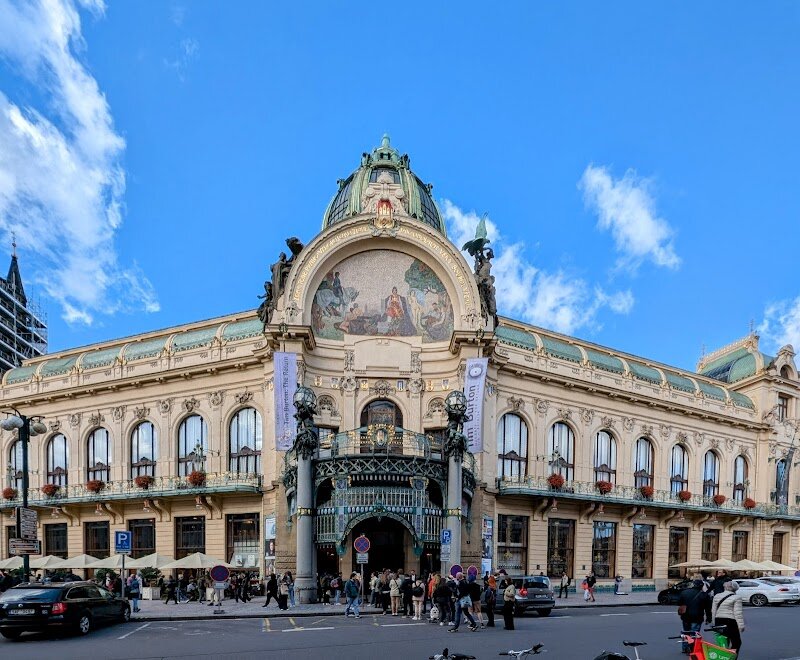
Municipal house

The **Municipal House (Obecní dům)** stands as Prague’s dazzling jewel of **Art Nouveau architecture**, captivating visitors with its ornate facades, sumptuous interiors, and a rich tapestry of Czech history. Built between 1905 and 1912 on the site of the former Royal Court—the medieval seat of Bohemian kings—this cultural landmark was designed to be Prague’s grand social and artistic center, where families and travelers can step into a world where creativity and history intertwine. What makes the Municipal House truly special is its role in shaping Czech identity: it was here, in the majestic **Smetana Hall**, that the birth of independent Czechoslovakia was proclaimed in 1918, and it later hosted pivotal meetings during the Velvet Revolution. Inside, you’ll marvel at the intricate glass, ceramic, and metalwork, with famed Czech artists like **Alfons Mucha** contributing to the lavish decoration. Families and curious explorers can soak in concerts, admire ever-changing exhibitions, or simply enjoy the lively atmosphere of its elegant café and restaurant. Whether you’re tracing the footsteps of history or delighting in artistic splendor, the Municipal House invites you to experience the heart and soul of Prague in one unforgettable visit.

You know that gorgeous Art Nouveau facade you're staring at? In 1905, the mayor literally FAINTED when he saw the final construction bill... it cost triple the original budget at 6 million crowns, enough to build three entire city blocks back then! See those mosaic panels above the entrance? That's actually the largest ceramic artwork in Central Europe, with over 200,000 individual pieces telling the story of Prague's history. But here's what kills me... before this beauty stood here, this was the site of the old Royal Court, where they used to execute nobles by beheading them with a special silver axe. Talk about a glow-up, right? Step inside and look up immediately... that glass dome you'll see weighs 40 tons and was installed WITHOUT any cranes, just an intricate pulley system that took 73 days. The Smetana Hall inside? That's where the Czech Republic declared independence in 1918, and where Dvořák himself premiered his final symphony. Oh, and locals know to sneak up to the hidden Mayor's Salon on the second floor around 3pm... the afternoon light through those stained glass windows is absolutely INSANE, and hardly anyone's there!

landmark

National Monument at Vítkov

Perched high above Prague on Vítkov Hill, the National Monument at Vítkov is a dramatic tribute to Czech history and resilience. Dominated by the colossal bronze statue of Jan Žižka—one of the largest equestrian statues in the world—this landmark honors the legendary general who led the Hussites to victory here in 1420, defending Prague against a crusader army. The monument itself was built between the World Wars to commemorate Czechoslovak legionnaires who fought for independence, and its walls have witnessed the rise and fall of regimes, from Nazi occupation to Communist rule. Today, families and curious travelers can explore immersive exhibitions that bring to life the nation’s tumultuous past, including the stirring “Crossroads of Czech and Czechoslovak Statehood” display and the solemn Tomb of the Unknown Soldier. Children and adults alike will marvel at the sweeping panoramic views of Prague from the rooftop terrace, while the story-rich halls invite visitors to unravel centuries of Czech identity. Whether you’re a history buff or simply seeking a unique vantage point, the National Monument at Vítkov offers a powerful and memorable experience for all ages.

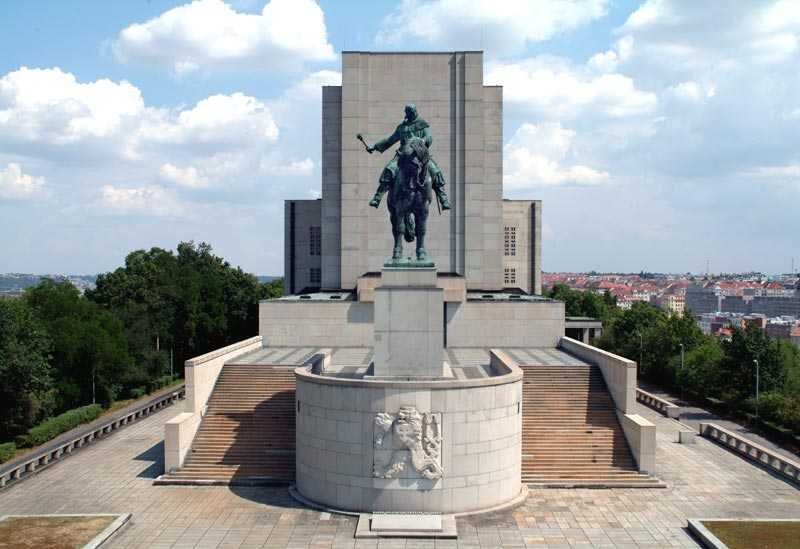
You're standing in front of the third-largest equestrian statue in the WORLD... and the guy on that horse up there? He never actually existed! That's Jan Žižka, a legendary one-eyed Hussite warrior from the 1400s, but nobody knows what he really looked like, so sculptor Bohumil Kafka just... made him up in 1950. This whole massive monument weighs 16.5 tons of pure bronze, and here's the kicker - during World War Two, the Nazis tried to blow it up THREE times but failed every single time. See that Art Deco facade stretching 142 meters across? Before this monument went up in the 1920s and 30s, this hilltop was just vineyards and a medieval execution ground where they used to hang criminals. Now look closer at those granite blocks... each one weighs over two tons and had to be hauled up this 270-meter-high hill by a special cable railway they built just for construction. The whole thing cost 42 million crowns back then - that's like building a skyscraper today! Inside that hall behind Žižka, there's something absolutely wild - the body of an unknown World War One soldier has been lying there since 1922, and get this... they've got the preserved corpse of Communist president Klement Gottwald in a secret lab underneath,

building

Kostel svatého Filipa a Jakuba

Kostel svatého Filipa a Jakuba in Prague is a captivating blend of history and artistry, inviting families and curious travelers to discover its unique story. Originally constructed as a Romanesque church in the 12th century, it was lovingly rebuilt in 1894 in the neo-Romanesque style, drawing on materials and stunning sculptures from its predecessor. The church’s tall steeple, with its three floors and elegant spire, stands as a proud landmark in the Malvazinky district, its facade adorned with baroque statues and intricate architectural details that will fascinate both adults and children. Stepping inside, visitors are greeted by a tranquil atmosphere, where echoes of centuries past blend with the beauty of restored artistry. Families can marvel at the baroque Messiah statue and the original works of Ferdinand Maxmilián Brokof, while the church’s peaceful surroundings offer a gentle reprieve from the city’s bustle. With its rich historical roots—once the spiritual heart of Smíchov and now a testament to Prague’s evolving story—Kostel svatého Filipa a Jakuba promises an inspiring experience for anyone eager to explore Prague’s hidden gems and heritage.

Did you know there's a SECRET TUNNEL hiding under your feet right now that monks used to escape during fires? This church from 1680 is actually the THIRD one built on this exact spot - the first two COMPLETELY burned down! Look up at those twin towers - they're as tall as EIGHT giraffes stacked on top of each other, and here's the crazy part... one tower is actually TWO WHOLE METERS taller than the other because the builders ran out of matching stones! Can you spot which one? Inside, there are 147 hidden faces carved into the ceiling - medieval builders put their own faces up there as a sneaky signature. Quick challenge: find the green dragon painted behind the altar... it's been there for 300 years and most grown-ups walk right past it!

museum

Villa Müller

Villa Müller in Prague is a masterpiece of modern architecture that invites families and curious travelers to step into the world of visionary design and rich history. Conceived by renowned architect Adolf Loos and built between 1928 and 1930 for the Müller family, the villa stands out with its strikingly simple, cube-like exterior—an intentional contrast to the vibrant, thoughtfully arranged interiors that showcase Loos’s innovative *Raumplan* concept. Each room is positioned on a different level, creating a fascinating spatial experience that delights visitors of all ages. Beyond its architectural significance, Villa Müller’s story is woven into the fabric of Prague’s 20th-century history. From its beginnings as a family home to its turbulent years under communist rule, and finally its restoration as a museum, the villa offers a window into the city’s past and the resilience of its people. Today, visitors can explore beautifully restored rooms, admire unique furnishings, and immerse themselves in the creative genius of Loos. With sweeping views of Prague from its Střešovice location and engaging exhibits, Villa Müller is an inspiring destination for anyone eager to discover the intersection of design, history, and family legacy.

Picture this... a millionaire's wife once refused to enter her own bedroom for THREE YEARS because the doorknob was placed two centimeters off-center. That was Milada Müllerová, and you're standing before her Villa Müller – Adolf Loos's most radical experiment in what he called "Raumplan," where no two floors align and every room floats at its own perfect height. Look at that stark white cube rising from Střešovice hill – not a single ornament disturbs its surface, yet Loos spent 400,000 crowns in 1930 (enough to build five ordinary houses) creating what he called "architecture turned inside-out." Before this modernist marvel appeared, a humble vineyard cottage stood here for two centuries, its cellar now hidden beneath the villa's foundations. Step through that unassuming entrance... and prepare for vertigo. You're about to navigate THIRTY-THREE different floor levels connected by a maze of stairs, where the dining room ceiling becomes the library floor, and windows frame Prague Castle at precisely calculated angles. František Müller made his fortune selling reinforced concrete, yet Loos built his house with exotic African woods and twenty-four different types of marble, including green Cipollino from Greece that cost more per square meter than most Czechs earned in a year. Here's the secret most visitors miss – run your hand along any wall and you'll find it curves ever so slightly... Loos believed perfectly straight walls made people anxious.

building

St. Peter at Poříčí

St. Peter at Poříčí in Prague is a captivating blend of history and architectural beauty, inviting families and curious travelers to step into a story that spans nearly a thousand years. Nestled in the vibrant New Town, this Romanesque basilica was originally built in the mid-12th century for the settlement of Poříčí, once a bustling riverside community of merchants and knights. As you enter, you’ll be greeted by a harmonious mix of Romanesque, Gothic, and Baroque elements—each layer reflecting the church’s resilience through fires, wars, and centuries of change. Children and adults alike will marvel at the church’s striking stonework, soaring arches, and intricate stained glass, all lovingly restored to showcase its medieval roots. The site’s fascinating past comes alive as you discover stories of knights, royal patrons, and dramatic sieges, making it a perfect setting for young imaginations and history enthusiasts. Beyond its history, the peaceful interior offers a quiet escape from the city’s bustle, while the surrounding streets still hint at the old Poříčí, where merchants once traded along the Vltava. A visit to St. Peter at Poříčí is not just a step into a church, but a journey into the living heart of Prague’s past and present.

You know what's wild? You're standing in front of a church that literally MOVED here in 1411... they picked up the entire building from the Old Town and dragged it across medieval Prague because the Hussites wanted it gone! Look at that Gothic facade – see those bullet holes near the left portal? Those are from 1945, the last three days of World War Two when Czech resistance fighters used this bell tower as a sniper position against the Nazis. The Germans actually set up a machine gun nest right where that tram stop is now, and for 72 hours, this quiet street was a battlefield. Inside, if you peek through the doors, you'll spot something bizarre... the altar faces NORTH instead of east like every other Catholic church, because when they reassembled it here, they got the orientation completely wrong and just... left it that way for 600 years! Oh, and here's what locals know – come back at exactly 3 PM on Sundays. That's when the organist practices, and she always leaves the side door open. You can slip in and hear Bach echoing through those 14th-century vaults for free, sitting in the same pews where Franz Kafka's uncle got married in 1887. This whole neighborhood used to be Prague's red-light district until the 1920s, and this church was literally the only "respectable" building for blocks!

museum

Království Železnic

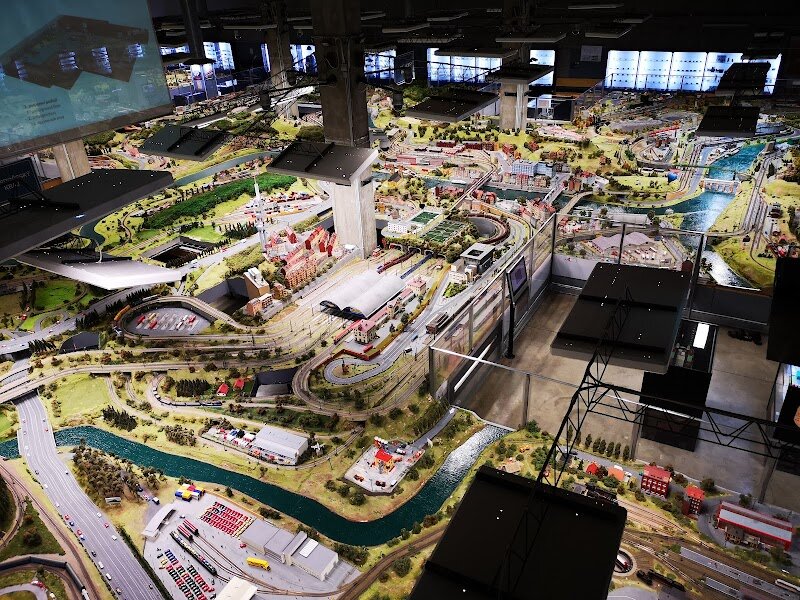
Step into the enchanting world of **Království Železnic**—the Kingdom of Railways—where Prague’s love affair with trains comes to life in miniature. Opened in 2009, this immersive museum delights families and curious travelers alike with its sprawling, meticulously crafted model railways, all set in the heart of the city’s vibrant Anděl district. Here, the **history of Czech railways** unfolds across two expansive underground floors, where tiny trains wind through detailed landscapes that mirror real Czech towns, rolling countryside, and iconic landmarks. What makes Království Železnic truly special is its blend of *education and play*. Kids and adults can operate trains, press buttons to animate scenes, and even ride on miniature trains, making every visit hands-on and memorable. The exhibits go beyond static displays—watch as bustling stations come alive, urban trams glide through mini Prague, and trains traverse rivers and forests, all accompanied by the authentic sounds of rail travel. Whether you’re a railway enthusiast or just looking for a magical day out, you’ll find inspiration here. The museum’s evolving displays and interactive features ensure that every visit offers new discoveries, sparking imaginations and creating lasting memories for visitors of all ages.

Did you know there are exactly 1,008 tiny people living in this building right now, and they're all frozen in place? Welcome to Království Železnic, where the BIGGEST model railway in all of Central Europe stretches longer than FOUR soccer fields combined! Look up at this modern glass building - before 2009, this was just an empty warehouse where trucks parked, but now it holds a secret world that took 12 years to build... that's like your ENTIRE life if you're twelve! Inside, you'll spot 120 model trains zooming past 10,000 miniature buildings, and here's the silly part - the tiny toilets in those buildings actually flush with real water! Can you find the hidden dinosaur that the builders snuck into the medieval castle scene? It's there because one model-maker's daughter INSISTED on it!

landmark

Baba ruins

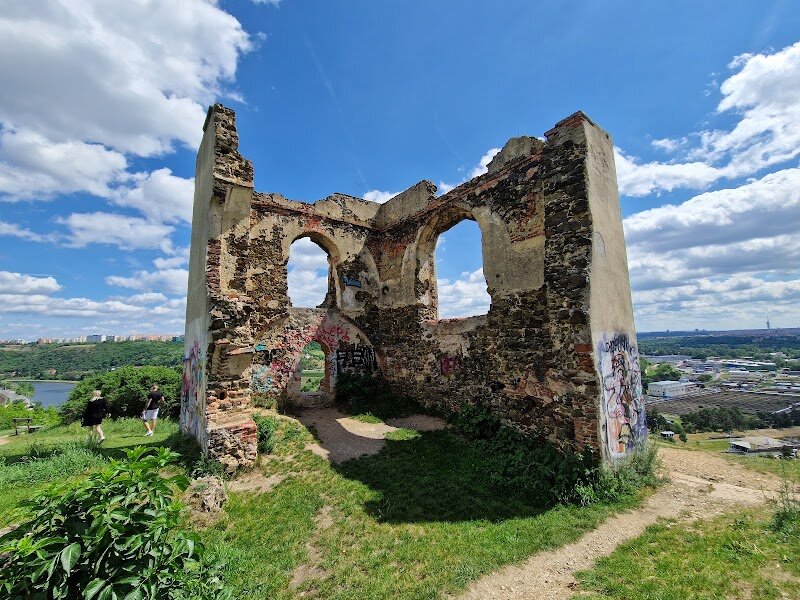
Perched high above the Vltava River, the **Baba ruins** in Prague offer families and curious travelers a magical blend of history, mystery, and panoramic city views. These evocative stone remains crown Baba Hill in the Dejvice district, where legends and facts intertwine: some say the structure was once a vineyard press from the 17th century, others claim it was a summer house, or even a chapel. What sets Baba apart is its transformation in 1858, when railway builders reshaped the ruins into a romantic, castle-like folly—perfect for sparking the imagination of visitors of all ages. The hill itself has been a gathering place since the Stone Age, and archaeological finds reveal that people have admired this vantage point for millennia. Today, you can wander among the weathered stones, let children explore the nooks and crannies, and soak in sweeping views of Prague’s rooftops and the meandering river below. The site is freely accessible and illuminated at night, making it an inspiring spot for sunset picnics, family adventures, and anyone eager to experience a different, enchanting side of Prague’s history.

Did you know that RIGHT where you're standing, ancient people played a ball game so dangerous that the losing team's captain sometimes got his head chopped off? YIKES! These stone ruins are over 1,300 years old - that's like your whole life times ONE HUNDRED! Look for the slanted walls with the stone rings sticking out... those are goals where players had to bounce a solid rubber ball through using only their hips and elbows - no hands allowed! The ball weighed as much as a newborn baby, and archaeologists found one that still bounces after being buried for a thousand years. Can you spot any jaguar carvings? Ancient Maya believed jaguars helped the sun travel underground at night, and there are secretly SEVEN hidden jaguar faces carved into these walls!

museum

Museum of Decorative Arts in Prague

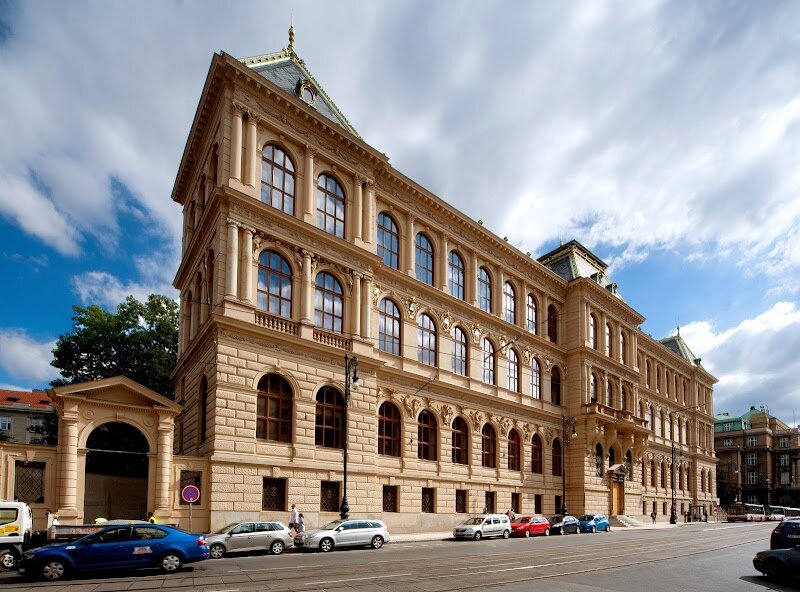
Step into the enchanting Museum of Decorative Arts in Prague, where history and creativity come alive for visitors of all ages. Housed in a magnificent **Neo-Renaissance building** dating back to the late 19th century, this museum has been a beacon of art and design since 1885. Its grand halls and exquisitely decorated interiors invite families and curious travelers to explore a world of beauty, craftsmanship, and imagination. The museum’s vast collection—nearly half a million items—spans centuries of **European decorative arts**, with a special focus on treasures from the Bohemian lands. Here, you’ll marvel at dazzling **glasswork, ceramics, textiles, fashion, jewelry, and even children’s toys**. Interactive displays and thematic exhibitions, like the beloved “Stories of Materials,” reveal the fascinating stories behind everyday objects and extraordinary masterpieces. Recent renovations have transformed the museum into a vibrant cultural hub, offering not just awe-inspiring exhibits but also engaging programs and spaces for discovery. Whether you’re drawn to ornate furniture, intricate goldwork, or playful design, the Museum of Decorative Arts promises an unforgettable journey through the heart of Czech creativity—making it a must-visit destination for families and explorers alike.

You know what's wild? You're standing in front of a building that was literally designed to make Czech artisans look BETTER than their Austrian rivals... and it worked! This gorgeous Neo-Renaissance palace from 1897 was built as a political weapon disguised as a museum – the Czech industrial elite funded it to prove they could match Vienna's decorative arts scene, blow for blow. See those intricate sgraffito patterns covering the facade? There are exactly 168 different motifs up there, each one representing a different Czech craft guild. Before this beauty went up, this spot was home to Prague's most notorious gambling den – the "Golden Peacock" – where supposedly half the Bohemian aristocracy lost their fortunes in the 1860s. Step inside and you'll hit that jaw-dropping main staircase... it's the ONLY one in Europe where every single banister is made from a different type of Czech wood – 47 varieties total! The locals know to visit Thursday evenings after 5pm when it's free AND empty – you'll have those 7,000 pieces of Bohemian glass practically to yourself.

building

Břevnov Monastery

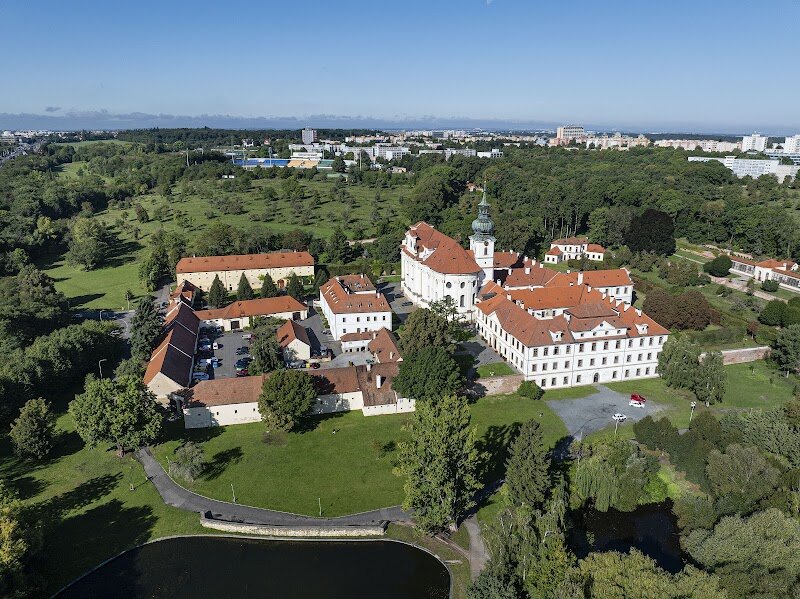
Břevnov Monastery, nestled in the tranquil outskirts of Prague, is a hidden gem brimming with stories that stretch back over a millennium. Founded in 993 by Prince Boleslaus II and Saint Adalbert, it holds the distinction of being the **oldest male monastery in Bohemia**, making it a place where history and legend intertwine. Over the centuries, this Benedictine haven has weathered wars, witnessed royal visits, and served as a spiritual and cultural anchor for the region. Families and curious travelers will delight in exploring the **stunning Baroque architecture**, wandering through peaceful gardens, and discovering treasures like the **Basilica of St. Margaret**—home to beautiful frescoes and a centuries-old crypt. The monastery’s library, filled with ancient manuscripts, sparks the imagination of all who visit. For a unique treat, sample traditional Czech beer brewed right on site, continuing a monastic brewing tradition dating back to the 13th century. With its blend of serene beauty, vibrant history, and family-friendly experiences, Břevnov Monastery offers a memorable journey through Prague’s past—perfect for those eager to combine learning with leisure in an enchanting setting.

You're standing where Czech Christianity literally began – right here in 993, Prince Boleslav II and Bishop Adalbert hammered out the deal that created the very first monastery in all of Bohemia. Before these baroque beauties went up, this hillside was just pagan sacred groves where our ancestors worshipped trees... talk about a spiritual makeover! See that stunning white and gold facade? That's actually version 3.0 of this place – the original wooden monastery burned down, the Gothic replacement got trashed in the Hussite Wars, and then in 1708, the genius Christoph Dientzenhofer basically said "let's go HUGE" and created what you're looking at now. Step through that entrance and boom – you're hit with this insane oval nave that completely messes with your head... Dientzenhofer literally bent the rules of baroque architecture to squeeze maximum drama into minimum space. Here's what kills me – those Benedictine monks still live here, still brew beer using their original 13th-century recipe, and yes, they run a HOTEL upstairs where you can literally sleep in a monastery cell. Mozart's buddy Beethoven hung out here composing, and during Communist times, the secret police used the crypt for... well, let's just say NOT prayer meetings. Wild place, right?

museum

Loreto

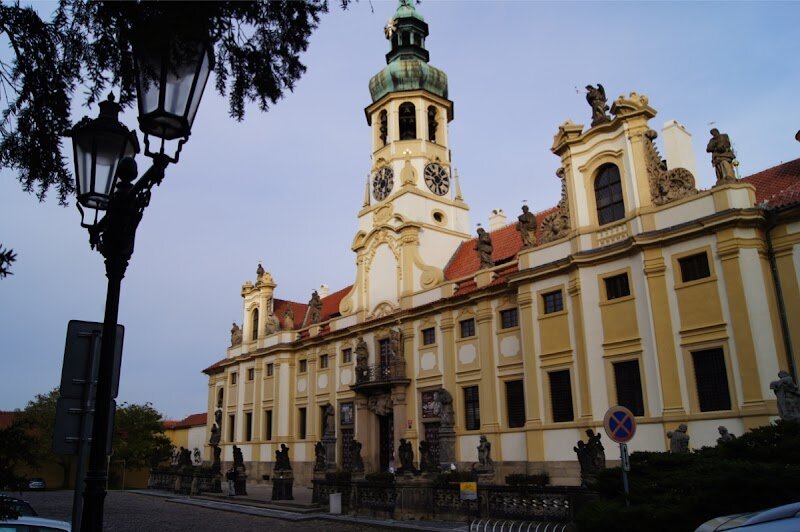
Loreto in Prague is a captivating Baroque sanctuary that enchants visitors with its blend of history, art, and spiritual wonder. Founded in 1626 by the noble Lobkowicz family, Loreto was built as a symbol of faith and gratitude after the tumultuous Thirty Years’ War, and quickly became one of the city’s most treasured pilgrimage sites. At its heart lies the Holy House (*Santa Casa*), an ornate replica of the Virgin Mary’s legendary home, believed to have been miraculously transported by angels—a story that fascinates both young and old. Families and curious travelers will be drawn to the magical carillon, where 27 bells ring out every hour, filling the courtyards with joyful melodies. Inside, you’ll discover dazzling treasures, including the famed Prague Sun—a monstrance encrusted with over 6,000 diamonds—and an impressive collection of religious art and artifacts that span centuries. Children can marvel at the intricate statues and frescoes, while adults appreciate the layers of history embedded in every detail. Whether you’re seeking inspiration, a peaceful retreat, or a glimpse into Prague’s rich cultural tapestry, Loreto promises an unforgettable experience for all ages—a place where legends, artistry, and devotion come vividly to life.

Picture this... in 1294, angels supposedly carried an entire HOUSE through the sky from Nazareth to this very hilltop, stone by stone. Look up at that imposing brick facade before you – behind those Renaissance walls lies what believers claim is the actual childhood home of the Virgin Mary, flown here by divine intervention after three mysterious stops along the Croatian coast. Before this basilica rose in 1468, medieval pilgrims crawled on bloodied knees up this hill to reach a simple wooden shelter protecting those sacred stones. Step through that bronze door and you'll enter a space where 50 million souls have whispered their deepest prayers... including a desperate Christopher Columbus who knelt here in 1493, crediting this sanctuary for surviving his shipwreck off Portugal's coast. As your eyes adjust to the candlelit interior, notice how the Holy House sits INSIDE the church – no foundations beneath it, just three ancient walls of Palestinian limestone that mysteriously match the exact dimensions of ruins still standing in Nazareth today. Above you, that dome soars 75 meters high, taller than the Leaning Tower of Pisa, while beneath your feet lie the bones of eight popes who insisted on eternal rest near these miraculous stones.

landmark

Vyšehrad Cemetery

Vyšehrad Cemetery, nestled beside the majestic Basilica of Saints Peter and Paul atop Prague’s historic Vyšehrad hill, is much more than a burial ground—it’s a vibrant tapestry of Czech history and culture. Families and curious travelers alike will find themselves captivated by its serene paths, lined with ornate neo-Renaissance arcades and artistically crafted tombstones from some of the nation’s finest sculptors and architects. What makes Vyšehrad Cemetery truly special is its role as the **national pantheon**—the final resting place for over 600 of Czechia’s most celebrated figures, from legendary composers like Antonín Dvořák and Bedřich Smetana to iconic writers such as Karel Čapek and Božena Němcová. The centerpiece, the grand Slavín tomb, stands as a powerful symbol of Czech pride, honoring those whose achievements have shaped the country’s identity. As you wander through its tranquil grounds, you’ll encounter fascinating memorials—like the white skis marking Josef Rössler-Ořovský’s grave, a pioneer of Czech sports—each telling a unique story. Vyšehrad Cemetery invites you to reflect on history, art, and the enduring spirit of a nation, making it a memorable stop for visitors of all ages.

Did you know there's a GIANT tomb here that's basically a superhero headquarters for dead artists? Right in front of you stands the Slavín monument - it's 15 meters tall, that's like stacking THREE giraffes on top of each other! Built in 1893, this mega-tomb holds 55 of Czech Republic's most famous artists all together, like the world's coolest sleepover party that never ends. Look for the winged statue on top - she's holding a palm branch and watching over composers like Antonín Dvořák who wrote music about TRAINS! Can you count how many stone lions are guarding the entrance? Here's a silly secret: the cemetery's designer Antonín Wiehl is buried here too... so he basically built his own forever home! Over 600 super-famous Czechs rest here, making this the only cemetery where almost EVERY grave belongs to someone in history books!

museum

National Technical Museum

Step into the National Technical Museum in Prague and embark on a captivating journey through centuries of innovation and discovery. Founded in 1908, this museum stands among the world’s oldest and most respected institutions dedicated to science and technology, tracing its roots back to the eighteenth century. Housed in a striking functionalist building beside Letná Park, the museum boasts 16 expansive exhibitions that engage visitors of all ages, making it an ideal destination for families and curious minds alike. What sets this museum apart is its immersive, hands-on approach—far from a collection of dusty relics, the galleries invite you to explore everything from gleaming vintage cars and historic locomotives to the wonders of astronomy and the marvels of everyday household inventions. Children and adults can descend into a realistic coal mine model, experience the drama of early flight, and marvel at intricate timepieces that chart humanity’s quest to measure the universe. With its blend of Czech heritage and international innovation, the National Technical Museum transforms the story of technology into an adventure—perfect for sparking curiosity, inspiring young inventors, and offering fresh perspectives for travelers seeking more than the ordinary.

Did you know there's a REAL piece of the moon right here in Prague, and it's older than every dinosaur that ever lived? Look up at this massive building - it used to be an army barracks where 2,000 soldiers slept, which is like... your ENTIRE school times four! See those huge windows? Count them - there are 427 of them, and in 1908, before this became a museum, horses lived on the ground floor while soldiers marched above them! Inside, you'll find the very first car that ever drove through Prague streets in 1898... and here's the silly part - it scared so many horses that the driver had to honk a horn AND ring a bell to warn everyone he was coming! Quick challenge: can you spot the secret coal mine entrance hidden in the basement? It goes down 50 meters underground - that's like stacking ten giraffes on top of each other!

landmark

Old Town Square

Old Town Square in Prague is a captivating crossroads where centuries of history meet lively modern-day culture, making it an unforgettable destination for families and curious travelers alike. Established as a bustling marketplace in the 10th century, this iconic square has witnessed the rise and fall of kings, dramatic medieval events, and vibrant European trade. Today, visitors are surrounded by a breathtaking tapestry of Gothic, Baroque, and Romanesque architecture, including the legendary twin spires of the Church of Our Lady before Týn and the ornate St. Nicholas Church. Children and adults alike will be mesmerized by the Astronomical Clock, which springs to life every hour with its whimsical procession of figures—a spectacle that delights all ages. The square’s open spaces buzz year-round with street performers, festive markets, and outdoor cafés, providing endless opportunities to soak in the atmosphere or enjoy a treat together. Historical monuments, such as the Jan Hus Memorial and commemorative stones, invite visitors to uncover stories of courage and intrigue from Prague’s storied past. Whether you’re exploring underground dungeons, attending a classical concert, or simply watching the world go by, Old Town Square promises a magical blend of adventure, learning, and old-world charm for every traveler.

In the year 1621, twenty-seven Protestant nobles had their heads displayed on iron spikes right where you're standing... for ten long years. Look around this ancient square that's witnessed a thousand years of human drama since its birth in the 10th century, and you'll notice something peculiar – every single building faces slightly inward, creating an amphitheater of stone where executions, coronations, and love stories have played out like scenes on history's grandest stage. That Gothic spire piercing the sky to your left? The Church of Our Lady before Týn contains the tomb of astronomer Tycho Brahe, who died in 1601 after his bladder burst because he refused to leave a royal banquet – etiquette literally killed him. And see those 27 white crosses embedded in the cobblestones near the Old Town Hall? Each marks where a nobleman's head rolled after the failed Bohemian Revolt, their blood seeping between these very stones you walk upon. But here's the SECRET most visitors miss... beneath your feet lies a network of medieval cellars, three stories deep, where merchants once hid their gold and lovers met in darkness. During the plague of 1680, these underground chambers became makeshift morgues, holding over 15,000 bodies. Today, as tourists snap photos above, few realize they're standing atop Central Europe's largest medieval necropolis, where the whispers of ten centuries still echo in the shadows below.

museum

New National Museum

The New National Museum in Prague is a captivating gateway into the heart of Czech history, culture, and science, making it a must-see for families and inquisitive travelers alike. Perched majestically atop Wenceslas Square, this Neo-Renaissance architectural marvel has been a symbol of national pride since 1891, recently restored to its former glory with modern enhancements that delight visitors of all ages. Founded in 1818, the museum was envisioned as a guardian of the Czech lands’ natural and cultural heritage, and today its vast collections—nearly 14 million items—span everything from dazzling gemstones and prehistoric fossils to royal artifacts, rare coins, and vibrant traditional costumes. Young explorers and lifelong learners can marvel at life-sized dinosaur skeletons, interactive science exhibits, and immersive displays tracing Czech history from ancient times through moments that shaped the nation. Art lovers will appreciate galleries showcasing masterpieces by Czech and European artists, while history buffs can delve into stories that bring the Czech national revival to life. With its grand halls, awe-inspiring dome, and ever-changing exhibitions, the New National Museum offers an unforgettable blend of wonder, learning, and inspiration for every curious mind.

You know what's wild? You're standing in front of a building where 323 communist party members once voted to dissolve their own government in 1989... without a single vote against! This massive concrete beast from 1973 was actually built on top of Prague's old stock exchange - they literally bulldozed capitalism to build communism here. Look at that facade - those 4,500 glass panels were each hand-cleaned by workers dangling from ropes because the architects forgot to design any way to wash them! The locals used to call it "Darth Vader's helmet" because of how it looms over Wenceslas Square. Step inside and you'll find the old assembly hall where Václav Havel gave his first speech as president... right where they now hang contemporary art installations. Here's what tourists miss - head up to the fourth floor terrace around sunset. The communist architects accidentally created Prague's best FREE viewing platform, and hardly anyone knows it's open to the public. Trust me, skip the crowded Petřín Tower and come here instead!

landmark

Prague Castle

Perched high above the Vltava River, **Prague Castle** is a storybook fortress that has captivated visitors for over a thousand years. As the largest ancient castle complex in the world, it sprawls across a vast area, blending grand palaces, mysterious alleyways, and lush gardens into one unforgettable destination. **Families and curious travelers** will be enchanted by its mix of fairy-tale legends, royal history, and hands-on exploration—from wandering the colorful cottages of Golden Lane to marveling at the soaring Gothic spires of St. Vitus Cathedral. Founded in the 9th century by Prince Bořivoj, Prague Castle has been the seat of kings, emperors, and presidents, witnessing coronations, epic battles, and even the infamous Defenestration of Prague that ignited the Thirty Years’ War. Today, it stands as a living museum and UNESCO World Heritage site, where every stone tells a story—from the ancient halls of the Old Royal Palace to the dazzling Crown Jewels housed within its walls. Visitors can **explore centuries-old chapels, climb medieval towers for sweeping city views, and stroll through peaceful gardens**, making Prague Castle a magical experience for all ages.

Did you know there's a window here that started a WAR that lasted THIRTY YEARS - that's like your whole life times THREE! Look up at those castle walls stretching longer than FIFTEEN football fields... this is the BIGGEST ancient castle on Earth, and it took over ONE THOUSAND years to build - imagine starting something when Vikings sailed the seas and still adding rooms when people had smartphones! See that tall pointy tower reaching up like a giant's finger? That's where they kept prisoners who had to climb 147 steps every day just to get bread and water - count how many steps YOU take to get up there! Inside these walls, there are so many rooms that if you spent just one minute in each one, you'd be exploring for NINE whole hours... that's longer than your entire school day including recess!

building

Czech University of Life Sciences Prague (CZU)

The Czech University of Life Sciences Prague (CZU) is a captivating destination for families and inquisitive travelers eager to explore one of Prague’s greenest and most innovative academic campuses. Founded in 1906 by decree of Emperor Franz Joseph I, CZU has grown from its roots in agricultural education to become a vibrant hub for environmental sciences, sustainability, and life sciences research. Its spacious campus in Prague-Suchdol, surrounded by woodlands and meadows, feels more like a tranquil park than a typical university, inviting visitors to unwind and connect with nature. What truly sets CZU apart is its blend of tradition and forward-thinking spirit. The university’s history is woven into its leafy walkways and modern research facilities, where pioneering work in food, forestry, and environmental stewardship takes place. Families can stroll through beautifully kept botanical gardens, enjoy interactive exhibitions, and even encounter farm animals—a delight for children and adults alike. Whether you’re drawn by its rich heritage or its commitment to a sustainable future, a visit to CZU offers a unique glimpse into Czech scientific life, all within easy reach of Prague’s city center.

Picture this: in 1906, while Prague's farmers were still using wooden plows, Emperor Franz Joseph signed the decree creating what would become Central Europe's most ambitious agricultural experiment... right where you're standing now. Before us rises the modernist facade of CZU, but beneath your feet lies something extraordinary – the original experimental fields where Czech scientists first grew drought-resistant wheat in 1952, saving millions from famine across Soviet-controlled territories. Look closely at those seemingly ordinary windows on the third floor... that's where Antonín Klečka secretly developed pesticide-free farming methods during the 1960s, hiding his research from communist authorities who demanded chemical agriculture. As we step through these glass doors, you're entering the very halls where 23,000 students from 89 countries study today – making this the ONLY university in Europe where you can earn a degree in tropical agriculture without leaving the continent. To your left, that bronze statue? It's not decorating – it's hiding the entrance to underground tunnels built in 1938, originally meant to protect seed banks from Nazi bombs. This campus produces more agricultural patents per square meter than any institution between Berlin and Moscow... including the gene-edited hops that revolutionized Czech beer in 2019.

building

Charles University

Charles University in Prague is a living testament to the city’s rich intellectual and cultural legacy, captivating families and curious travelers alike. Founded in 1348 by Charles IV, Holy Roman Emperor and King of Bohemia, it stands as the oldest university in Central Europe and one of the oldest in the world. Walking through its historic courtyards, visitors can sense the echoes of centuries past, where scholars like Jan Hus once debated ideas that would shape European history. What makes Charles University truly special is its enduring spirit of curiosity and resilience. Over 650 years, it has weathered wars, political upheaval, and sweeping social change, always remaining at the heart of Czech national identity and innovation. Today, its grand halls and libraries invite exploration, offering glimpses of medieval manuscripts and ornate architecture that inspire imagination. Families and travelers can experience guided tours, exhibitions, and occasional public lectures, immersing themselves in stories of science, art, and revolution. Every corner reveals a new chapter in Prague’s story, making Charles University not just a place of learning, but a vibrant window into the soul of the city.

You know what's wild? You're standing in front of the oldest university north of the Alps and east of Paris... founded way back in 1348, making this place older than the printing press! Charles IV basically wanted to one-up the French, so he created this powerhouse that's been churning out revolutionaries and Nobel laureates for 676 years. See that Gothic archway ahead? That's where Jan Hus taught before they burned him at the stake in 1415 for challenging the Church... and where Einstein lectured about relativity in 1911, completely blowing everyone's minds. The locals will tell you the REAL treasure is through that courtyard – the original medieval lecture hall where students literally fought with swords over the best seats! Before Charles built this, it was actually a Jewish cemetery for three centuries. Today, with 50,000 students spread across SEVENTEEN faculties, it's basically a city within a city. Pro tip: sneak in around 7am when the courtyards are empty... that's when you can actually hear the building breathe.

landmark

Olšany Cemetery

Olšany Cemetery, Prague’s largest and most storied burial ground, invites visitors to step into three centuries of history and quiet beauty. Founded in 1680 in response to a devastating plague, Olšany has grown into a sprawling complex of twelve distinct cemeteries, each reflecting Prague’s rich tapestry of cultures and faiths—from Catholic and Orthodox to Jewish and Muslim communities. Families and curious travelers will be captivated by the cemetery’s serene paths lined with magnificent Art Nouveau monuments, centuries-old tombstones, and ornate chapel graves. It’s a peaceful haven for reflection, where the city’s past comes alive through stories etched in stone. Notable Czechs rest here, including artist Alphonse Mucha and student Jan Palach, whose grave tells of heroic protest for freedom. Literature lovers can seek out Franz Kafka in the Jewish section. Olšany’s tranquil atmosphere is perfect for a quiet walk or a moment of discovery. As you wander, you’ll encounter military memorials, local legends (including Prague’s only enduring vampire myth!), and a unique blend of art, history, and nature. Whether you’re exploring with family or on a personal quest for Prague’s secrets, Olšany Cemetery offers a memorable, moving experience for all ages.

You know that massive flu pandemic in 1918? Well, right here at Olšany, they had to dig 2,000 graves in just THREE weeks because bodies were literally piling up faster than they could bury them. Yeah... let me show you around Prague's largest cemetery – and trust me, this place is WAY more fascinating than it is creepy! So you're standing at what locals call "the city of the dead" – 50 hectares where over two MILLION people are buried, making it the biggest cemetery in the entire Czech Republic. See those Art Nouveau tombs to your left? That's where Jan Palach is buried – the student who set himself on fire in 1969 to protest the Soviet invasion. Every January 19th, locals still leave candles here... it's incredibly moving. Oh, and here's something wild – during Communist times, the secret police actually HID listening devices inside some of these graves to spy on dissidents visiting their dead relatives! The cemetery's so huge that resistance fighters used it for secret meetings, thinking nobody could track them in this maze of 200,000 tombstones. They were wrong.

landmark

Letna Park Carousel

Letna Park Carousel in Prague is a magical blend of history and delight, enchanting visitors for over a century. Built in 1894 by master carpenter Matěj Bílek, it is recognized as the **oldest operating carousel in Europe**. Nestled within Letna Park, its Neo-Renaissance wooden pavilion—with a striking cupola—evokes a timeless atmosphere that appeals to families and curious travelers alike. What truly sets the carousel apart are its **remarkably realistic horses**, crafted from iron frames, carved wooden heads and legs, and covered in authentic horsehide. These figures have witnessed generations of riders, from local children to visiting adults, and even hold secrets of the past—restorations revealed hidden newspaper clippings and coins from the Austro-Hungarian era inside the horses. Visitors today can enjoy the gentle thrill of riding on these historic horses or charming miniature cars, all to the lively tunes of a vintage orchestrion, just as in days gone by. The carousel’s enduring appeal lies in its ability to transport guests back in time, offering a playful, nostalgic escape amidst the lush scenery and vibrant energy of Letna Park. Whether you’re seeking family fun or a touch of Prague’s rich heritage, the Letna Park Carousel promises a truly unforgettable experience.

You know what's crazy? This carousel right here has been spinning in the exact same spot since 1894 – that's 130 years of kids grabbing for the same brass rings while their parents watched from these very benches! But here's the kicker... this isn't even technically a carousel, it's what we locals call a "kolotoč" – a Czech-style roundabout that spins counterclockwise, the ONLY one in Europe that still does this! Look at those hand-carved horses – each one took master craftsman Matěj Bílek three months to complete, and if you check the third horse from the entrance, you'll spot his hidden signature carved into the mane. The whole thing runs on its original 1894 steam engine mechanism that's been converted to electric, but the gears? Still the same ones forged in Vienna! Best part? Come here Tuesday mornings around 10 AM when the local pensioners ride it for free – I'm not kidding, they've been doing this since the 1960s as part of their "movement therapy." You haven't lived until you've seen an 85-year-old grandma racing a toddler to grab the golden ring that still gives you a free ride, just like it did in Emperor Franz Josef's time!

landmark

Petrin Tower

Rising gracefully above Prague’s lush Petřín Hill, **Petřín Tower** is a beloved icon for families and curious travelers alike. Built in 1891 for the Jubilee Exhibition, this steel marvel was inspired by the Eiffel Tower after Czech visionaries visited Paris and dreamed of bringing a similar landmark to their city. While only one-fifth the size of its Parisian cousin, Petřín Tower’s summit matches the Eiffel’s altitude, thanks to its hilltop perch—offering breathtaking, panoramic views over Prague’s spires, bridges, and gardens. Climbing the 299 steps (or riding the elevator) to the observation decks is an adventure for all ages, rewarded by vistas stretching across the city and, on clear days, into distant Bohemia. The journey begins with a scenic stroll or funicular ride through Petřín’s tranquil park, making it a perfect outing for families wanting to blend nature and history. Beyond its architectural charm, Petřín Tower has endured dramatic chapters—including wartime threats and decades as a TV transmitter—before being lovingly restored for new generations to enjoy. Today, its playful silhouette and interactive climb make it an unforgettable highlight of any Prague adventure.

Did you know this tower is actually the Eiffel Tower's BABY BROTHER? That's right - when Prague built this iron giant in 1891, they copied Paris's famous tower but made it exactly ONE-FIFTH the size... like if you shrunk a giraffe down to the height of your bedroom door! Look up and count those zigzag iron beams - there are over 175 TONS of them, which is like stacking 35 elephants on top of each other! Here's the silly part: it took TWO whole years to build, but during World War Two, the Nazis used it as a secret radio tower to jam enemy signals... nobody knew until 1945! Can you spot the 299 steps spiraling up inside? That's exactly how many licks it supposedly takes to finish a lollipop! At the very top, you're standing 1,043 feet above sea level - higher than THREE Statues of Liberty stacked up - making this the TALLEST lookout point in all of Prague!

building

Prague New City Hall

Prague’s New City Hall, or **Nová radnice**, is a striking fusion of history, artistry, and civic pride right in the heart of Old Town. Built between 1908 and 1912, this impressive building was designed by Osvald Polívka to echo the grandeur of Prague’s baroque surroundings while embracing the elegance of Art Nouveau. Once simply the city’s finance office, it became the official seat of Prague’s mayor and city council after World War II, making it a living symbol of the city’s resilience and governance. What truly sets New City Hall apart is its **artistic detail**—look for the expressive statues and bas-reliefs by renowned Czech sculptors, including allegories of labor and legendary local figures like Rabbi Loew and the Iron Knight, which are sure to spark children’s imaginations. Families and curious travelers will love exploring the grand halls, adorned with sparkling chandeliers and intricate ironwork, and experiencing the famous *paternoster lift*—a rare, continuously moving elevator that feels straight out of a storybook. Inside, visitors often find exhibitions that bring Prague’s vibrant history and culture to life, while outside, the picturesque square and nearby winding streets invite exploration. The New City Hall offers a unique window into Prague’s past and present—a must-see for anyone eager to discover the city’s hidden stories and architectural wonders.

Did you know that in 1419, angry citizens threw SEVEN city councilors out of THIS building's windows... and that's how a whole war started? That's right, explorers - you're standing where the very FIRST defenestration happened, which is a fancy word for throwing people out windows! Look up at those Gothic windows on the tower - they're 70 meters high, that's like stacking TWENTY giraffes on top of each other! Before this building was here in 1377, there was just a muddy marketplace where people sold stinky fish. Can you spot the secret stone faces hidden in the corners? There are fourteen of them, and each one is making a different silly expression! Inside, there's a hall so big that medieval knights once rode their horses RIGHT through it during celebrations... imagine the mess THAT made!

museum

Museum of Prague

The Museum of Prague, officially known as the **National Museum**, stands as a crown jewel atop Wenceslas Square, beckoning families and curious travelers into the heart of Czech history and culture. Founded in 1818, this majestic Neo-Renaissance landmark not only dazzles with its grand architecture and ornate interiors, but also serves as a proud guardian of nearly **14 million artifacts** spanning natural history, science, art, and music. Stepping inside, visitors are swept through centuries—from prehistoric relics and medieval treasures to rare coins and masterpieces by Czech and European artists. Young explorers can dive into the engaging **Children’s Museum**, while history buffs trace the evolution of Czech society in immersive exhibits. The museum’s **iconic dome** offers panoramic views of vibrant Prague, making the visit even more memorable. Beyond its collections, the National Museum is a living symbol of Czech identity, having played a pivotal role in the nation’s cultural revival and independence. Whether you’re marveling at dinosaur skeletons, uncovering tales of revolution, or simply admiring the breathtaking staircase hall, the Museum of Prague promises an inspiring journey for all ages.

You know that incredible paper model you're about to see inside? It took Antonín Langweil ELEVEN years to build, and get this... he was completely self-taught and worked on it while going blind! Right now you're standing in front of a Neo-Renaissance palace from 1898, but here's what blows my mind - this exact spot used to be medieval butcher shops until the great fire of 1689. Look up at those carved faces between the second-floor windows... each one represents a different Prague guild master who never actually existed - the architect just made them up for fun! Inside, past that gorgeous marble staircase, you'll find Langweil's masterpiece covering 20 square meters with over 2,000 paper buildings, accurate down to individual window frames. The craziest part? Langweil's model is now MORE historically valuable than he ever imagined, because it shows 800 buildings that were demolished during Prague's 19th-century modernization. You're literally looking at the ONLY record of what half the Jewish Quarter looked like before it vanished forever.

landmark

State Opera

The State Opera in Prague is a dazzling treasure for families and travelers eager to experience the city’s rich cultural tapestry. Opened in 1888, this majestic theater is a superb example of **neo-classical architecture**, with a grand façade adorned by sculptor Theodor Friedl’s ornate tympanum depicting the myth of Orpheus. Step inside and you’ll be greeted by a **spacious auditorium** and a lavish neo-Rococo interior—often cited as one of the most beautiful in Europe. What truly sets the State Opera apart is its vibrant history. Once the heart of Prague’s German-speaking community, it has welcomed world-renowned artists and hosted landmark premieres since its inaugural performance of Wagner’s *Die Meistersinger von Nürnberg*. Over the decades, the opera has evolved, blending Czech and European traditions, and today it stands as a symbol of Prague’s multicultural spirit. Visitors can immerse themselves in **world-class opera and ballet performances**, enjoy modern comforts like multilingual surtitles, and marvel at the stunning décor that evokes the golden age of theater. Whether you’re introducing children to the magic of live music or seeking inspiration from history and artistry, the State Opera promises an unforgettable journey for all ages.

Did you know that 5,000 pounds of REAL gold leaf covers the ceiling inside this opera house? That's heavier than a whole rhinoceros made of gold floating above your head! Look up at those fancy windows... in 1869, Emperor Franz Joseph himself stood right HERE when this building first opened, but get this - the original opera house BURNED DOWN in World War Two! The whole thing had to be rebuilt brick by brick, and it took TEN YEARS - that's probably your entire life so far! Here's the coolest secret: underneath where you're standing, there's a hidden bunker where they stored all the precious costumes during the war... and some say you can still find old ballet shoes from 1944 down there! Can you count how many golden statues are watching you from the roof? I'll give you a hint - there are exactly SIXTEEN, and each one weighs as much as a small car!

museum

Lobkowicz Palace

Lobkowicz Palace, nestled within the iconic Prague Castle complex, is a treasure trove of art, music, and family history that invites curious travelers and families to step into the heart of Bohemian heritage. Built in the 16th century, this remarkable palace is the only privately owned building in the castle grounds and has witnessed pivotal moments in Czech history—most famously, sheltering Catholic ministers after the dramatic Defenestration of Prague in 1618, a spark that ignited the Thirty Years’ War. What sets Lobkowicz Palace apart is the personal touch of the Lobkowicz family, who reclaimed their ancestral home after decades of confiscation by Nazi and Communist regimes. Visitors can explore one of Europe’s finest private art collections, with masterpieces by Bruegel, Canaletto, and Velázquez, rare musical manuscripts by Beethoven and Mozart, and centuries-old ceramics and armor. Engaging audio guides, narrated by family members, bring the stories to life, making it easy for all ages to connect with the palace’s rich past. The palace also delights with panoramic city views, a family-friendly café, and daily classical music concerts—making it a magical, memorable stop for anyone eager to experience Prague’s cultural legacy firsthand.

Did you know there's a cannonball stuck in this palace wall that's been there for THREE HUNDRED AND SEVEN years? Look up at the yellow walls and count the windows - see that dent near the third floor? That's from when Swedish armies attacked in 1648, and the Lobkowicz family just... left it there like the world's coolest battle scar! Before you rush inside to see Beethoven's actual handwritten music - yes, the REAL papers he scribbled on - check out those fancy swirls above the doorway. Those aren't just decorations... they're actually secret family symbols that spell out L-O-B-K-O-W-I-C-Z if you squint just right! This family has lived here since your great-great-great-great... times SIXTEEN grandparents were alive! Inside, you'll find Europe's oldest private art collection still owned by the same family - that's like if your family kept EVERY drawing you ever made for 600 years! Quick challenge: can you spot the painting of the dog wearing pearls? It's worth more than 50 school buses full of gold coins!

building

Sacre Coeur

Sacre Coeur in Prague is a hidden gem that blends rich history with awe-inspiring architecture, creating a destination that intrigues both families and curious travelers. Originally founded in 1882 on the site of a former convent and finishing school for girls, this Neo-Gothic church quickly became a local landmark, with its soaring ceilings and intricate frescoes capturing the imagination of all who enter. Today, Sacre Coeur has been transformed from its sacred origins into a vibrant venue for cultural events, concerts, and celebrations. Visitors are greeted by a grand nave, breathtaking height, and angelic atmosphere—perfect for sparking young imaginations and offering adults a taste of Prague’s elegant past. The space is alive with creativity, often hosting exhibitions, banquets, and even fashion shows, making every visit a unique experience. Families can explore the spacious courtyard or marvel at the artistry overhead, while history enthusiasts will appreciate the building’s evolution from a place of worship to a hub of community and festivity. Whether you’re attending a lively event or simply soaking in the historic ambiance, Sacre Coeur promises a magical encounter with Prague’s heritage and contemporary culture.

Did you know that every single day, the bells of Sacré-Cœur ring out exactly 84,000 times? That's more times than you blink in a whole WEEK! Look up at those white domes - they're made from a special stone that actually cleans itself when it rains, like a giant self-washing building! Before this church was here, this hill was covered with ancient windmills grinding flour, and Romans used to worship their god Mercury right where you're standing. Can you spot the gargoyles? Count them... there are 47 hiding up there, and one of them is sticking its tongue out at you! Inside, you'll find the world's heaviest bell - it weighs as much as THREE elephants and when it rings, people can hear it from 10 kilometers away... that's like if you rang a bell at your school and your grandma heard it at her house!

building

St. Nicholas Church (Malá Strana)

St. Nicholas Church in Prague’s Malá Strana is a dazzling Baroque masterpiece that enchants visitors of all ages with its soaring dome, ornate interiors, and rich history stretching back to the 13th century. Rising just steps from the Charles Bridge, this church captivates families and curious travelers with its dramatic architecture—look up to marvel at one of Europe’s largest ceiling frescoes, the breathtaking “Apotheosis of St. Nicholas,” painted in 1761 by Johann Kracker. Built between 1704 and 1755 on the site of an older Gothic church, St. Nicholas Church was shaped by some of the greatest Baroque architects, including Christoph and Kilian Ignaz Dientzenhofer, whose vision brought to life the church’s grand nave and striking copper cupola. Inside, you’ll discover a world of exquisite marble, gilded carvings, and monumental statues. For music lovers, the church’s mighty organ—once played by Mozart himself—still fills the space during regular concerts, making every visit a multisensory delight. Families can climb the 80-meter bell tower for stunning views over Prague’s rooftops, while history buffs will appreciate the church’s role through centuries of religious change, royal patronage, and even Cold War intrigue. Whether you’re drawn by art, music, or stories, St. Nicholas Church offers a feast for the imagination in the heart of Prague.

Did you know that Mozart himself played the organ right here in 1787, just four years before he died? That's like... imagine your favorite pop star performing in THIS exact spot over 200 years ago! Look up at that ENORMOUS dome above you - it's 20 meters wide, which is bigger than TWO school buses parked side by side! Before this church was built, there used to be a tiny medieval church here that was so small, only 50 people could squeeze inside. Now THIS church can fit 1,200 people - that's like your entire school times three! The builders used a super sneaky trick... they painted fake windows on the dome to make it look even BIGGER than it really is. Can you spot which windows are real and which ones are just painted on? I'll give you a hint - there are 12 fake ones up there!

landmark

Strahov Monastery

Strahov Monastery in Prague is a treasure trove of history, art, and wonder that invites families and curious travelers alike to step into centuries of stories. Founded in 1143, this remarkable complex is one of the oldest and most important monasteries in the Czech Republic, originally established by the Premonstratensian order and supported by Bohemian royalty. Over the years, it has evolved from its Romanesque beginnings through Gothic and Baroque transformations, each era leaving its unique mark on the grand basilica and elegant halls. What truly makes Strahov special is its breathtaking library—often called one of the most beautiful in the world—where visitors can marvel at ornate frescoed ceilings, ancient manuscripts, and globes that once mapped the expanding world. For art lovers, the gallery showcases a rich collection of Gothic paintings, while the monastery’s own brewery offers a chance to taste traditional Czech beer with panoramic views of Prague. Children and adults will be captivated by the monastery’s blend of architectural splendor, fascinating exhibits—including a small zoological collection—and its serene gardens. Strahov Monastery is a place where history comes alive, making it a must-see for anyone eager to experience the heart and heritage of Prague.

Did you know there are TWO MILLION books hiding up here - that's enough to give every kid in Prague their own personal library of FOUR books each! Look at those white walls climbing up the hillside... this monastery is older than America times THREE - monks started building it way back in 1143, when knights still rode horses through these very gates! See that fancy church dome that looks like a giant golden cupcake? Before these buildings stood here, this hilltop was a spooky forest where hermit monks lived in caves and tree hollows - imagine living in a tree like a squirrel! The coolest secret is waiting inside the library halls... they painted FAKE books on the ceiling to trick visitors, and there's even a hidden door disguised as a bookshelf that leads to SECRET monk tunnels! Can you count how many real windows are on the big white building as we walk closer?

Discover Prague
Your Way

Expert Narration

Choose from professor, storyteller, or local friend perspectives for each location.

AI-Powered Stories

Discover hidden histories and fascinating facts powered by advanced AI research.

Location-Aware

Stories automatically play as you approach each landmark during your walk.

Ready to explore Prague? Get the full audio experience
Download on the App Store